Feeds:
Posts
Comments

Archive for the ‘Science!’ Category

Ken Liu is one of our modern masters of speculative fiction. The first story of his that I read was “The Paper Menagerie,” “the first piece of fiction to win three genre literary awards: the Hugo, the Nebula, and the World Fantasy Award.”

So he’s pretty good.

He’s also been thinking about art, AI and the evolving relationship between them. Here’s his new story:

Future Science Fiction Digest – Good Stories

Clara’s favorite part of the workday is the very beginning.

She likes flipping the switches on the wall right inside the office entrance, all sixteen of them, different colors and laid out in two neat columns, like the console from an old NASA space capsule that she got to sit inside once on a school trip to DC. As she takes a sip of her latte, her right hand running up the wall, click-click-click, flipping one switch after another, she imagines herself turning on rocket engines, initiating a docking maneuver, venting some dangerous alien spores out the airlock.

The story is one of the many interesting pieces in The Digital Aesthete: Human Musings on the Intersection of Art and AI, edited by Alex Shvartsman with an impressive roster of authors.

Today’s software can only imitate art, but what about tomorrow?

* * *

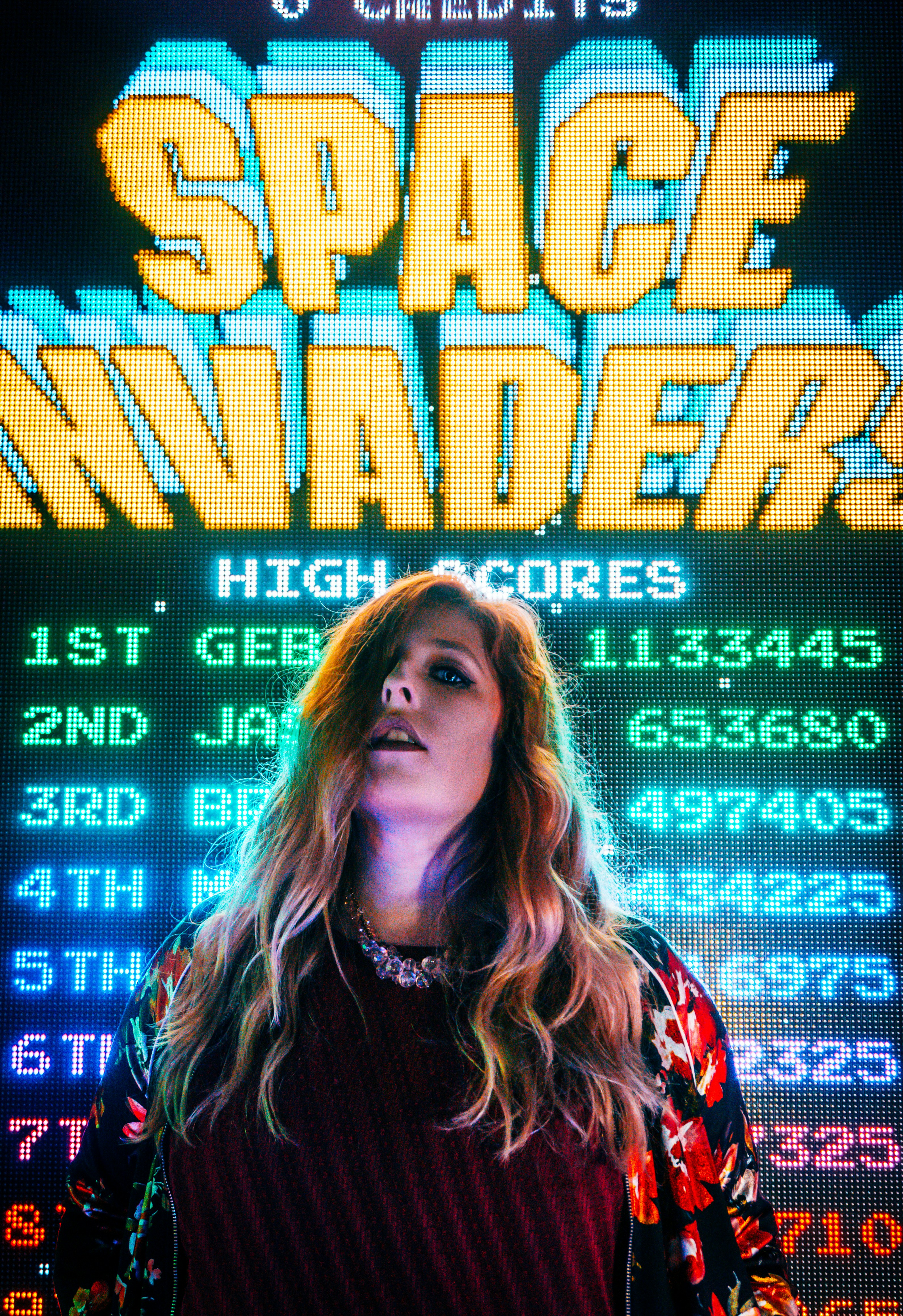
Photo by Possessed Photography on Unsplash

Read Full Post »

Of Notes and Meteors

Did this post start out life as a path to a map of sci-fi story locations in space? It did, and then I realized that in my haste, I’d picked a draft I’d already posted before.

It happens, especially on days when one is juggling not one not two not three but four big projects, and one has absolute reams of notes in the “blog post ideas” folder.

So now I’m here with an update, still space-related but also experiential. It has to do with the Geminid meteor shower.

Bundle up and look to the sky: It’s time for one of the best meteor showers of the year

The shower will be at its peak on Wednesday night and early Thursday morning, though you’ll likely see some meteors in the nights before and after…

“The meteors will seem to shoot out of the constellation Gemini (hence the name) but could streak across pretty much any part of the sky,” Wiegert said. “So if you can find a dark place, with a good view of the sky in any direction, you could get a good view of the Geminids.”

Happy hunting!

* * *

Photo by Ricardo Rocha on Unsplash

Read Full Post »

Want to see a rare astronomical event tonight? (And really, why wouldn’t you?)

The extremely rare Betelgeuse occultation by asteroid (319) Leona

For a very short time, we will see the legendary Orion constellation without its famous, orange shoulder, as it will be in the distant future, once Betelgeuse will have exploded as a supernova and faded to black.

Hey, I like Orion! What’s this all about?

Watch an asteroid eclipse the puzzling red giant star Betelgeuse tonight live online

At at 8:17 p.m. EST Monday (Dec. 11) (0117 GMT, Dec. 12), an asteroid will pass in front of the curious red star Betelgeuse, eclipsing it from our vantage point here on Earth and blocking it from view for up to 15 seconds in an event known as an occultation. The asteroid is known as 319 Leona, a main belt object that orbits the sun between Mars and Jupiter. Shaped roughly like an egg, 319 Leona measures some 50 by 34 miles (80 x 55 kilometers) in size.

Here’s a link to live coverage of the event.

So Orion’s loss is temporary, and will also help scientists better understand both the asteroid’s shape and the star’s characteristics. No Tim Burton movie required!

* * *

via Microsoft Image Creator: graphic illustration stamp of a star over mountains in winter, with a passing asteroid

Read Full Post »

Imagination will often carry us to worlds that never were. But without it, we go nowhere.

— Carl Sagan

* * *

Photo by Michal Vrba on Unsplash

Read Full Post »

Why isn’t there any sound in space? An astronomer explains why in space no one can hear you scream

In space, no one can hear you scream.

You may have heard this saying. It’s the tagline from the famous 1979 science fiction movie “Alien.” It’s a scary thought, but is it true? The simple answer is yes, no one can hear you scream in space because there is no sound or echo in space.

I’m a professor of astronomy, which means I study space and how it works. Space is silent – for the most part.

University of Arizona Distinguished Professor of Astronomy Chris Impey explains the science behind the Alien tagline, showcases slinkies as sound waves, and discusses why humans can’t speak across space but phenomena like galaxies and black holes can.

Also, a fun fact I did not know: “The word vacuum comes from the Latin word for empty.”

* * *

Photo by Susan Wilkinson on Unsplash

Read Full Post »

What’s the fastest way to slow global warming? Bill Nye has the answer. | Environmental Defense Fund

We asked Bill Nye The Science Guy to create a quick, easy-to-understand lesson on the fastest way to slow global warming: cutting methane emissions. 

* * *

Photo by Jake Hawkes on Unsplash

Read Full Post »

What’s happening in the night skies this month? I have no idea, actually, but this calendar does!

Astronomy Calendar for December, 2023 for Ottawa, Canada

Welcome to NightsOnEarth.com, a customizable, free astro-calendar to help you plan your stargazing, created by photographer Phil Mosby.

Click on any day and then on Settings to specify your location.

What’s this? The Pheonicid Meteor Shower will be visible starting tomorrow night and showcases meteors seemingly coming from the Phoenix constellation?

Cool cool cool. And what’s the Phoenix constellation? (Clicks on “learn more” and voila: Pheonicid meteor shower 2023).

Although that particular arrangement of stars isn’t saying phoenix to me so much as… curling stone.

* * *

Photo by Sebastian Knoll on Unsplash

Read Full Post »

All of history in an hour? Amazingly, yes. And if you’d like to know more, I recommend  A Short History of Nearly Everything by Bill Bryson.

* * *

Photo by Venti Views on Unsplash

Read Full Post »

John Oliver’s recent shenanigans in New Zealand’s Bird of the Century contest has me thinking about birds, and I remembered this site from the Cornell Lab of Ornithology

Wall of Birds

This interactive mural showcases 270 of the interesting birds around us. Zoom in and click to learn more about each species. And if New Zealand’s competition wasn’t enough for you, you can vote for your favorites.

I enjoy a lot of these birds (the Drongo, Lilac-breasted Roller, Hoopoe, puffins!), but the Blue-footed Booby looks like it took a wrong turn and missed the “Caution: Wet Paint” sign. Delightful.

* * *

Photo by Andy Brunner on Unsplash

Read Full Post »

I did not know that solar panels have been around for more than a century. 

I did not know that one of the early pioneers in this field was a Canadian inventor named George Cove.

And I did not know that Cove was on the brink of bringing solar power to the masses when he was kidnapped and threatened unless he closed down his company.

If the first solar entrepreneur hadn’t been kidnapped, would fossil fuels have dominated the 20th century the way they did?

While researching the economics of clean energy innovation, I came across a little-known story: that of Canadian inventor George Cove, one of the world’s first renewable energy entrepreneurs. Cove invented household solar panels that looked uncannily similar to the ones being installed in homes today – they even had a rudimentary battery to keep power running when the Sun wasn’t shining. Except this wasn’t in the 1970s. Or even the 1950s. This was in 1905.

It sounds like that wasn’t the only reason Cove’s company collapsed, but whoever was behind the actions against him clearly had, shall we say, other interests at heart. Spare a thought for George Cove and other creators who were either ahead of their time or swept aside.

While we’re here, enjoy these images of early electric cars, milk trucks, and… baby carriages?

Shock of the old: the amazing, infuriating history of the electric car – in pictures

Believe it or not, battery-powered vehicles have been around since Victorian times – everything from private automobiles to taxis, ambulances and tricycles. We’ve got the photos to prove it.

History is a fascinating place, full of lessons for the future. 

* * *

“a futuristic image of a baby in a flying stroller, with a cloud city in the background, photorealistic” (Bing Image Creator, Generated with AI)

Read Full Post »

« Newer Posts - Older Posts »