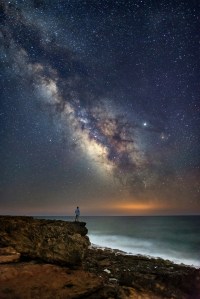
Yes, the wind blows colder now, teasing the last summer petals from their stems.
But oh, the sky!
“It was the golden time of year. Every day the leaves grew brighter, the air sharper, the grass more brilliant. The sunsets seemed to expand and melt and stretch for hours, and the brick façades glowed pink, and everything got bluer. How many perfect autumns did a person get?”
I analyzed the top 200 sci-fi films and tv shows every decade from the 1950s to present day. What I found was that sci-fi narratives from yesteryear were quite different from today’s stories….
Sci-fi is an amazing genre.
It helps us explore our feelings about the unknown, the future, and the possible. It lets us imagine “what if” scenarios, and then build out rich worlds that our minds can occupy. It depicts dystopias we should fend off and utopias we should seek – and it teases us with the scintillating possibility that humans may actually be able to build the world we want.
But over the last few generations, it’s been harder for us to imagine this better world – and our sci-fi reflects that.
And while that may be so, sci-fi is also a critical part of highlighting society’s important problems. That’s the first step to finding a fix.
“Awful first drafts are fine—Agree with this. If you don’t finish something, you’ll never get in the game. Just quell the voice in your head that says “Are you kidding? No one is going to want to read this drivel” and keep on going.”
Poor Monday. It gets a bad rap not because of what it is, but what we have made it. The first day of another round of school or work, forced to carry the weight of expectations, regrets and often just plain exhaustion.
It’s not Monday’s fault, it’s ours.
How can we do better?
By making sure that we are doing our best to stay sensible, as in balanced but also as in aware. For me, that usually means going outside.
I’m an introverted reader/writer type, so you know I think that being inside is great. There are comfy chairs and cuddly kitties and good books inside. There are mugs of hot chocolate and fun recipes and cake inside. But I always enjoy those things more when I’ve been out in nature.
This weekend Mr Man and I discovered two new hiking spots and had a great time out in the woods.
We had dinner with friends. They gave me a fun new mug that captured a lot of what I wanted to say about the weekend.
Sometimes it’s okay to take time off. And sometimes a break is more helpful than trying to power through and keep working.
Just because you can doesn’t always mean you should.
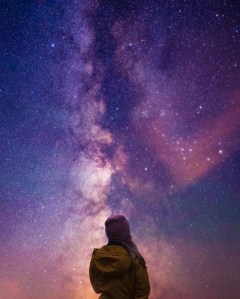
So I try to take a little time when possible, even if it’s a quick walk after lunch or remembering something transformative, like looking up at the stars and realizing that someone out there may be looking up at me too, or standing on the edge of a live volcano (Hawaiian, not Icelandic; stay safe, people!).
Then when I head back to work, even on a Monday, I’m better for it.
One of the best ways to understand art and think about developing your own abilities is to study those who came before. That applies to writers, musicians, painters and more. I’m going to go out on a pretty short limb and say that every master crafter out there had a “see Spot run” or “macaroni and string” phase.
The problem is that we don’t see that, we see their masterpieces. And that can be inspiring but also discouraging. How did they make the leap from macaroni to the Mona Lisa*?
That’s an excellent if somewhat off-base question. Because for most artists, that transition isn’t a leap at all. It’s more of a journey, and anyone can go on one of those. (Consider how often you hear someone being called an overnight success, and they laugh and say, “Yeah, but it took years.”)
Here’s an example from the art world.
Raphael is now considered one of the three great masters from the High Renaissance. (Leonardo da Vinci and Michelangelo being the other two, so he had a high bar to reach. My point is that he didn’t start out at the top.)
Where did he begin, how did he improve, and what lessons does his progress give to aspiring artists out there?
This video provides an in-depth look at the what, when and how of it all. Hopefully it can also provide some encouragement to anyone working to improve, regardless of their art form.
And while it’s true that talent helps and that there are child prodigies out there (looking at you, Mozart!), most who achieve excellence do it exactly the way you are doing it: setting goals, studying what works, and practice, practice, practice.
* A note on the title: I know that the Mona Lisa was Leonardo da Vinci’s masterpiece, and Raphael painted a lot of Madonnas, but given that titling this piece “From Macaroni to Madonna” seemed more likely to evoke ’80s pop music rather than classical art, I went with this instead. (Although to be honest, I’m feeling a little bad about this decision and may change it later!)
You must be logged in to post a comment.