Feeds:
Posts
Comments

Now that Suni Williams and Butch Wilmore are back on the planet after an unexpectedly long stint at the office (in space! because they’re astronauts!), we’re left with some important questions.

Like, what changes when you’re in space, physically speaking? How challenging is it when you come back to earth? How long does it take to adjust? And what exactly happens in their “comprehensive reconditioning process”?

For the answers to all this and more, check out How astronauts like Suni Williams and Butch Wilmore adjust when back on Earth.

“I was like, laying in bed. I had to go to the bathroom and I just started pushing off my back thinking, ‘I’m going to float to the bathroom.’ And the light was out and I’m pushing up and I roll out of bed,” he says.

Hehe:)

Here’s another take on the process, from former NASA astronaut Jack Fischer: Astronaut explains what a long space mission did to his body. He answers critical questions like “Can you have a beer right away if you wanted to?”

Inquiring minds want to know! (Short answer? Yes!)

There are certain upsides, physical…

The impacts of being in space, especially for long periods of time, on the body are still being studied. During a study conducted on astronaut twins Mark and Scott Kelly, researchers found that while Scott was on the ISS, he temporarily became two inches taller.

— NPR

…and mental…

“I went around the planet every 90 minutes. I saw everyone that was, is and will be on planet Earth.”

— Leland Melvin, Astronaut, NFL Player, Children’s Book Author 

Here’s to perspective!

* * *
How do I know when it is Spring? There’s the calendar, of course, and yesterday was the March Equinox, yay. But that’s not as reliable as some other indicators. Like what, you may ask?

It’s still too early for cherry blossoms or daffodils here, but there are other signs of spring.

For example:

  • Canada geese flying overhead? check
  • the season’s first roar of a motorcycle? check
  • melting snow in my yard? check
  • the Fish Doorbell up and running in the Netherlands? check! I haven’t seen any fish yet but it’s still fun. The migration has begun, so the lack of sightings are probably because I’m watching during work hours my time, which are snoozing hours for Dutch fish (do fish have nationalities? unique patterns of DNA by country? accents? so many questions!)

Happy Spring!

* * *

Day of Happiness

Is the world on fire? Yes, often literally, but that’s not all it is. The world is also astonishingly, incredibly, heart-achingly beautiful. 

Today is the UN’s International Day of Happiness, and I’m going to celebrate by remembering that there is so much to see, to love, and to support. 

Then I’m going to go do just that. 

While we’re at it, here’s the new World Happiness Report and its ranking of countries by happiness.

A key finding: “…people are much too pessimistic about the benevolence of others. For example, when wallets were dropped in the street by researchers, the proportion of returned wallets was far higher than people expected. This is hugely encouraging.”

Well, that makes me happy!

“We don’t have to engage in grand, heroic actions to participate in the process of change. Small acts, when multiplied by millions of people, can transform the world.”

— Howard Zinn

* * *

Thank Canada

Hey, all you sports fans out there! Enjoying March Madness? Thank this Canadian from Almonte, Ontario.

How a Gym Teacher Invented Basketball

He thought hard, going over the philosophy of sports, considering what made games popular, grasping for how he could invent a new principle that wasn’t already steeped in tradition. And finally, he had a lightbulb moment.

“I can still recall how I snapped my fingers and shouted, ‘I’ve got it!’”

For more on Dr. James Naismith and his game, bounce on over to the Naismith Basketball Foundation.

* * *

Recently announced, here are the finalists for this year’s Nebula Awards! I don’t know about you, but I could use some alternate worlds to explore.

From MetaFilter, links for most stories in the short story and novelette categories:

Nebula Award for Novelette

Nebula Award for Short Story

See the complete list here: SFWA Announces the 60th Annual Nebula Awards® Finalists!

* * *

Happy St. Patrick’s Day to all! One great thing about this holiday is that you don’t need to be Irish to enjoy it. Find a green shirt in your closet, break out the food coloring and drink green drinks and eat green foods, and have a fun day.

But hang on, what’s this? The day hasn’t always been about having fun or the color green? 

The Color of St. Patrick’s Day – Atlas Obscura

St. Patrick’s Day usually conjures images of partying, Catholicism, Irish nationalism and, perhaps most famously, the color green: green clothes, green shamrocks, green beer, and green rivers.

So my students are often surprised when I tell them that St. Patrick’s Day was once a solemn feast day when you’d be far more likely to see the color blue. In fact, there’s even a color known as St. Patrick’s blue.

Have to say, I prefer our modern version.

I was also surprised to learn that St. Patrick wasn’t Irish, or named Patrick.

He wasn’t Irish; rather he was born in Wales, the son of a Roman-British official. He was, however, captured by Irish pirates and enslaved in Ireland. After six years he went back to Britain but returned to Ireland as one of the missionaries to convert Irish pagans to Christianity. At some point he adopted the Latin name Patricius.

And so, after a bit of piracy, a name change, and the appropriation of a solemn holiday for patriotic and community-building purposes, here we are.

To the long tail of unintended consequences. Enjoy!

* * *

Title says it all. I like the idea of taxes because I like what they buy me (civilization, basically), but the paperwork is a drag. 

Here’s hoping your tax season is going faster than mine!

* * *

“Don’t throw any of yourself away. Don’t worry about a grand scheme or unified vision for your work. Don’t worry about unity — what unifies your work is the fact that you made it. One day, you’ll look back and it will all make sense.”

— Austin Kleon

* * *

A Simple Act

If you’re stuck on a problem, don’t sit there and think about it; just start working on it. Even if you don’t know what you’re doing, the simple act of working on it will eventually cause the right ideas to show up in your head.

— Mark Manson

* * *

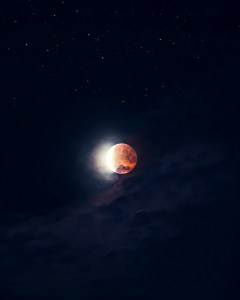
Red Moon Rising

Tonight, a little astronomy-related drama!

North America will have a blood worm moon this week. Here’s how you can see it

Late Thursday night or Friday early morning, North Americans with clear skies can look up to see a full moon with a beautiful reddish hue. 

What to know about March’s full “Blood Worm Moon,” a total lunar eclipse

March’s full moon, known as the Worm Moon, will pass into Earth’s shadow on the night of March 13, or early on March 14, depending on the time zone, according to NASA. This eclipse will be visible from Earth’s Western Hemisphere.

While the peak of the eclipse will happen in the middle of the night (my time, at least), we should be able to see the event begin as the red(dish) moon rises around 7pm. 

Why red? The color can vary based on the Moon’s path and the Earth’s atmosphere. The shade is measured on the Danjon Scale, which is a thing I hadn’t heard of but absolutely needed to know!

Danjon Scale of Lunar Eclipse Brightness

Earth’s atmosphere contains varying amounts of water (clouds, mist, precipitation) and solid particles (dust, organic debris, volcanic ash). This material filters and attenuates the sunlight before it’s refracted into the umbra. For instance, large or frequent volcanic eruptions dumping huge quantities of ash into the atmosphere are often followed by very dark, red eclipses for several years. Extensive cloud cover along Earth’s limb also tends to darken the eclipse by blocking sunlight. 

And for fun: Capri Sun Releases a Glow-in-the-Dark Moon Punch

Not fun but interesting: This week’s ‘blood moon’ eclipse mirrors one Christopher Columbus used to scare indigenous people in 1504

Enjoy. I’m hoping for an L3 on the Danjon scale!

* * *