Feeds:
Posts
Comments

Posts Tagged ‘#365Ways2021’

This is a lovely piece about a ship, a bird, and making the most of even trying circumstances. It’s a message I think we could all use right about now:)

What a Songbird Lost at Sea Taught Me About Survival | Audubon

She has reminded me that all of us can find ourselves lost. Winds don’t only carry songbirds to sea.

And here, floating atop this undulating unknown, Homeslice reminds me I am still on Earth. There is air and water, light and dark, and there is life in all forms, including restless humans, migrating birds, and the symbiotic methane-fueled fan worms discovered on our trip. Including even the sort-of-living viruses that plague us. We travel the wind, walk on land, float in currents, or remain anchored in sediment. We’re all surviving on this spinning island in the cosmos. And there’s more than one way to survive, even at the bottom of a sea of Mondays.

* * *

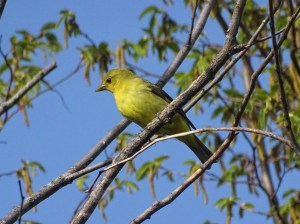
Female Scarlet Tanager, Ottawa, ON
Matt Osborne, CC BY-SA 4.0, via Wikimedia Commons

Read Full Post »

A few days ago I talked about finding ideas, and even better, how to find good ideas. But what comes after that? After a writer sifts through the mountain of “not bad” and “ok” and even “pretty good” ideas and finds the one that is worth investing in, what comes next?

Because that’s what you’re doing, investing your time, energy, creativity, and care into this little story seed. How can you give it the best chance to grow up healthy and strong?

* * *

Elizabeth Bear has a useful piece out about taking ideas to the next level:

A post office box in Schenectady.

“I used to despair of coming up with A Great Idea. Eventually I discovered that the way to make my not-so-great ideas better is to keep asking more complicated questions about them.”

For writing in general (and as previously discussed), a good first step is to check out Techniques of the Selling Writer by Dwight V. Swain

Once you’ve done that, what’s next? I moved on to Stein on Writing.


And what do you know, I roughed out notes for that book too. If you’re interested, check out the PDF below!

* * *

And when it comes right down to it, this is some of the best advice on creativity I’ve seen:

can’t find the original post/s but here is a screenshot that was living under a digital rock in my computer files, next to many other fascinating and under-utilized resources

* * *

And to be clear, yes, I like sparkle:)

Photo by 3Motional Studio on Pexels.com

Read Full Post »

What kind of day is it today? Cool, a bit busy, with rain and a chance of taxes. The kind of day where it’s nice to find warmth: a hot beverage, a fleece vest, or kittens, even if they are virtual:

Kitten Rescue Cat Cam

* * *

Kittens not your thing? (Honestly?) Explore.org has dozens of other live cams for you, like NestFlix or ZenCams

Or puppies. Because who doesn’t like puppies? (Cue obligatorily adorable puppy shot!)

* * *

Photo by sergio souza on Pexels.com

You’re welcome:)

Read Full Post »

Yesterday’s post has me thinking of Spring.

Maybe I should be thinking about new projects and ways to be productive, but I’m about to go get a Covid test and I’ve got work to do and it’s lunchtime, so instead I’m thinking about food.

Today that means I’m thinking about stuffed grape leaves. Our neighbor has a grapevine that has reached out to us and now covers a significant part of the fencing in the back. The vine is starting to bud and soon we’ll have new growth. 

My culinarily-talented brother gave me this recipe years ago. I love citrus so I serve these with egg-lemon sauce, but adjust as you like.


* * *

Stuffed Grape Leaves

2 lb. ground lamb
1 large onion
⅓ cup tomato paste
½ tsp. each thyme, basil, garlic powder
1 tsp. each oregano, dillweed, salt
1 cup cooked rice
1½ oz. Pernod
Grape leaves (canned or bottled)

  1. Dice onion and sauté in a little butter until tender. Add tomato paste, then lamb, stirring constantly as it cooks.
  2. When lamb is almost cooked through, remove from heat, add spices, then stir in rice and Pernod.
  3. Drain excess fat and refrigerate until use.
  4. To assemble, lay out a grape leaf with the stem pointing toward you. Place a spoonful of stuffing at the bottom of the leaf, and roll leaf around it, working away from you. Tuck in the sides of the leaf as you go.
  5. Heat in microwave for a minute or two just prior to serving. May be dressed with fresh lemon juice or egg-lemon sauce.


* * *

Photo by David on Pexels.com

Read Full Post »

(Being me, I couldn’t resist a Hobbit reference, but this post is about migratory birds in general. No Goblins allowed!)

* * *

We’ve still got two feet of snow on the lawn but the signs of Spring are everywhere. Melting ice, the smell of skunk in the night, and Canadian teenagers in shorts and T-shirts (it is above freezing, after all). And soon, the birds will be back. Last evening I heard a flock of Canada geese heading for the river, and they aren’t the only avian adventurers heading our way.

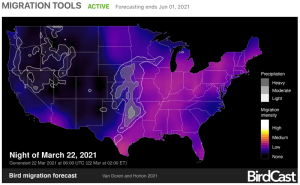
If you are interested in the when and where of bird migrations, you’re in luck. From now through the end of May you can track migration forecasts, get location-based alerts, and learn more about what’s happening in Birdlandia. 

BirdCast – Bird migration forecasts in real-time

* * *

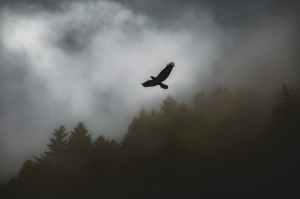
And as for those eagles, and other birds of prey? Check out this story about a suffragist and bird lover who established Pennsylvania’s Hawk Mountain Sanctuary in 1934. It’s an incredible place, and is why I am lucky enough to know what it’s like to watch from the edge of a stone outcropping while hawks ride the thermals mere feet away.

Breathtaking.

How Mrs. Edge Saved the Birds | Smithsonian Magazine

The abundance of raptors at North Lookout owes a great deal to topography and wind currents, both of which funnel birds toward the ridgeline. But it owes even more to an extraordinary activist named Rosalie Edge, a wealthy Manhattan suffragist who founded Hawk Mountain Sanctuary in 1934. Hawk Mountain, believed to be the world’s first refuge for birds of prey, is a testament to Edge’s passion for birds—and to her enthusiasm for challenging the conservation establishment. Bold and impossible to ignore, she was described by a close colleague as “the only honest, unselfish, indomitable hellcat in the history of conservation.”

* * *

A story from that trip, with recipe:

Mrs. Shaw’s Chakchouka

(adapted from The New York Times Large Type Cookbook)

Notes from my father: Here’s the best story I have about this recipe; this happened at Hawk Mountain. We were there to see the raptor migrations in October. We were camping at a nearby state park and it was freezing, in fact it snowed. We were cooking chakchouka for 4 in a big pan over a Coleman stove. Right near the end of the cooking we picked up the pan to serve everyone and it tipped and spilled a large part of dinner into the dirt. You two were off running around in the woods somewhere, so we both looked at each other and then at dinner in the dirt, looked back at each other, then brushed the dirt off and put it all back in the pan. It was actually still pretty good. You know in statistics “robustness” means that you can violate the rules a lot and the results still hold, so you could say that this is a very robust recipe.

  • 3 links Italian sweet sausage, cut into 1-inch pieces
  • 2 Tbs. olive oil
  • 2 onions, finely chopped
  • 2 cloves garlic, minced
  • 1 green pepper, diced
  • 1 tomato, diced
  • 2 potatoes, diced
  • 1 cup water
  • Salt and pepper
  • 3 eggs, lightly beaten
  1. Sauté sausage pieces in a large skillet until browned.
  2. Add olive oil, onions and garlic and cook 3 minutes.
  3. Add green pepper, tomato and potatoes and cook 2 minutes longer.
  4. Add water and allow mixture to simmer, uncovered until potato is tender. Season with salt and pepper.
  5. Stir in eggs and continue to cook, stirring, until eggs are done, about 2 minutes. Garnish as desired.

Serves 4.

* * *

Photo by Tim Mossholder on Pexels.com

Read Full Post »

I came across this sentence a while back: 

“Please bear in mind that Somaliland has no Postal Service” 

Think about that.

Forget complaints about the cost of stamps rising by however many cents, or the extra day it took for your first class letter to reach Hawai’i. There are places on Earth with no postal service at all.

Want to mail a letter? Too bad. Want to send in your rent or mail tax forms or vote? Sorry. And if you want to do something crazy like send in a patent application or submit to Fantasy & Science Fiction, you are out of luck.

“Talent is equally distributed, opportunity is not.”

— Harvard, Stanford, and MIT Researchers Study 1 Million Inventors To Find Secret To Success, And It’s Not Talent
Photo by Elizabeth Kay on Unsplash

* * *

I’ve mentioned my love of the mail system and other vital public infrastructure before. 

Adventure, Past and Future | J.R. Johnson

Even beyond the immediate usefulness, I find the concept of a system that ties us all together inspiring. Sure, the internet is obviously taking up a lot of that space (in ways both good and bad) but I also believe that there is also real value in its physical equivalent. 

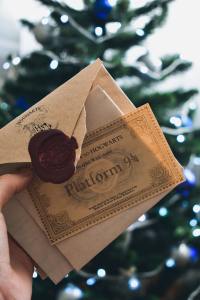
I mean, Owl Post is great and all, but consider the Muggles.

* * *

Read Full Post »

Yesterday’s post was a long one and right now, the federal tax institutions of two countries are calling my name. Also my wallet.

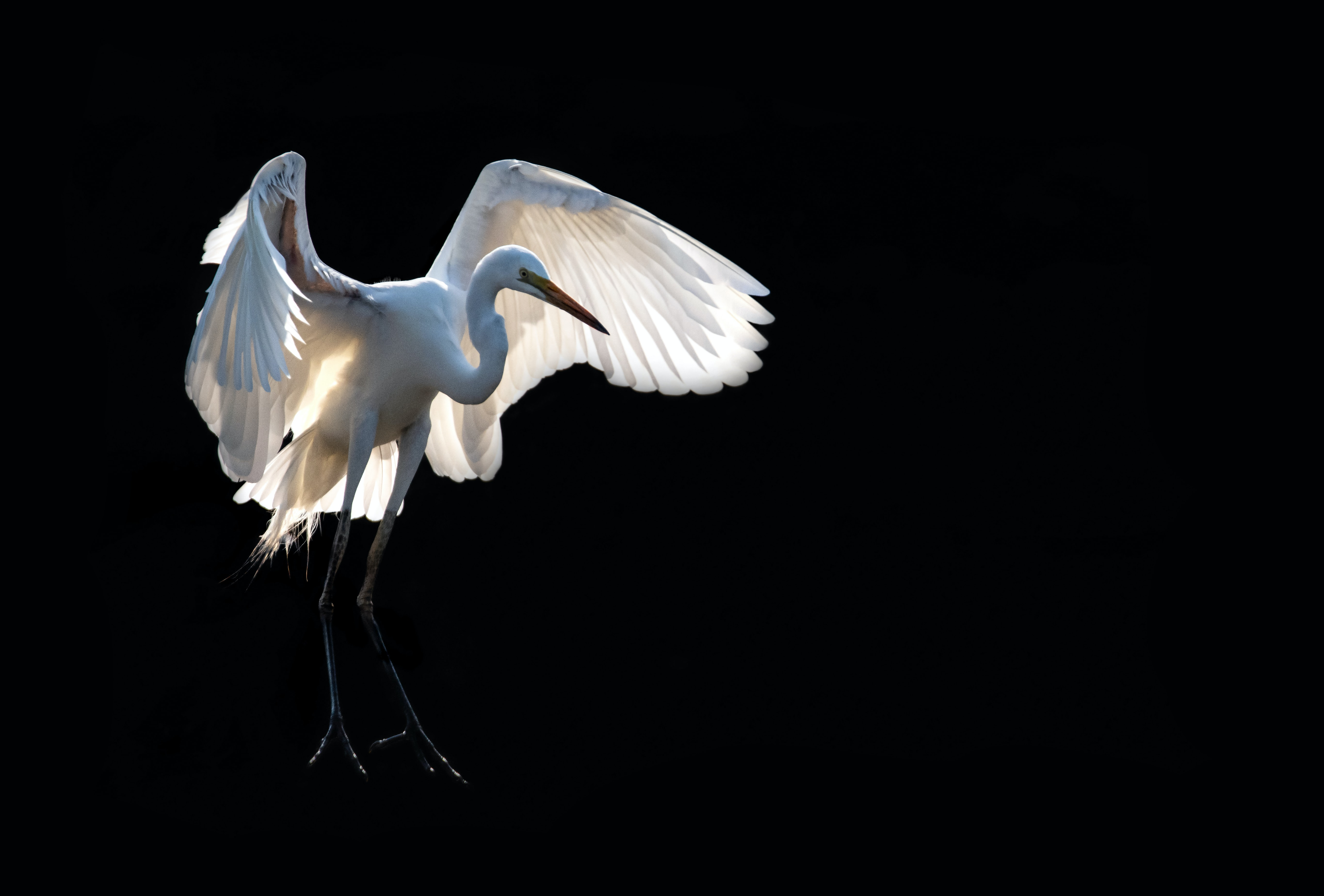
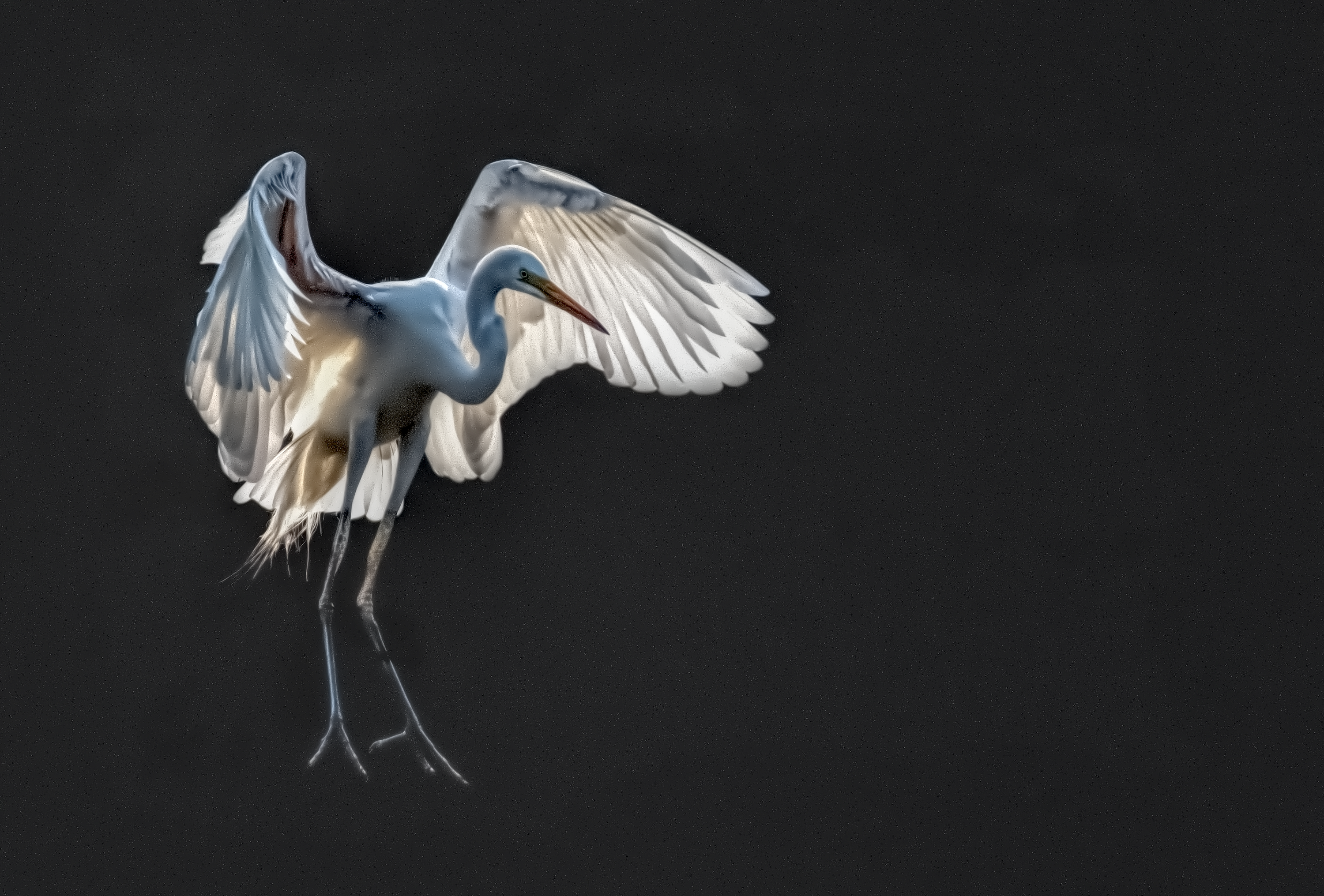
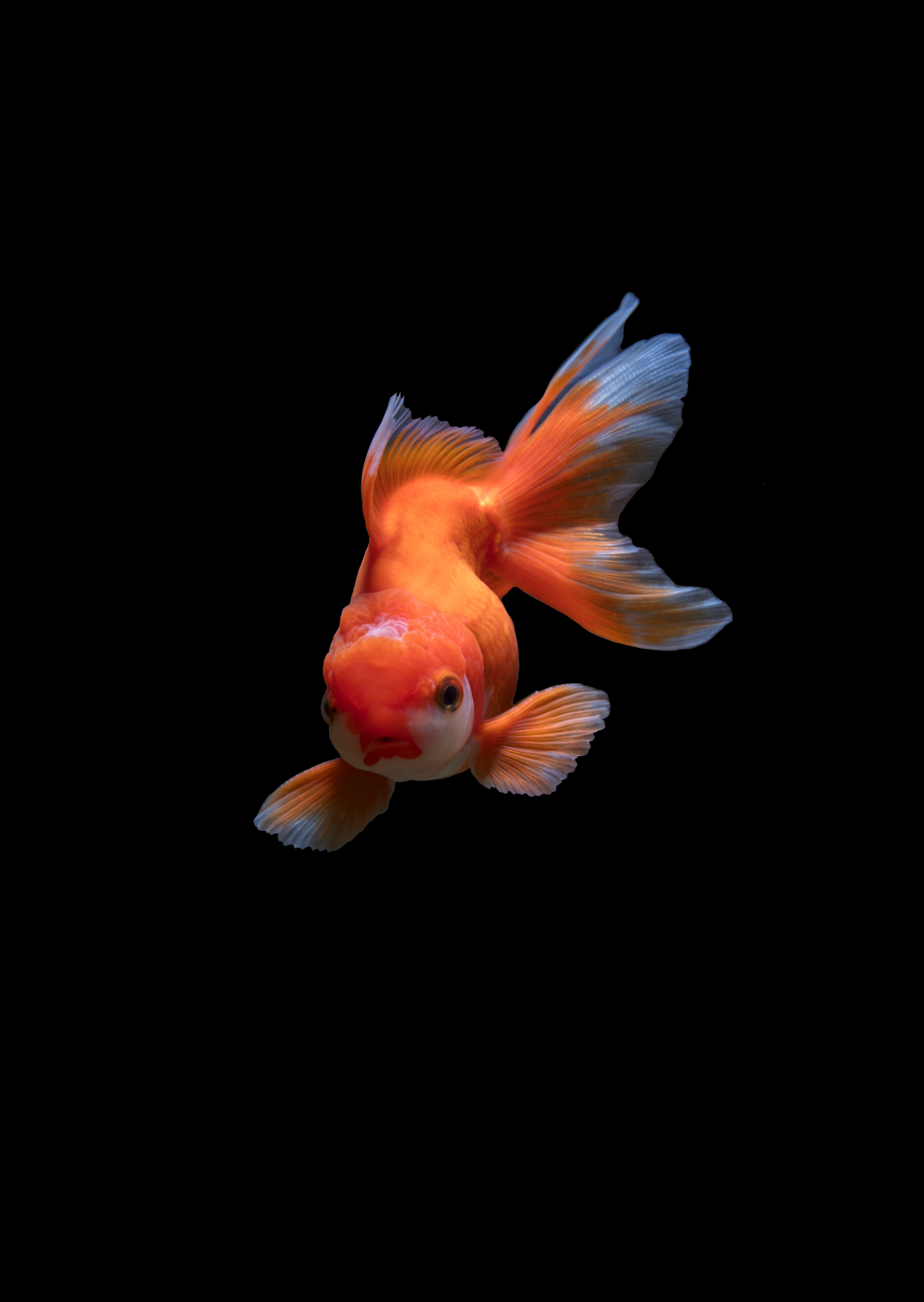
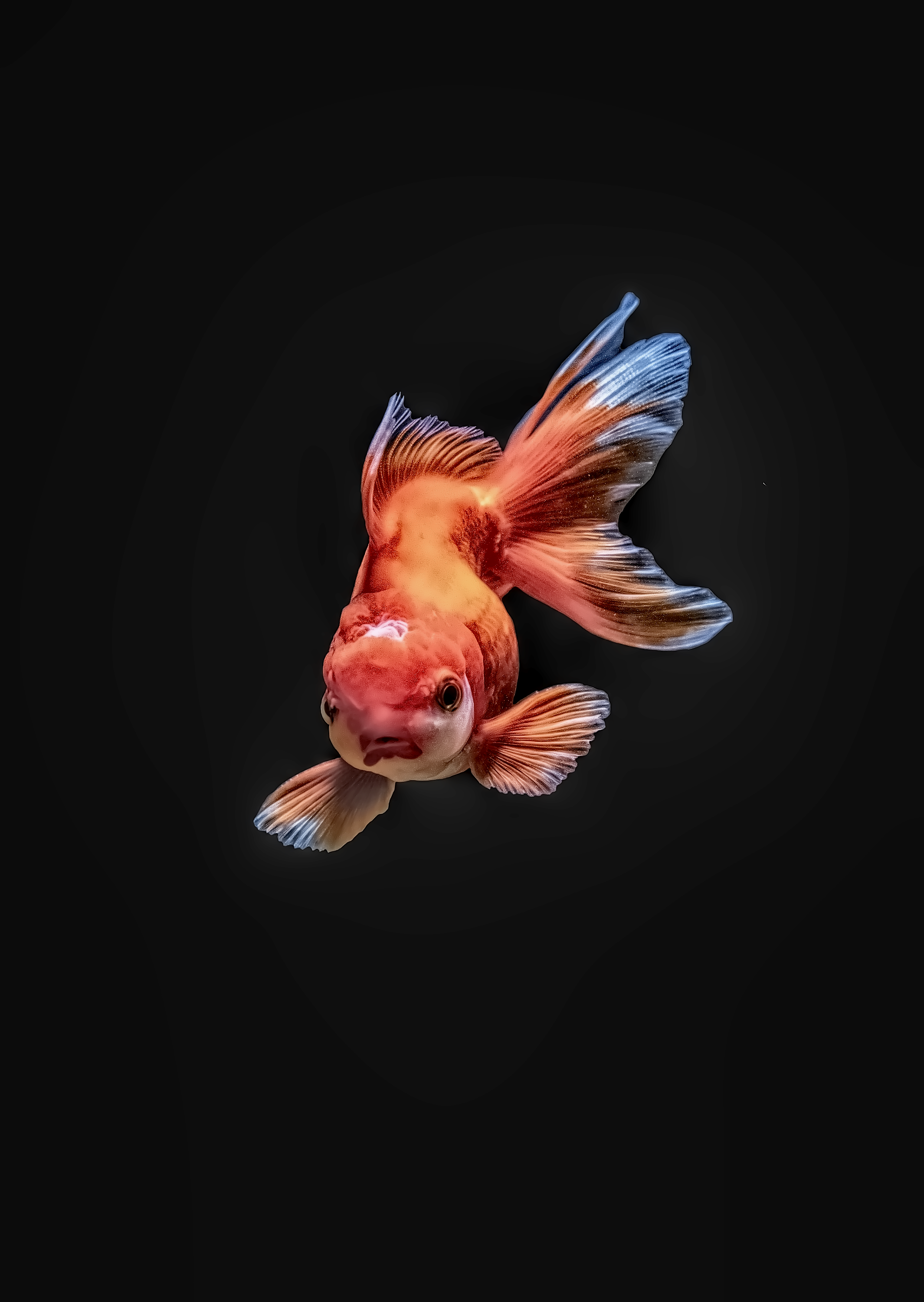
So today we have a technique using Affinity Photo to make a picture look more like a painting. Compare the original vs. modified versions below and you’ll see that the method isn’t exact, but it’s a quick and easy way to take the edges off reality.

(And the way taxes usually go, that will probably come in handy;)

* * *

Original Photo by David Clode on Unsplash
Original Photo by zhengtao tang on Unsplash

* * *

Also, I like birds and fish. Enjoy your weekend!

Read Full Post »

My little brother just got his first shot. I can’t tell you how happy I am that he and his wife are one step closer to full protection.

As discussed in many venues in recent months,* the path to the Covid-19 vaccines has been convoluted. And not only does our health and safety rest on the shoulders of scientists who spent most of their careers in under-rewarded obscurity** but the history of vaccines is even more complicated than it may at first seem.

* * *

The past year has been a nightmare, but I am incredibly grateful that we haven’t had to deal with a disease like, say, smallpox. Wildly contagious with a fatality rate of about thirty percent, for most of human history this disease was unstoppable. It spread within communities and also, devastatingly, between locations (like 17th century Europe and North America).

Thanks to a concerted international effort and global vaccination campaign, by 1980 smallpox was eventually eradicated. Thank you, science! And now we’re tackling our own pandemic with the power of vaccination. How did we get here?

* * *

The history of vaccination usually starts something like this:

One of the first methods for controlling smallpox was variolation, a process named after the virus that causes smallpox (variola virus)… The basis for vaccination began in 1796 when the English doctor Edward Jenner noticed that milkmaids who had gotten cowpox were protected from smallpox. Jenner also knew about variolation and guessed that exposure to cowpox could be used to protect against smallpox.

— History of Smallpox | CDC

What caught my eye about this bit in particular was “variolation.” Who, I wondered, was behind the initial work? I’m always interested in the beginnings of things. Who worked out how to eat a poisonous plant like cassava, for example? In this case, where did the idea of inoculation come from? What of the giants on whose shoulders we stand?

Practitioners in Asia worked out the method, and by the 1700s it had spread to Africa, India and the Ottoman Empire. Next stop, North America, by way of the slave trade.*** Here’s a version of that story in graphic form:

* * *

At the same time, a smallpox epidemic devastated England. An English Lady (yep, capital L), Lady Mary Wortley Montagu, brought information about inoculation back with her from the Ottoman Empire, where female medical professionals practiced a variation of the technique:

An Old Effort To Stop The Smallpox Virus Has Lessons For COVID-19 Today

Unfortunately, “European doctors were aware of what the Ottomans and others were doing but they refused to believe it worked. At the time, “Europe was pretty isolated and it was fairly xenophobic”…”

Lady Mary’s efforts came up against (stop me if you’ve heard this one) prejudice, xenophobia, and the perverse financial incentives of the medical profession.

“I am patriot enough to take the pains to bring this useful invention into fashion in England.” But in the next breath, she expressed contempt for British doctors, who she believed were too preoccupied with making money: “I should not fail to write to some of our doctors very particularly about it, if I knew any one of them that I thought had virtue enough to destroy such a considerable branch of their revenue, for the good of mankind.”

— Lady Mary Wortley Montagu

Even so, she had a positive impact, not least on one particular individual:

…the technique she’d borrowed from Ottoman women did take hold in England. Many thousands were inoculated, including a young boy named Edward Jenner. He went on to develop the first vaccine, also against smallpox.

— An Old Effort To Stop The Smallpox Virus Has Lessons For COVID-19 Today

* * *

So here’s to the unsung heroes who took the first steps into the unknown, the practitioners lost to history, and those who passed their knowledge down in the hopes that we would use it to build something better, like the slave who shared what he knew and the aristocrat who used her status for good. 

“One takeaway for everyone, whether it be scientists or nonscientists, is that we’re not nearly as smart as we think we are,” he says. “We have much we can learn from others.”

— An Old Effort To Stop The Smallpox Virus Has Lessons For COVID-19 Today

* * *

* Here are a couple of articles if you’re interested in the background: How mRNA went from a scientific backwater to a pandemic crusher and How mRNA Technology Gave Us the First COVID-19 Vaccines.

** That really should change, and I hope the Nobel Prize Committee agrees with me. Katalin Karikó, Ugur Sahin and Ozlem Tureci in particular come to mind.

*** No, I’m not happy about this either, but I am very grateful that Onesimus was willing to share.

* * *

vials of Covid-19 vaccine
Photo by Daniel Schludi on Unsplash

Read Full Post »

There are a lot of ways to write, and a lot of types of writing. Fiction alone comes in novels, of course, but also novellas, novelettes, short stories, screenplays, etc. I happen to have a soft spot for the drabble.

drabble is a piece of fiction that is exactly 100 words long, excluding title. Explore the history of it at that link if you like, but for me the important part is the constraint.

One hundred words, no more, no less. 

It’s an easy number of words to produce, of course, but there’s something I find so satisfying about trying to build a story within the confines of such a concrete target. The limits inspire creativity, make finishing feel not only possible but inevitable, and provide a sandbox to play in, if you will.

It’s also a terrific way to dip your toes in the rapids of fiction. My first two publications were drabbles (thanks, Luna Station Quarterly!):

Ray of Light.”
The Witch.”

Go ahead, try it for yourself. And have fun!

* * *

This is my latest drabble, “Adoption Papers.”

I was sixteen when I found the receipt. My receipt.

“What the hell, Dad?”

The paper was old and faded, one tattered corner poking from a manila folder marked “Family Records.” There were maybe ten lines on the page, with a stamp at the top that read “Beta: Final Sale.”

Dad shrugged, like it was no big deal.

“Are you pissed that you’re a bot, or that you didn’t cost more?”

I hadn’t even noticed the total. 

“Twelve and a half bucks? Seriously?”

He smiled. “We always said you were special.”

“Not on special!” 

I blinked. 

“Wait, I’m a what?”

* * *

Photo by Alex Knight on Pexels.com

Read Full Post »

Happy St. Patrick’s Day! We won’t have a night out at the pub or parades but Chicago went ahead and dyed the river green to cheer people up. Good for them. 

* * *

I’m remembering a family trip to Ireland, all of us crowded into a van that barely fit on most of the roads. It rained half the time, it was cold, and I’m never going to like blood sausage, but that paled in comparison to the overall experience.

Driving down tunnels of arched trees and rolling landscapes of the brightest, most verdant greens. Hiking through castle ruins, watching the ocean from Dingle’s shores, sleeping in a convent, the people, the music, and of course, the beer.

So here’s to my Irish relatives! Thanks for letting us share your charm, humor, stories, and of course, beer;) We’re the lucky ones.

* * *

Photo by Harris Vo on Unsplash

Read Full Post »

« Newer Posts - Older Posts »