Feeds:
Posts
Comments

Posts Tagged ‘astronomy’

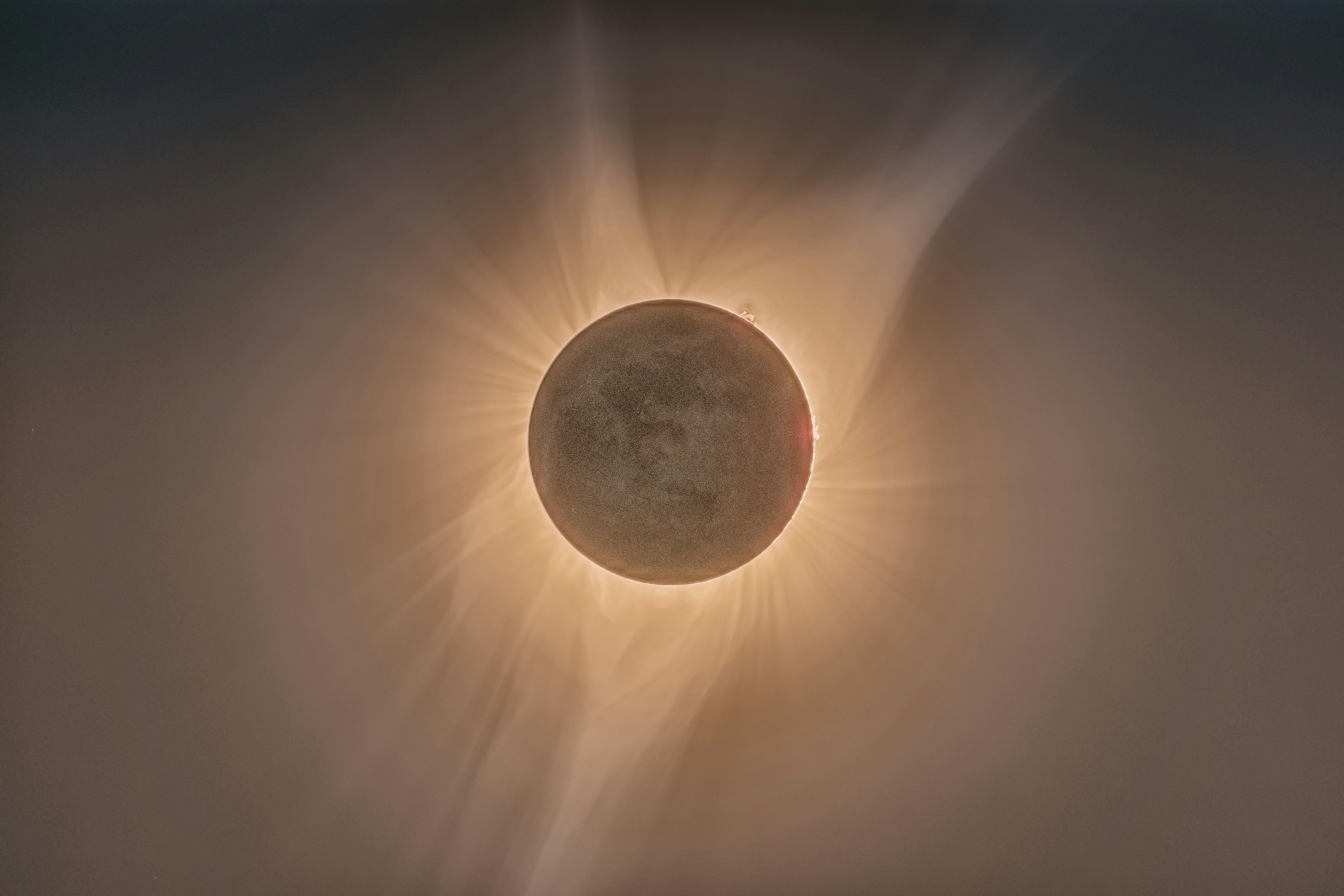
By now you have probably heard that there will be a full eclipse of the Sun on April 8th. (If you haven’t, this is your public service announcement. The world is not ending and the Sun will return to its place in the sky. No wolvesdragons or demons are involved. The gods of sun and light just need to slip out for a quick break.) The next time this will happen in the contiguous US won’t be until 2044.

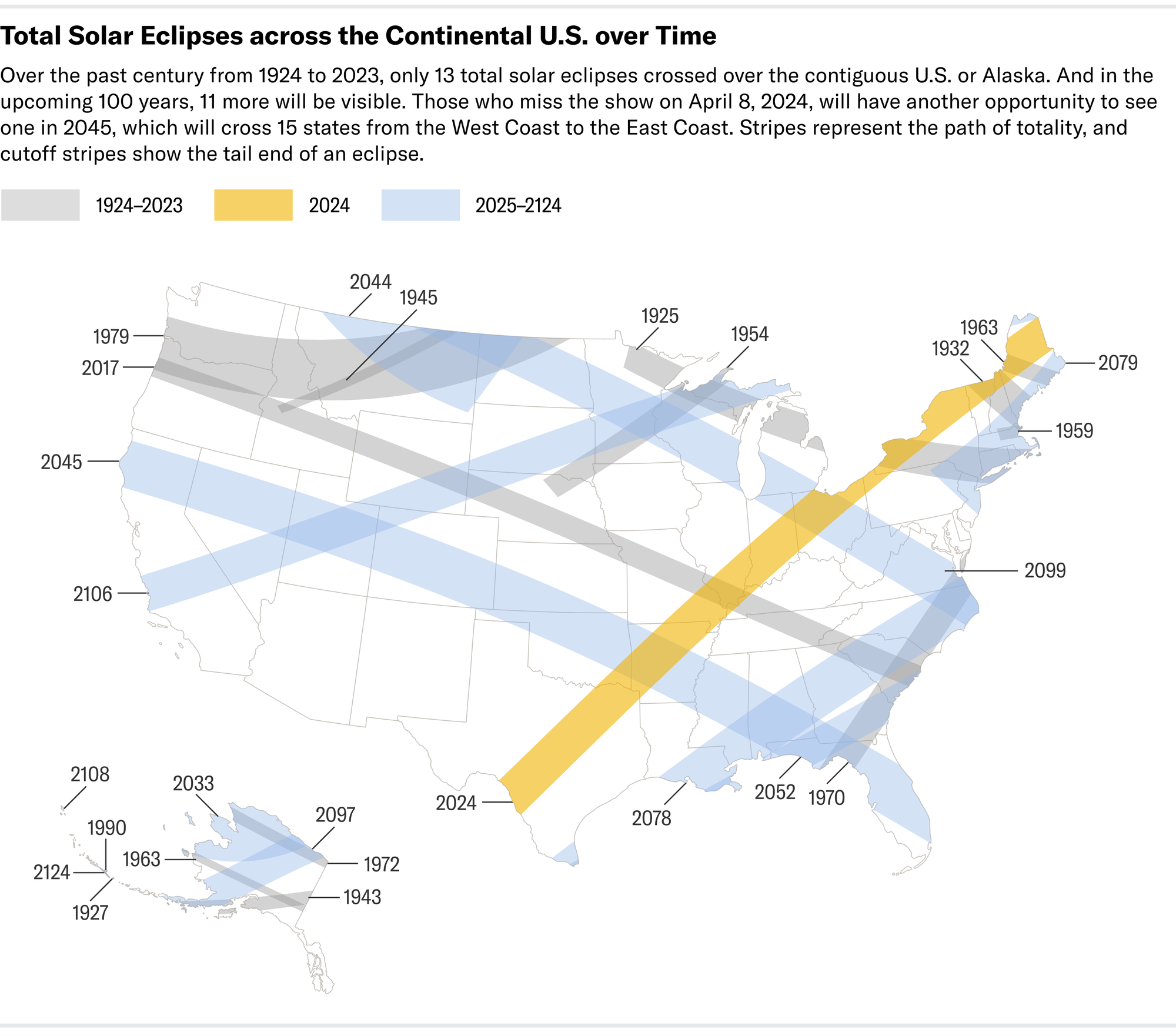
Millions of people will be able to view the eclipse. Here’s a map of the eclipse path:

NASA Eclipse Explorer

Keep in mind, of course, that even those outside the path of totality will be able to view a partial eclipse. 

When will it happen? Here’s a table, with another map. Because I like maps.

Total Solar Eclipse on April 8, 2024 (Great North American Eclipse )

If you will be able to view this super cool space phenomenon, then you’ll want to get your hands on some eclipse glasses.

How safe are your solar eclipse glasses? Cheap fakes from online marketplaces pose a threat, supply-chain experts say

Of course, we now know that the Sun isn’t really eaten during an eclipse. Instead, it does what it always does: rain ultraviolet rays on everything in its path. That’s why you should never look at a solar eclipse without protective eyewear.

And if you are in charge of kids on April 8th (or adults, we should have sciencey fun too!) consider the ideas in this article:

How Schools Can Turn the Solar Eclipse Into an Unforgettable Science Lesson

If the weather cooperates, science students of all ages could be in for quite a show on April 8. The first sign will be a sudden temperature drop. The sky will darken, and winds will shift. A dark shadow will appear on the horizon. Faint waves of light may waft across the ground. A ring of bright light will shine from the outer edges of the otherwise darkened sun. Then the moon will cover the sun completely and, for a few seconds, a thin red layer may appear around its outer rim.

And just for fun, here’s a little something for your ears, too:

Listen to the Eclipse Song Made by the Sound of Light of an Eclipse

Ok, that’s a little edgy. But still fascinating!

* * *

Photo by Bryan Goff on Unsplash

Read Full Post »

Want to see a rare astronomical event tonight? (And really, why wouldn’t you?)

The extremely rare Betelgeuse occultation by asteroid (319) Leona

For a very short time, we will see the legendary Orion constellation without its famous, orange shoulder, as it will be in the distant future, once Betelgeuse will have exploded as a supernova and faded to black.

Hey, I like Orion! What’s this all about?

Watch an asteroid eclipse the puzzling red giant star Betelgeuse tonight live online

At at 8:17 p.m. EST Monday (Dec. 11) (0117 GMT, Dec. 12), an asteroid will pass in front of the curious red star Betelgeuse, eclipsing it from our vantage point here on Earth and blocking it from view for up to 15 seconds in an event known as an occultation. The asteroid is known as 319 Leona, a main belt object that orbits the sun between Mars and Jupiter. Shaped roughly like an egg, 319 Leona measures some 50 by 34 miles (80 x 55 kilometers) in size.

Here’s a link to live coverage of the event.

So Orion’s loss is temporary, and will also help scientists better understand both the asteroid’s shape and the star’s characteristics. No Tim Burton movie required!

* * *

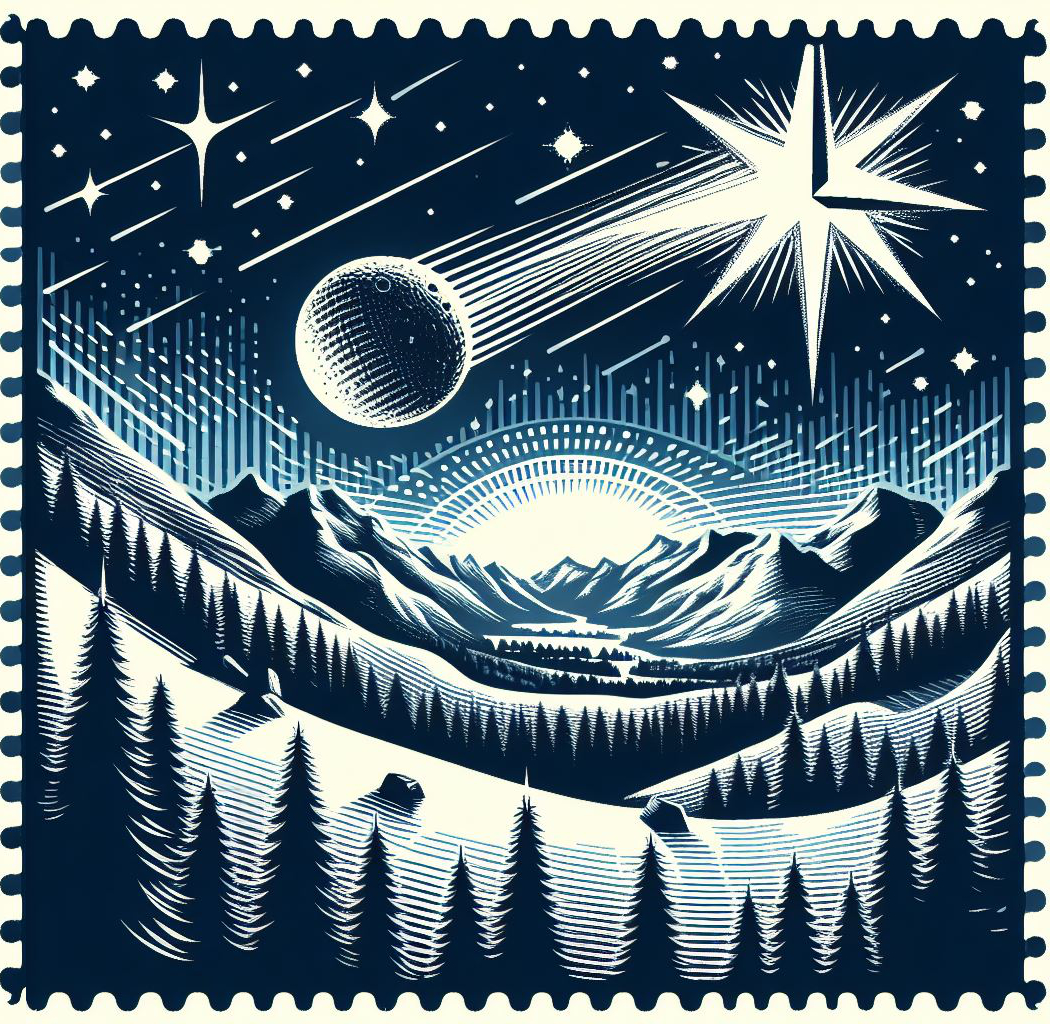
via Microsoft Image Creator: graphic illustration stamp of a star over mountains in winter, with a passing asteroid

Read Full Post »

Why isn’t there any sound in space? An astronomer explains why in space no one can hear you scream

In space, no one can hear you scream.

You may have heard this saying. It’s the tagline from the famous 1979 science fiction movie “Alien.” It’s a scary thought, but is it true? The simple answer is yes, no one can hear you scream in space because there is no sound or echo in space.

I’m a professor of astronomy, which means I study space and how it works. Space is silent – for the most part.

University of Arizona Distinguished Professor of Astronomy Chris Impey explains the science behind the Alien tagline, showcases slinkies as sound waves, and discusses why humans can’t speak across space but phenomena like galaxies and black holes can.

Also, a fun fact I did not know: “The word vacuum comes from the Latin word for empty.”

* * *

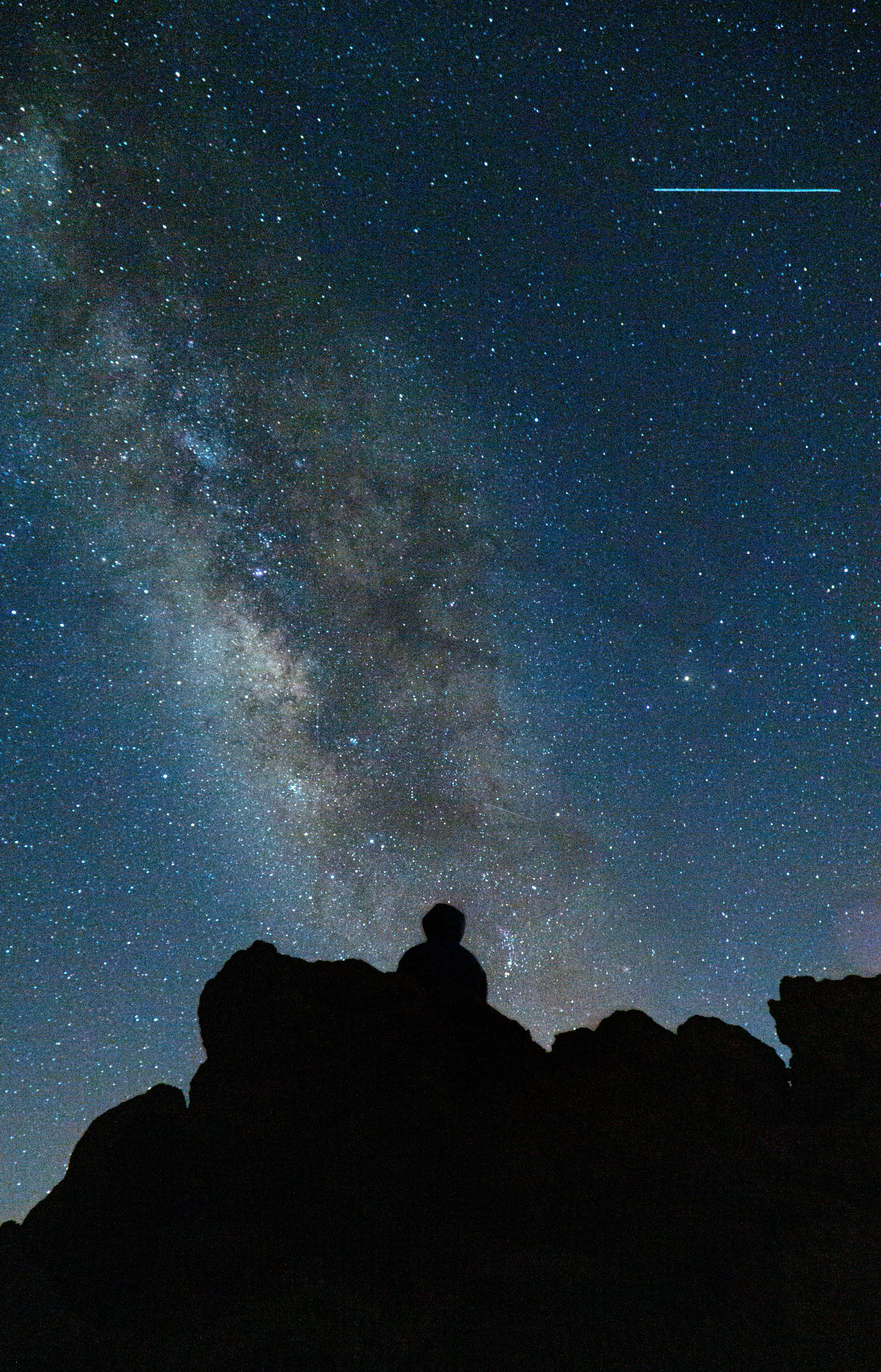
Photo by Susan Wilkinson on Unsplash

Read Full Post »

What’s happening in the night skies this month? I have no idea, actually, but this calendar does!

Astronomy Calendar for December, 2023 for Ottawa, Canada

Welcome to NightsOnEarth.com, a customizable, free astro-calendar to help you plan your stargazing, created by photographer Phil Mosby.

Click on any day and then on Settings to specify your location.

What’s this? The Pheonicid Meteor Shower will be visible starting tomorrow night and showcases meteors seemingly coming from the Phoenix constellation?

Cool cool cool. And what’s the Phoenix constellation? (Clicks on “learn more” and voila: Pheonicid meteor shower 2023).

Although that particular arrangement of stars isn’t saying phoenix to me so much as… curling stone.

* * *

Photo by Sebastian Knoll on Unsplash

Read Full Post »

It’s that time again. If you are in the northern hemisphere on planet Earth, today is the Fall Equinox.

Autumnal Equinox 2023: First Day of Fall | Facts, Folklore & More | The Old Farmer’s Almanac

After the autumnal equinox, days become shorter than nights as the Sun continues to rise later and nightfall arrives earlier. This ends with the winter solstice, after which days start to grow longer once again. 

The word “equinox” comes from Latin aequus, meaning “equal,” and nox, ”night.” On the equinox, day and night are roughly equal in length.

Why just “roughly” equal in length?

Why day and night aren’t equal length on an equinox

Firstly, the sun has a size—it’s not just a point in the sky.… Secondly, the Earth’s atmosphere refracts (bends) sunlight.

What does the ebb and flow of axial luminescence look like from space?

NASA: Seeing Equinoxes and Solstices from Space

For more on the “why” of seasons, check out this explainer:

What Causes the Seasons? | NASA Space Place

* * *

Photo by Alicia Petresc on Unsplash

Read Full Post »

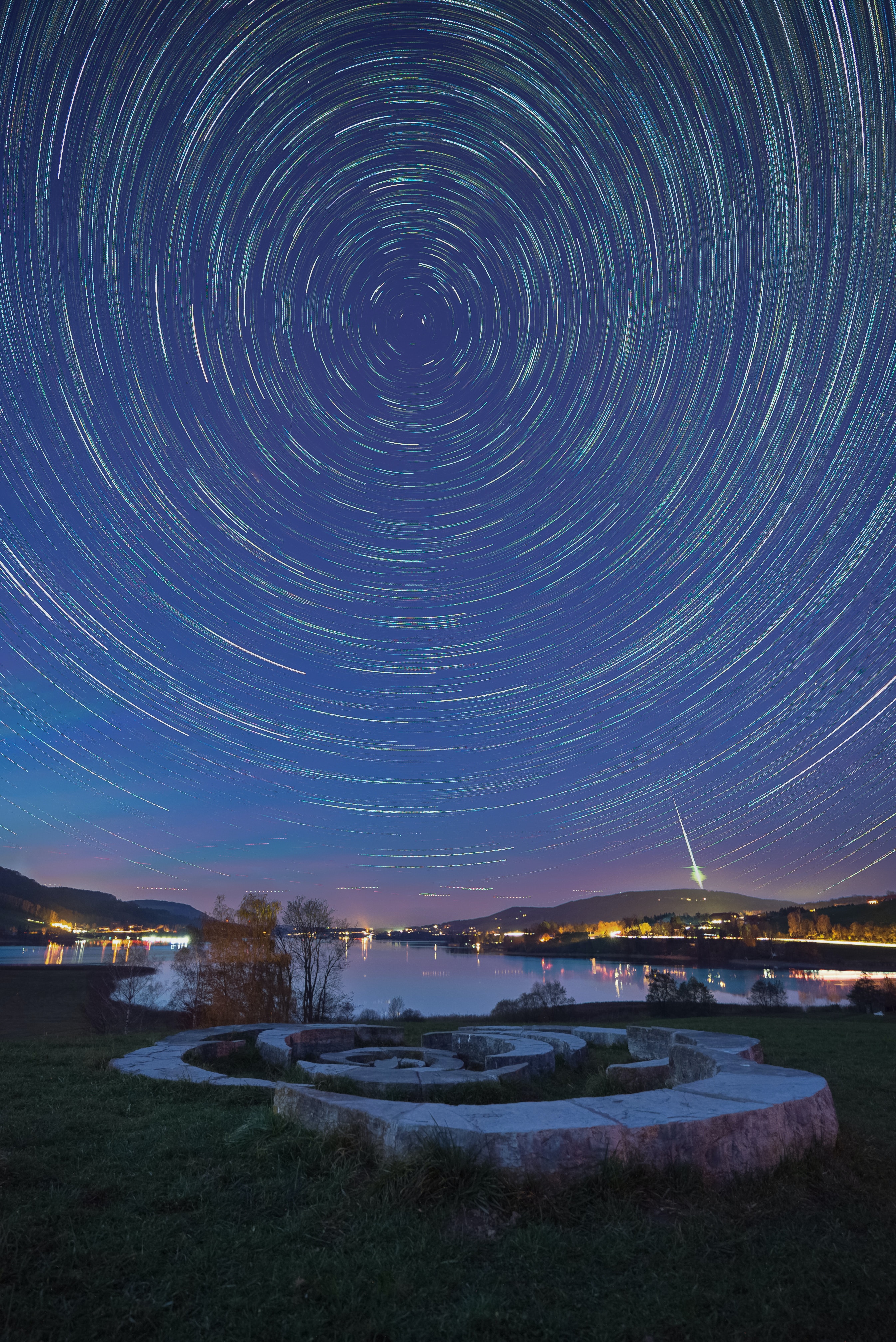
This week, you have a once-in-a-430 year chance to see a new comet. Comet Nishimura was just discovered last month, and will be gone by the end of the week.

Nishimura green comet: what is it, how to see it and when it will be back – NPR

Scientists determined that this comet takes about 430 years to orbit the sun.

So the last time it was visible from Earth was in the late 1500s — before Galileo Galilei pointed his telescope to the sky.

The last time this comet came through these parts was just a few years before Galileo invented his telescope. The comet was discovered just last month, by an amateur astronomer named Hideo Nishimura.  

There are good images of the comet as well as detailed location information here: The new comet Nishimura is closest to Earth today.

I should have posted this a few days ago, because the comet is now passing us. If you’re interested, the comet is visible this week with binoculars or a telescope, but only with effort and only from the northern hemisphere. Try looking toward the east, low on the horizon, before sunrise, and look for the constellation Leo.

I don’t have good binoculars or a telescope, but that’s fine. It’s enough for me to know that this comet, and so many other fascinating objects, are still out there. 

Waiting to be discovered.

* * *

Photo by Sten Rademaker on Unsplash

Read Full Post »

Images > Graphs

This week, we’ve touched on time lapse videos and astronomy, so let’s just round it out with an exoplanetary time lapse!

Stunning timelapse video captures 17-year journey of exoplanet around its star | Space

Beta Pictoris b’s footage was created by scientists who condensed videos created with real datasets that were collected between 2003 and 2020. 

* * *

Photo by Daniel Olah on Unsplash

Read Full Post »

If you have clear skies tonight, take a moment to look up. There will be a super blue moon overhead, and if last night’s preview is any indication, it will be glorious.

How Rare Is the ‘Super Blue Moon’ Appearing in Skies Later This Week?

This special event is the coincidence of two uncommon moon traits: A supermoon, which occurs when the moon appears larger than usual, and a blue moon, or the second full moon in a month.

More on what and how!

Blue supermoon: what is it, when it peaks and how to see it – NPR

* * *

NASA / JPL-Caltech

Read Full Post »

What are you doing this weekend? Maybe you have plans for an all-night rave this weekend, but if you’re free at some point between the hours of dark Saturday night and dawn Sunday morning, consider the Perseids.

That’s right, it’s that time again, for one of the best shows in the night sky, the Perseid Meteor Shower. And unlike last year, the Moon won’t be crashing the party.

Here’s a time-lapse video from 2021 to whet your appetite:

How to Watch the Highly Anticipated Perseid Meteor Shower | Smart News| Smithsonian Magazine

The Perseids are known to treat viewers to a fantastic display, and coupled with a particularly dark sky, this year’s show is shaping up to be one you won’t want to miss…

During a meteor shower such as the Perseids, Earth passes through a large cloud of debris in space. Right now, the planet is moving amid the rocks and ice left behind by the comet Swift-Tuttle, which last was seen from Earth in 1992. The 16-mile-long comet orbits the sun over a 133-year period, which means it won’t be seen again until 2125. But every August, its remains create the radiant Perseid meteor shower.

/rubs hands in anticipation

This weekend’s Perseid meteor shower is ‘worth staying up for’ | CBC News

While there’s a major meteor shower every month, there’s nothing quite like the Perseid shower for those in the northern hemisphere, with the warm summer nights and better chances of clear skies. And this year, Canada is in a particularly favourable position for the peak night of Aug. 12–13.

And what do you know? I’m in Canada!

Perhaps you’re interested in a bunch of complicated graphs and a cool “activity level” dial? The Global Meteor Network has you covered. 

Meteor shower flux

The dial shows the peak sum of activity from all currently active showers and the sporadic background in the next 24 hours.

More interesting background information:

The 2023 Perseids Meteor Shower – YouTube

Sky & Telescope gives advice on how to watch the 2023 #perseids and explains how the #Perseids are formed in this video. 

Not into staying up late? In that case, I recommend looking for new time lapse video of the weekend event on Monday morning. 

Because this weekend, the best show in the solar system will be right on our doorstep.

* * *

Photo by Michał Mancewicz on Unsplash

Read Full Post »

Happy summer solstice, everyone! (Fine, it’s called the June Solstice, but we all know what that means here in the Northern Hemisphere, don’t we? Summer!)

What is it?

Do You Really Know Why Earth Has A Solstice? – 13.7- Cosmos And Culture – NPR

Remarkably, Earth has seasons for the same reason that a good quarterback can throw a tight spiral. 

Even more explanations:

June Solstice 2023: Shortest & Longest Day of the Year

Why is it a thing?

Because it’s cool. And also because our ancestors knew a lot about practical astronomy. Seasons mattered.

* * *

Photo by Hulki Okan Tabak on Unsplash

Read Full Post »

« Newer Posts - Older Posts »