It seems we each have a fundamental core where we feel most comfortable, or most ourselves. It may come as no surprise to those who have spent any time on this site, but for me, it’s books and food.
Those aren’t all I’m made of, of course, but those two elements were established early, before my memories became fixed. I don’t remember a time when I didn’t love books and food. One of my first real recollections is sitting on the side steps of the porch eating an artichoke with my father, and it’s hard not to feel happy in a kitchen or library.
Now, if I’d had different experiences growing up I might have become an engineer or a tailor or a computer scientist. I make things and sew and code but not with the intuitive ease some have. Instead, it’s books. And food. I’m ok with that.
* * *
I’m in the middle of a writing class, designing story ideas and characters. It got me thinking about how experiences become preferences and worldviews underpinning our actions.
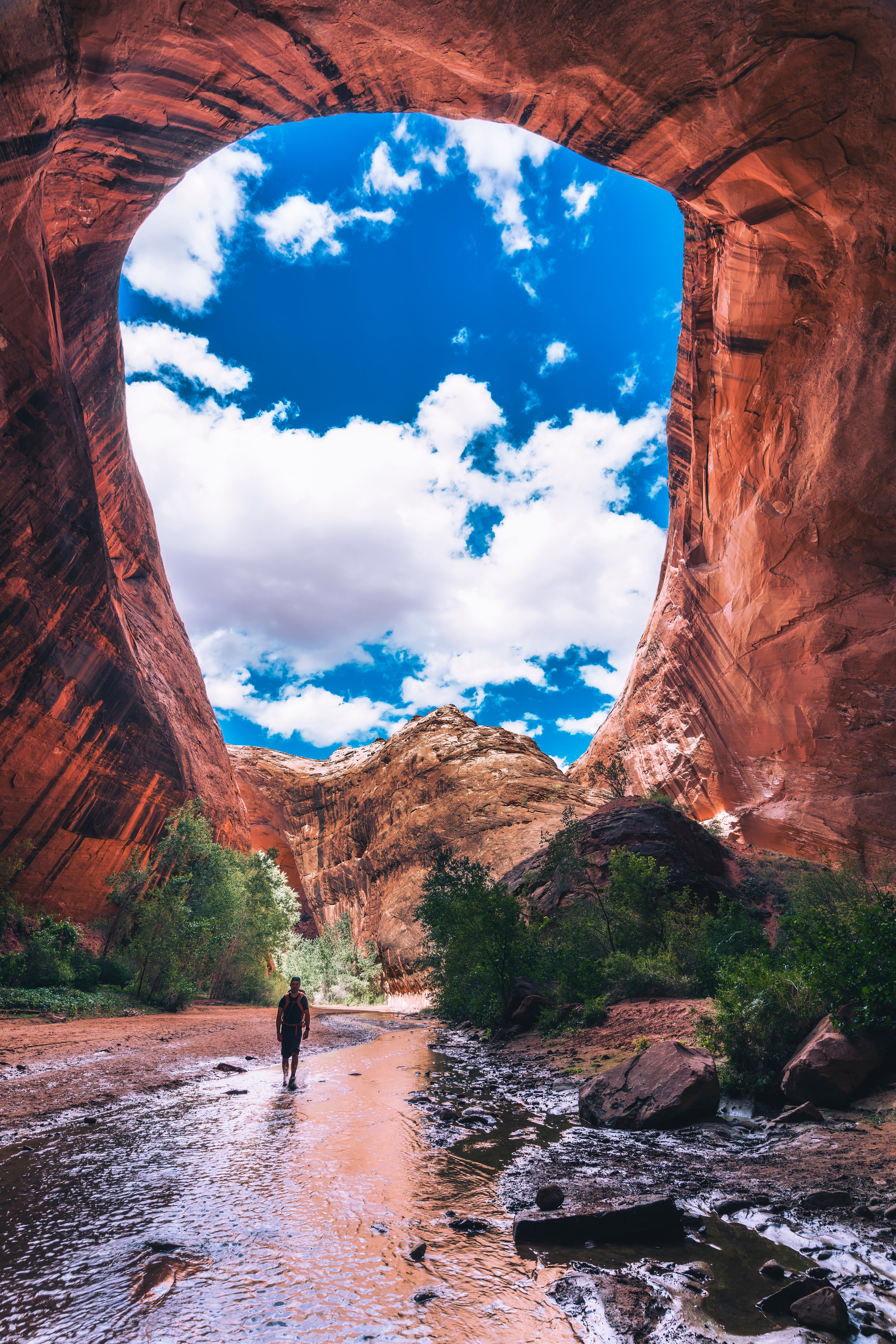
My father and I visited the Grand Canyon once, road-tripping north to the South Rim to hike and camp. The trip was great, full of summer heat and happiness, astonishing vistas and challenging trails.
I may also have spent some of the visit sitting by the edge, reading a book. Because we had a few minutes and that’s how I roll.
* * *
Like places, people have layers. Understanding how time and exposure, pressure and purpose combine makes it easier to build complex and interesting motivations, or to understand our own.
We just have to sit back and consider what we’re made of.
The other day I hemmed a pair of jeans for Mr Man. The method isn’t difficult but can be a little tricky to get right. All those thick seams and difficult fabric.
I don’t sew much, so I had to go through the usual process of pretending like I know what I’m doing. A lot like life, really. Thankfully, muscle memory has been in charge of threading sewing machine needles since I was about twelve.
Once I finished, I realized something interesting. The results were good. Better than the last time I did it, actually. And the interesting part was that it wasn’t perfect, nowhere close, but I seem to have figured out what mattered.
For hemmed jeans, it’s thread color.
For writing, I will argue, it’s the emotion that connects reader and written.
It’s possible that I sometimes try too hard, in an effort to get everything right. (Hahahahaha, that seems even sillier when I write it down. Yeah, that’s not happening, like, ever;)
But what if I don’t need to get the whole thing right? What if I just need to get the right things right?
Step one, figure out what those things are. Step two, take the next step.
Octavia Butler’s alternate realities and ‘speculative fiction’ reveal striking, and often devastating parallels to the world we live in today. She was a deep observer of the human condition, perplexed and inspired by our propensity towards self-destruction. Butler was also fascinated by the cyclical nature of history, and often looked to the past when writing about the future. Along with her warning is her message of hope – a hope conjured by centuries of survival and persistence. For every society that perishes in her books comes a story of rebuilding, of repair.
* * *
I was also interested to see this piece on largely forgotten female composers, complete with interactive map. I’m not a classical music buff, but I didn’t even know Amadeus had a sister, much less one who was also a child music prodigy. Now I do, and I’m better for it.
Two siblings, both considered child prodigies, dazzled audiences across Europe together in the 18th century, leaving a trail of positive reviews in their wake. But while Wolfgang Amadeus Mozart went on to be celebrated as one of the world’s greatest composers, the accomplishments of his sister – Maria Anna – were quickly forgotten after she was forced to halt her career when she came of age.
Tuesdays are back to their normal busy schedule, but I am having one of those days when I’m more-than-usually aware of the good things. Not only, but also.
I have found a source of caffeine that I can actually drink and I am suuuuperhappyaboutthat!
Ahem.
I gave up coffee voluntarily in grad school (because school was stressful enough and also when you need a giant pot to get through the day that’s your body telling you something) and then had to give up tea a few years later for digestive reasons. So I’ve been living a mostly caffeine free life for too long.
Recently, through a confluence of conversational touch points, I found myself telling my mother about yaupon, the only (known) caffeinated plant native to North America.
Yaupon (pronounced yō-pon) is a branch of the holly family. The scientific name is terrible (Ilex vomitoria, um, no thanks?) but the plant and tea have nothing to do with regurgitation (ok, that’s fine then!).
Native to the southeastern US, it was used by natives for thousands of years, and traded across North America and the Atlantic.
When picked, roasted and boiled, the leaves yield a yellow to dark-orange elixir with a fruity and earthy aroma and a smooth flavour with malty tones. As if orchestrated specifically for the mind and body, yaupon leaves’ perfect ratio of stimulating xanthines such as caffeine, theobromine and theophylline release slowly into the body, providing a jitter-free mental clarity and an ease to the stomach.
* * *
Why am I going on about this tea? Because it’s native, sustainable, and it deserves to be thought of as more than a “pesky weed.” It’s tannin free, so unlike traditional tea from Camellia sinensis, you can steep it multiple times without that unfun bitter, astringent aftertaste.
Also, because I happen to have a bag from one of the more prominent yaupon companies, CatSpring in Texas, and I’m drinking a delicious cup with maple syrup right now.
This caffeine stuff works, y’all;)
* * *
Speaking of, let’s just take a brief moment to appreciate the role of caffeine, “the most widely used psychoactive drug on Earth,” in human history.
Beer built the pyramids, but caffeine powered the Enlightenment.
Whatever your beverage of choice, may your eyes remain bright and your synapses active!
So long as you go about it ethically, I don’t see any shame in shortcuts. On a general note, most of what has given us as a species an edge could reasonably be categorized as such. And personally, I am particularly in favor of techniques, tools and strategies that help me fill in gaps of time or talent.
I’ve mentioned drawing, and how I can’t. Oh sure, I used to be able to draw an almost perfect circle freehand and once drew the world’s most beautiful eye while I was supposed to be studying verb conjugations in high school French class, but that’s about the extent of my talents in that department.
That doesn’t stop me from wanting to do more. If only my fellow monkeys had developed some tools that could help me make up for such deficiencies!
Cue computer drawing programs, yes, but then what? There’s still the difference between what I see in my mind and what comes out on the page or screen.
Ooh, I said to the cat (who paid as much attention as usual, which is to say none), that is exactly the sort of art I like, part beauty, part craft, part epistolary exploration. Too bad I had to move away from Photoshop. Now what?
First, despair! Cue gnashing of teeth and rending of garments (just kidding, that’s wasteful and I really hate to shop).
Then it was time to get to work.
I decided to see if I could replicate some version of this technique in Affinity Photo. After forum diving, video watching, and a visit to The notebooks of Leonardo da Vinci, I produced this:
The Venus de Milo by Alexandros of Antioch, sculpted c. 150BC. Original photo by tabitha turner on Unsplash, text and doodles by Leonardo da Vinci. I don’t read Italian, much less Renaissance mirror writing, but I would love it if this was Leo’s to do or shopping list. “Note: buy looser robes with draping like this, because I like a healthy breeze around my private parts.”
* * *
Not bad, aside from the fact that it took forever and could use some real hatching and more dramatic outlines and the shading crashed the program about a dozen times. Still, it was progress I felt ok about.
Working through that puzzle also gave me time to think, and in that time I realized a couple of important things:
my computer is not the only computer in this house, and while the desktop upstairs has had the tech equivalent of a stroke and can’t be trusted with anything not backed up, I did manage to rebuild it into a functional system and it is now running a deprecated OS,
six bucks is not a lot of money, and
don’t I still have the disks for CS5, which includes Photoshop, kicking around somewhere?
True, true, and yes, yes I do.
Cue exciting graphic adventures!
* * *
I may have also sprung for a couple more tools from the same developer. Still affordable, and still worth it. This is what the Da Vinci Photoshop action produced, plus several other versions:
Da Vinci action
vintage sketch action
architecture sketch action
* * *
Have I been having fun? Yes, and here’s my absolute favorite so far:
Shortcuts can be terrific so long as they don’t impede learning. In this case, I got the mental workout of deconstructing and rebuilding an effect, plus the practicality of pre-built actions.
Mr Man requested lemon meringue pie the other day. Do I have a recipe for it? I do, that’s not the problem. The problem is that I have too many recipes, taking many paths to the same destination.
And so I set out to make the pie, but also to reduce the stack of notes, hand-written adaptations, and other modifications into the One.
Here’s a snapshot of just some of the recipe pile:*
Does not include all of the many, many online references I used to triangulate the final recipe, but you get the idea.
* * *
So here we have it, the One Pie To Rule Them All (if you like lemon, that is).
The recipe looks a bit complicated but it’s really just a quick crumb crust, a batch of lemon curd, and whipped egg whites.
This works for me, and uses ingredients I can easily access. (I also do things like ignore milliliters and weigh everything in grams.) If you aren’t as into tangy citrus or can’t find Biscoff, modify at will!
crush Biscoff into fine crumbs with food processor or rolling pin
mix in melted butter
press into 9” pie plate (the bottom of a cup measure works well)
bake for ~18 minutes, remove and lower oven to 325F
Filling
mix lemon zest, juice, water and cornstarch until smooth
stir sugar and egg yolks together in a non-reactive pan, place over medium-low heat and add cornstarch mixture and butter
stir frequently until it just simmers and thickens like custard, about 5 minutes for me (taste and add another teaspoon+ of sugar if you fear the tang)
pour into crust and top with meringue
Meringue
combine sugar and cream of tartar in a small bowl
in a larger bowl, whip egg whites to soft peaks
add sugar mixture one tablespoon or so at a time, whipping between, until stiff and shiny
spoon or pipe over filling, touching meringue to crust edges to prevent shrinkage
bake 15 minutes until golden
* * *
Bonus: Lemon Syrup
Because I had organic lemons, I was also able to use the peels for this lemon syrup:
“True” lemon syrup, to distinguish it from the bottle of spiced white wine and lemon syrup I also have in the fridge right now.
I let it steep for about four hours. I don’t have a great citrus press so I strained the peels, then put them in a plastic bag and used a rolling pin to extract the rest of the juice. The result is sweet with a touch of bitterness to ground the flavor, and perfect with seltzer and fresh mint on a hot afternoon.
* I have attributions for some of these recipes but not all. That can happen when I’m away from home and trying to put together a recipe for the in-laws on the fly, with a kitchen and equipment not my own. Thanks for ideas for what to do (and not do) go out to Stella Parks, Mark Bittman, Alton Brown, and many bakers and commenters online.
You must be logged in to post a comment.