Feeds:
Posts
Comments

Posts Tagged ‘history’

For today’s sampling of free fiction we have a novelette by the great Connie Willis.

Fire Watch” is anchored in a future where time travel is a research tool, and features the same group of historians as in Doomsday Book and To Say Nothing of the Dog. (This novelette is #0.5 in the Oxford Time Travel series.)

Welcome to a world where your academic practicum might include saving a beloved church during the London Blitz. Heck, I wish my History degree had come with a side of time travel:)

Enjoy!


Read Full Post »

It’s snowing! It’s pretty! All is right with the world.

The past few weeks of above-freezing temperatures and no snow have been, for lack of a better word, weird. It reminds me of the time I spent in Arizona, and my first warm Christmas. Seventy degrees on Christmas? In the Northern Hemisphere? Weird. I thought I’d be happy to get away from the cold and snow but I guess childhood imprinting isn’t so easy to escape.

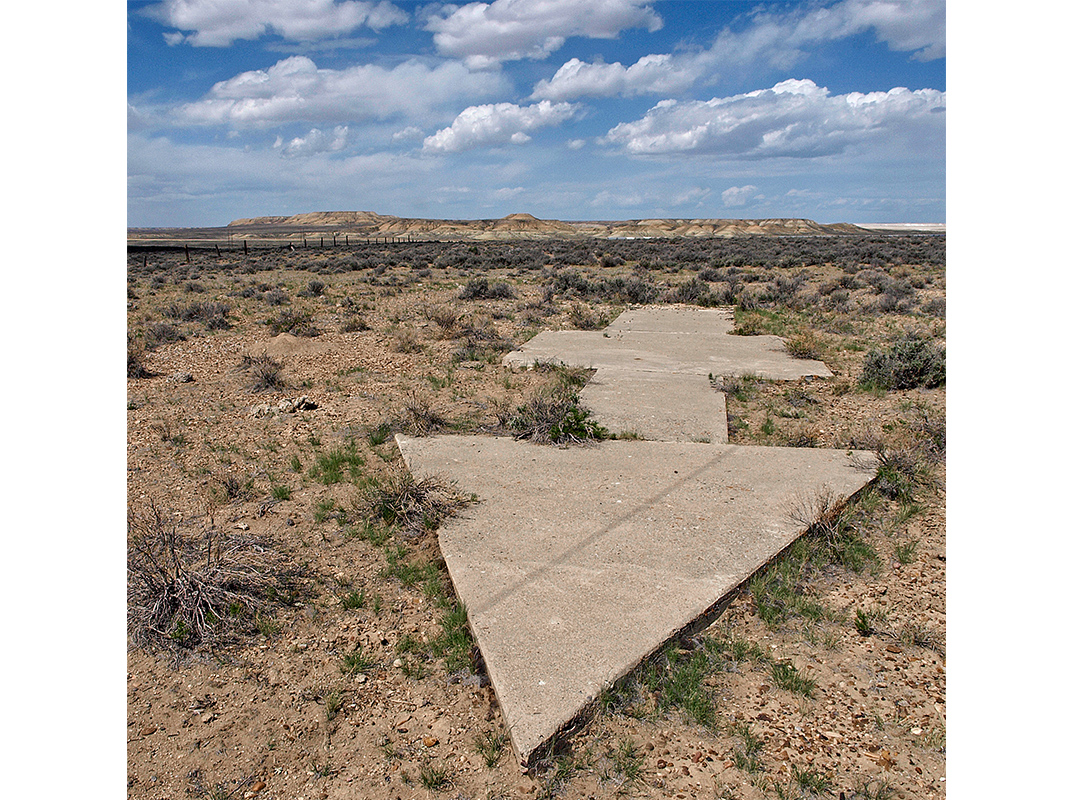
I’ve also been thinking about the desert for a story I’m working on. Remembering the dry expanse stretching to the horizon, tenacious scrub clinging to the sides of dry riverbeds and the clarity of the air at dawn. Thinking about the challenges of crossing such a place in an era before the things Americans tend to take for granted, like functional highways, a network of gas stations and cars that didn’t blow a tire every 50 miles. And I stumbled across this fascinating article in the Smithsonian’s Air & Space magazine, about a network of alien markings giant concrete arrows crisscrossing the continent.

giant arrow


Before satellites, real-time GPS or other modern navigation systems, pilots had to be able to see where they were going. They couldn’t fly at night or in bad weather, and figuring out where they were was a complicated affair involving tools like a compass, maps (on paper!) and a bit of guesswork.

Some towns painted their names in oversized block letters on rooftops to help pilots get their bearings. And sometimes—like when navigational delays slowed down transcontinental air mail delivery* after 1920**—the government saw the need for a more comprehensive solution to the problem and stepped in. In this case they built a system of 70-foot-long concrete arrows pointing the way:

The government built a path of 70-foot-long concrete arrows every few miles from coast to coast, each painted yellow and topped with a 51-foot steel tower that had a rotating beacon. Using the path, an airmail pilot needed only half the time to deliver a letter from New York to San Francisco.

Eventually technology caught up with our demands and the markers were abandoned. Where are these markers now? An intrepid couple named Brian and Charlotte Smith wanted to know the answer and embarked on A Quest (because let’s face it, it’s hard to get anything significant done without A Quest).

They go on road trips to investigate these remnants of a bygone era, and now you can too. With the help of drone lessons from their nine-year old grandson, they’ve assembled photos and a database of marker locations.

The core idea of this story resonates with me. It’s the same childhood fascination I had for the Pony Express or the challenges of nineteenth-century explorers. For me, it’s hard to read a piece like this and not conjure up a daring young Lady Adventurer winging her way across an untamed landscape on a new world, with nothing but a few isolated markers to keep her on track.***

Marvelous!

—–

* FYI, I love the USPS and public libraries and Eisenhower’s Interstate Highway System. These and other basic infrastructure**** projects help make us a better connected, better educated country and have impacted everything from social mobility to what we eat for dinner.

** Before 1920, if you wanted to send a letter to your cool aunt in San Francisco, for example, it went via methods like stagecoach or boat or train. Slooooooow. Or you could send a telegram and tell the whole world your business… like Twitter, actually.

*** A lot like Beryl Markham, actually.

**** (A footnote within a footnote. Does that make it a toenote?) I just want to include the definition of infrastructure and ask lawmakers responsible for assigning project funds, how is this optional?

Infrastructure: The basic physical and organizational structures and facilities (e.g., buildings, roads, and power supplies) needed for the operation of a society or enterprise.

Read Full Post »

Storytelling is a fundamentally human pursuit. (Not to say that we’re the only ones who do it, because it’s possible that ant and bee pheromones communicate the route to food in the form of a tale that resonates with those particular species, but…) In fundamental ways that touch on history to parenting to neuroscience and everything in between, we are our stories. The origins of some classic fairytales, for instance, go back thousands of years.

How our essential stories came to be, what they say to us, and about us, and how they continue to resonate, are all fundamental questions for writers. One way to think about the path of a story, where it goes and what it is meant to do, is through the Hero’s Journey. The TED Radio Hour on NPR did a nice series on this:

…why are we drawn to stories about heroes? And what do they tell us about ourselves?

There are other ways to tell a story, of course, but as the fundamental underpinnings of tales from The Odyssey to Star Wars, this framework provides a fascinating and concrete way to communicate through fiction.

Read Full Post »

My new crush: Miss Fisher’s Murder Mysteries

What: Australian TV series set in the 1920s, featuring a murder-solving “Lady Detective”… which doesn’t really capture it at all:)

Where: Seasons 1 and 2 are available on Netflix (and elsewhere, including my public library, but Netflix works for me). Season 3 recently aired on Australia’s ABC TV.

Why? Because Reasons!

  • The series is based on the books by Kerry Greenwood, and because each episode (at least those I’ve seen to date) is based on its own book, the plot and character arcs tend to be layered and complex.
  • It features a woman (played by the fabulous Essie Davis, interviewed about the series on NPR) who is not afraid of action, bucking authority, family planning, sex, crossing racial or class boundaries, believes whole-heartedly in nonjudgmental good works, tolerance, and enjoying the hell out of life.
  • Great mix of characters and story lines, plus incisive social commentary incorporated in an interesting way.
  • I’ve seen the series described as “competence porn” and while I think the lead character could benefit from a few lessons on how to hang on to one’s pistol and the downsides of scaling buildings in heels, I’d have to agree. She always solves the case, rescues herself and everyone else, and gets the gun back. Also, her skills with a grappling hook are impressive.
  • The clothing gets talked up a lot in reviews of the show and while I’m not a fashion devotee, it’s true, the outfits provide a beautiful and fascinating glimpse into Jazz-age apparel. In this article at The Australian, designer Marion Boyce discusses the process of outfitting the series. Fun fact: Instead of using vintage items, most of the costumes were made for the show, in part because modern humans are differently proportioned than they were even a hundred years ago.
  • Insanely catchy theme song🙂


Read Full Post »

We the people of the United States, in order to form a more perfect Union, establish justice, insure domestic tranquility, provide for the common defense, promote the general welfare, and secure the blessings of liberty to ourselves and our posterity, do ordain and establish this Constitution for the United States of America.
— Preamble to the United States Constitution

I stand here today as hopeful as ever that the United States will endure, that it will prevail, that the dream of our founders will live on in our time.

— Barack Obama

Read Full Post »

When I’m in Canada, I feel this is what the world should be like.
— Jane Fonda

https://instagram.com/p/xc5EUxwaiB/?taken-by=canada


Read Full Post »

I’ve come across an interesting new project spearheaded by writer/editor Kristine Kathryn Rusch. As a way to spotlight women writers in science fiction, she is building an anthology for Baen Books of classic stories and more contemporary works, all written by women. She proposed this project as a way to preserve excellent but often underexposed work:

I don’t want this volume to look like something you have to read in a college literature class… I want these stories to be by women, yes, but about anything. And I want them to be rip-roaring good reads.

While I agree the anthology’s working title of “Tough Mothers, Great Dames, and Warrior Princesses: Classic Stories by the Women of Science Fiction” is unwieldy at best, this looks to be a great project overall.

Rusch has also started a Women in Science Fiction website linked to the project, as a way to highlight and preserve women’s history in speculative fiction. The site showcases authors by award nominees, female firsts, and genre, among other categories.

The website is brand new and still a work in progress, and she’s open to suggestions. Part of her goal is to supplement the admittedly limited amount of work she’ll be able to include in the anthology. If you’d like to recommend a favorite female author or story for inclusion, feel free to comment on her Suggestions page.

Read Full Post »

I came across a fascinating article by David McRaney on survivorship bias. The overall point, that accounting for failure is critical to success, is well made, and the author uses a series of pointed examples. Not incidentally, the post also lays out a new-to-me part of World War Two history that includes a cabal of geniuses, women mathematicians, and the Department of War Math (ok, that last bit wasn’t its real name, but it should have been).

In World War Two, for example, the U.S. military tracked damage to returning bombers and wanted to beef up the most frequently-hit areas. A statistician named Abraham Wald pointed out that the surviving planes made it back despite that damage. The spots where they were unscathed, the ones no one had thought to record, were in fact the most vulnerable; as McRaney sums up, “that’s where the planes that didn’t make it back were hit.”

I found the history interesting in its own right, and if you have ever been tempted by the (admittedly seductive) trap of thinking, “Well, my grandfather breakfasted on salt pork and hot gin for ninety years, so I can eat whatever I want and still live forever,” I recommend a read.

“You develop a completely inaccurate assessment of reality thanks to a prejudice that grants the tiny number of survivors the privilege of representing the much larger group to which they originally belonged.“

That same logic applies to evaluating advice from diet gurus, celebrity CEOs and millionaire app designers. Skill plays a part, of course, but it turns out that overall, what a lot of successful people have in common could be termed luck. That may be a bit discouraging, but the good news is that such luck can be courted if you’re willing to take a longer-term view.

“The lucky try more things, and fail more often, but when they fail they shrug it off and try something else. Occasionally, things work out.”

Instead of looking for that one big break, think of the world as a series of possibilities; the more options you try, the greater your chance of success. Resist tunnel vision, “wade into the sea of random chance,” and stay open to new ideas and situations. That sounds pretty good, actually.

If you’re interested in how survivorship bias applies to writers and writing careers, check out this post by Tobias Buckell and the related Writing Excuses podcast in glorious audio or text.

Read Full Post »

Wonder Woman movie is finally really actually happening. This article at Tor.com lays out what we know (not much) and how this movie fits with the WB film slate.

Few details are available other than a 2017 release date, so let me leave you with Jill Lepore’s New Yorker piece on everyone’s favorite lasso-toting amazon and this fascinating Smithsonian article on The Surprising Origins of Wonder Woman.

Read Full Post »

Here’s a fun article at Modcloth about an independent librarian, cultural historian, community builder and all-around book maven:

Best Job Ever: Renegade Librarian Megan Prelinger

The Prelinger Library is located in San Francisco and is open on Wednesdays, but much of the collection is also available online.

I just asked the question,  ‘What would an alternative research library look like? And, what would research look like if it was as much fun as going out on a field trip?’

That sounds like my kind of library.

Read Full Post »

« Newer Posts - Older Posts »