Feeds:
Posts
Comments

Posts Tagged ‘history’

I’ve come across an interesting new project spearheaded by writer/editor Kristine Kathryn Rusch. As a way to spotlight women writers in science fiction, she is building an anthology for Baen Books of classic stories and more contemporary works, all written by women. She proposed this project as a way to preserve excellent but often underexposed work:

I don’t want this volume to look like something you have to read in a college literature class… I want these stories to be by women, yes, but about anything. And I want them to be rip-roaring good reads.

While I agree the anthology’s working title of “Tough Mothers, Great Dames, and Warrior Princesses: Classic Stories by the Women of Science Fiction” is unwieldy at best, this looks to be a great project overall.

Rusch has also started a Women in Science Fiction website linked to the project, as a way to highlight and preserve women’s history in speculative fiction. The site showcases authors by award nominees, female firsts, and genre, among other categories.

The website is brand new and still a work in progress, and she’s open to suggestions. Part of her goal is to supplement the admittedly limited amount of work she’ll be able to include in the anthology. If you’d like to recommend a favorite female author or story for inclusion, feel free to comment on her Suggestions page.
Read Full Post »

I came across a fascinating article by David McRaney on survivorship bias. The overall point, that accounting for failure is critical to success, is well made, and the author uses a series of pointed examples. Not incidentally, the post also lays out a new-to-me part of World War Two history that includes a cabal of geniuses, women mathematicians, and the Department of War Math (ok, that last bit wasn’t its real name, but it should have been).

In World War Two, for example, the U.S. military tracked damage to returning bombers and wanted to beef up the most frequently-hit areas. A statistician named Abraham Wald pointed out that the surviving planes made it back despite that damage. The spots where they were unscathed, the ones no one had thought to record, were in fact the most vulnerable; as McRaney sums up, “that’s where the planes that didn’t make it back were hit.”

I found the history interesting in its own right, and if you have ever been tempted by the (admittedly seductive) trap of thinking, “Well, my grandfather breakfasted on salt pork and hot gin for ninety years, so I can eat whatever I want and still live forever,” I recommend a read.

“You develop a completely inaccurate assessment of reality thanks to a prejudice that grants the tiny number of survivors the privilege of representing the much larger group to which they originally belonged.“

That same logic applies to evaluating advice from diet gurus, celebrity CEOs and millionaire app designers. Skill plays a part, of course, but it turns out that overall, what a lot of successful people have in common could be termed luck. That may be a bit discouraging, but the good news is that such luck can be courted if you’re willing to take a longer-term view.

“The lucky try more things, and fail more often, but when they fail they shrug it off and try something else. Occasionally, things work out.”

Instead of looking for that one big break, think of the world as a series of possibilities; the more options you try, the greater your chance of success. Resist tunnel vision, “wade into the sea of random chance,” and stay open to new ideas and situations. That sounds pretty good, actually.

If you’re interested in how survivorship bias applies to writers and writing careers, check out this post by Tobias Buckell and the related Writing Excuses podcast in glorious audio or text.

Read Full Post »

A Wonder Woman movie is finally really actually happening. This article at Tor.com lays out what we know (not much) and how this movie fits with the WB film slate.

Few details are available other than a 2017 release date, so let me leave you with Jill Lepore’s New Yorker piece on everyone’s favorite lasso-toting amazon and this fascinating Smithsonian article on The Surprising Origins of Wonder Woman.

Read Full Post »

Here’s a fun article at Modcloth about an independent librarian, cultural historian, community builder and all-around book maven:

Best Job Ever: Renegade Librarian Megan Prelinger

The Prelinger Library is located in San Francisco and is open on Wednesdays, but much of the collection is also available online.

I just asked the question,  ‘What would an alternative research library look like? And, what would research look like if it was as much fun as going out on a field trip?’

That sounds like my kind of library.

Read Full Post »

Because my father is touching down in the UK today, here’s a delightful look at the growth of London over the past two thousand years:

Watch London Evolve From Roman Times To Today

Read Full Post »

Did you know? Not only did there used to be a student jail for curfew breakers and related miscreants in Uppsala, Sweden, but that very same collection of cold stone cells is now the character-filled restaurant Domtrappkällaren. Translation: [Dom=cathedral] + [trapp=steps] + [kalleren=cellar]. For a mind-blowing bit of temporal perspective (for North Americans, at least), the university punishing said miscreants was founded in 1477. (Still left to learn: how are modern-day malfeasants chastised now that the jail has been repurposed? Inquiring minds want to know!)

The restaurant serves a delectable selection of Northern cuisine, including items like Kalix Löjrom roe. That name is a Protected Designation of Origin similar to “Champagne,” and is the only such designation in Sweden. Kalix is in Northern Sweden, and the region’s fish eggs (or Kalixlöjrom) gain their unique flavor from a mix of fresh and salt waters along with a copious dose of minerals. (Apparently, strontium and barium are quite tasty, if you can persuade a fish to prepare it for you.)

I learned none of this first-hand, sadly, but my globe-trotting father enjoyed the heck out of his dinner. Makes me want to get back to Sweden…

Read Full Post »

I’m busy working on a hard deadline so today I invite you to enjoy this great, self-reflective piece on diversity in historical fiction (and by extension, all fictional worlds) by Mary Robinette Kowal. She’s talking specifically about race but the same points apply to gender, sexuality, etc. as well.

Don’t blame the homogeneity of your novel on historical accuracy. That’s your choice, as an author.

Read Full Post »

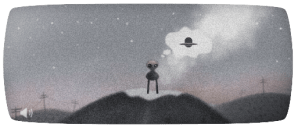
I know, I should be working (and I have been and I will be) but! Google has a fun little Doodle in honor of the 66th anniversary of the Roswell incident, and it’s too much fun not to mention.

Google's Roswell Doodle

Need a break? Play the game and take a moment to feel for the little lost alien. Poor thing! Now back to work:)

Read Full Post »

photo by Chris Willis

photo by Chris Willis

It’s Tulip Festival time here in Ottawa, and despite the unseasonably cold weather we’re having right now the flowers are beautiful. They also got me asking questions about the Festival specifically and about tulips in general. (If you are Canadian and a gardener feel free to stop here, you probably already know what I’m about to say. I’m neither and was happy to learn something new.)

Why tulips? Sure, the Festival is designed to promote trade and tourism, but there’s a nice story behind its origin. The tulips were “given as a gift in perpetuity to the Canadian people for having provided safe harbour to the Dutch Royal Family during the German occupation of the Netherlands”* during World War Two.

Princess Juliana was about to give birth in Ottawa but being born in another country would have affected the child’s succession status. Fair enough, but it’s not like the Princess could go home. So, in typically awesome Canadian style, when Princess Margriet was born in 1943 the Dutch flag was flown from the Peace Tower. Succession issue solved. How neighborly is that?

Wait, you may ask, isn’t this the same flower whose bulbs were once worth more than their weight in gold (and, not incidentally, also sparked the “Tulip Mania” market crash in the 17th century)? How do I get more of them? You may already know this but I didn’t, at least not in detail.

How do tulips propagate? As in, I’ve got this shallot-like bulb I picked up at the store and the package swears that if I put it in the ground I’ll get a tulip next Spring. Great. But what if I didn’t have this little net bag from the supermarket? If the Apocalypse comes tomorrow tulips are on their own. What then?

It turns out that tulips are well positioned to survive a catastrophic event because they are designed to propagate in not one but two ways. If you want to make more tulips, come Autumn you can either dig up the bulb or collect the seeds. The original bulb will have grown a number of little satellites, or offsets. The largest of the bulbs will flower the next year but the smaller ones will need extra growing time. Bulbs are exact genetic replicas of the original, while seeds will give you a hybrid plant with more genetic diversity, and the potential for new colors and characteristics.

This could be critical if the Apocalypse does come and you need new, pretty ways to match your landscaping with brimstone or mask the odor of zombie. Just saying.

Read Full Post »

Since I’m on an NPR science kick… this article provides a fascinating glimpse of our dual genetic past… and perhaps future?

What Happened When Humans Met An Alien Intelligence? Sex Happened : Krulwich Wonders… : NPR

… most humans on Earth, especially if they descend from Europe and most of Asia, carry about 1 to 4 percent Neanderthal DNA in their cells. Proportions will vary. British comedian Eddie Izzard, discovered he’s 2.8 percent Neanderthal. You don’t carry Neanderthal DNA unless someone up your family tree coupled with one.

So that’s our proof: that our first encounter with an intelligent alien led to … umm, well … more.


Read Full Post »

« Newer Posts