Some days you take a break from the avalanche of news and realize you’ve got Joni Mitchell’s Big Yellow Taxi stuck in your head. The chorus can feel too true to remember that there are reasons to be cheerful and the world is not, in fact, on a one way trip to Ugh Town.
But other days? Like today days? With heartfelt respect to Ms. Mitchell,* you realize that the final lines of the song could be rewritten:
How does one address someone with this level of accomplishment? Award-winner? Multi-Hall of Famer? Fellow Canadian? Doctor (she has three honorary doctorates)? I went with the title that, I hope, conveys fundamental respect across all arenas.
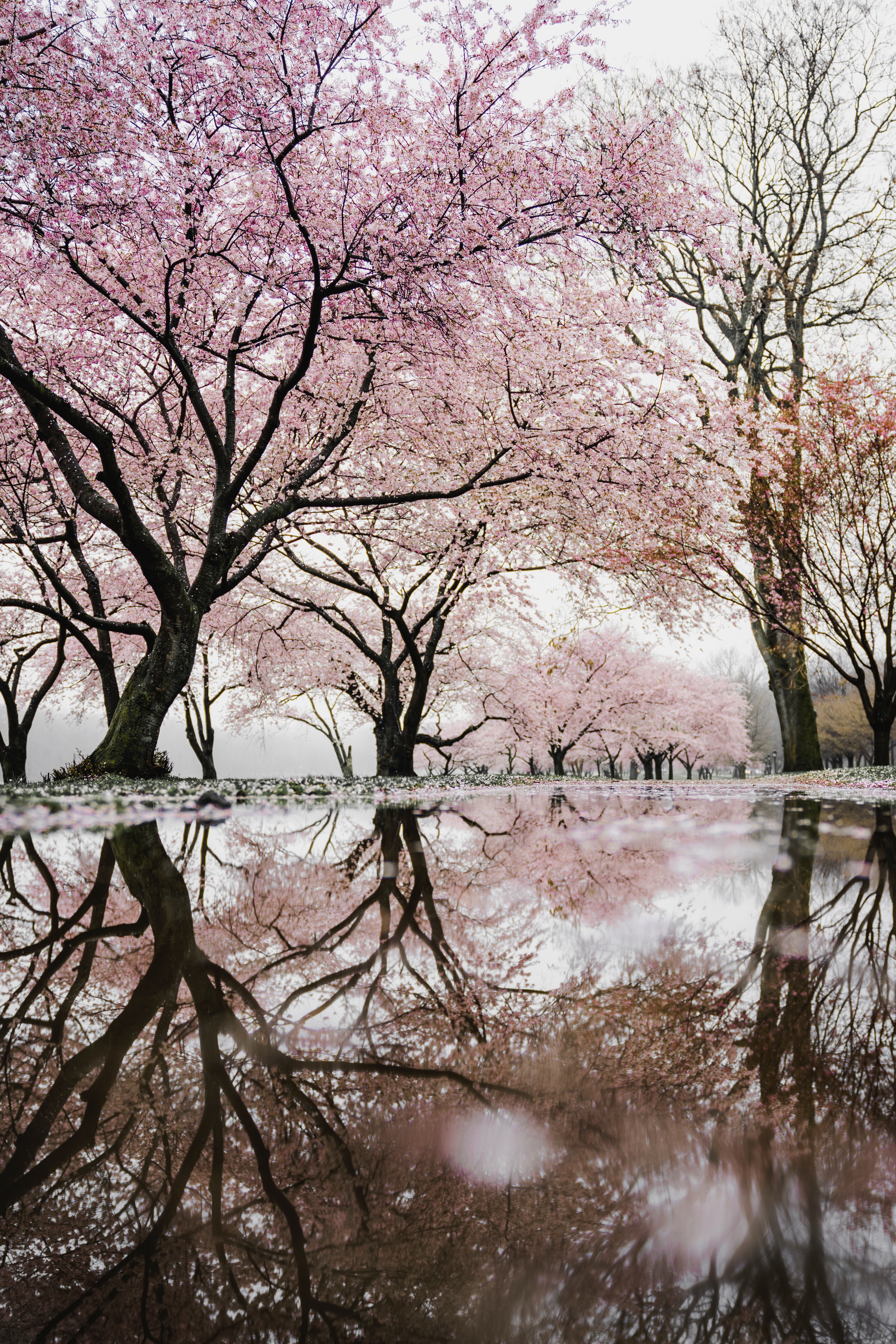
In memory of the pretty tree in full bloom around the corner, which our neighbor just cut down.
Also, it’s Tuesday.
(This is the part where I like to bring it back to a cheerful ending. Right. Hmm.)
Ah yes! I’m making excellent progress on the bird front, lots of goldfinches, robins, cardinals, chickadees, juncos and sparrows. Nature finds a way, even if it sometimes needs a little help:)
* * *
“The tree which moves some to tears of joy is in the eyes of others only a green thing that stands in the way. Some see nature all ridicule and deformity… and some scarce see nature at all. But to the eyes of the man of imagination, nature is imagination itself.”
Today is Earth Day. Happy 4.543 billionth birthday, Earth! Here’s hoping for many more.
Much of my day job is based in current news and events, which means I spend a good part of most days knee-deep in the internet. Yeah, it can be exactly as fun as it sounds. That said, I’m not looking for the bad stuff, or not only the bad stuff.
It’s hard to miss the evidence of change, but the good news is that we’re not just discussing it, we’re beginning to take concrete action.
* * *
You already know that doing big things is hard. Like ”saving the planet.” Human beings are small, and I suspect that at the root, most of us are plagued by the niggling feeling that we are just bit players on an unimaginably vast stage. That at some fundamental level our actions don’t matter much at all in the bigger picture. Not really.
But we’re wrong. And the world is made up of smaller pictures.
It’s the question every hero is asked: The future is uncertain. The path is unknown. What are you going to do about it?
What you can, wherever you can. As a minor example, I spent time today researching ways to turn our absolutely useless lawn space into a pollinator garden.
Of course, a lot of what needs to happen on climate change isn’t just about individual action. Deciding not to eat meat on Tuesdays matters, but standards and infrastructure for energy, transportation, agriculture and construction, to name a few sectors, will need to modernize too.
It means working together on new ideas, new innovations, and new legislation. More and better targets, the kind that make a positive difference in people’s lives.*
Because humans are a social species. There is never just one, and when it comes to saving our home that’s a challenge but also a benefit. Sea shanties swept the globe in a matter of weeks. Why not this?
* * *
It sounds big, and it is, but we do big things all the time, often by accident.** It’s just time to do this particular big thing on purpose. Here’s the mantra I try to stick with: Pick a goal. Break it down. Start today.
We are never just one. None of us are. We are legion. And we got ourselves into this mess. We can get ourselves out.
Starting today.
* * *
* Like clean air and water. And I really enjoy the fact that one day, for example, I’ll be able to put my seat belt on, drive an electric car down well-maintained roads, sit in a non-smoking section at a restaurant, and eat food that won’t kill me. And that my nephews don’t spend their summers swimming in a creek laced with PCBs (like we did). Crazy, I know!
** I mean, who sets out to upend civilization? They just want to see what happens if they burn that dirty rock or invent the light bulb or the assembly line or freaking Facebook. There is no button a curious monkey will not poke. Wouldn’t it be nice if we can make it work for us for a change?
* * *
“Look again at that dot. That’s here. That’s home. That’s us. On it, everyone you love, everyone you know, everyone you ever heard of, every human being who ever was, lived out their lives… The Earth is the only world known so far to harbor life. There is nowhere else, at least in the near future, to which our species could migrate. Visit, yes. Settle, not yet. Like it or not, for the moment the Earth is where we make our stand… To me, it underscores our responsibility to deal more kindly with one another, and to preserve and cherish the pale blue dot, the only home we’ve ever known.”
My father started a friends and family email chain about An Indigenous Peoples’ History of the United States, a window on a history that is both important and difficult. For a bit of balance, here are indigenous students doing something that is both important and uplifting.
Here’s to survival, and to hope.
* * *
Students at Allison Bernard Memorial High School in Cape Breton sing Paul McCartney’s Blackbird in their native Mi’kmaq language.
Society has been making progress, but some days it can still seem as though bad news outweighs the good. And then you see a story like this and remember that for all the negatives out there, humanity continues to answer with resounding positives.
Post-inauguration, the news is flooded with articles on the likelihood (or not) of unity in America, and even some on the failure of America as an ideal, as a dream. No matter what, some say, it will never be what it was again.
That may be true. But what if it can be better?
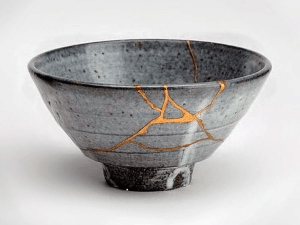
The Japanese have an art, Kintsugi. The art of broken things, of finding beauty in imperfection.
Rather than being thrown away, damaged pottery is rebuilt, pieced together with lacquer and gold binding the seams.* The results celebrate the history of the piece, not only what it once was but the damage it experienced and the conviction that it can be rebuilt into something beautiful. That it is worth saving.
“Some four or five centuries ago in Japan, a lavish technique emerged for repairing broken ceramics. Artisans began using lacquer and gold pigment to put shattered vessels back together. This tradition, known as kintsugi, meaning “golden seams” (or kintsukuroi, “golden repair”), is still going strong.”
“The restored ceramic becomes a symbol of fragility, strength, and beauty. Many see Kintsugi as a powerful metaphor for life, where nothing is ever truly broken.”
* * *
What has kept humanity going through lifetimes of broken dreams? Hope, faith, and the deeply-held conviction that progress is possible, that something strong can be built on what’s good about the past. I hold that hope now, for us.
“To be hopeful in bad times is not just foolishly romantic. It is based on the fact that human history is a history not only of cruelty, but also of compassion, sacrifice, courage, kindness.
What we choose to emphasize in this complex history will determine our lives. If we see only the worst, it destroys our capacity to do something. If we remember those times and places–and there are so many–where people have behaved magnificently, this gives us the energy to act, and at least the possibility of sending this spinning top of a world in a different direction.
And if we do act, in however small a way, we don’t have to wait for some grand utopian future. The future is an infinite succession of presents, and to live now as we think human beings should live, in defiance of all that is bad around us, is itself a marvelous victory.”
― Howard Zinn
* * *
* Commitment and cash, essentially; there are probably worse ways to describe what we need right now to rebuild.



You must be logged in to post a comment.