Feeds:
Posts
Comments

Posts Tagged ‘innovation’

Here’s a fun and productive use of the internet that answers a very important question: How close are we to living in the Star Trek universe?

Check it out and see!

Are We Trek Yet?

This guide is intended to be a comprehensive look at the tech that Star Trek suggested to drive humanity forward ad astra per aspera. The emphasis is on innovations that don’t violate physics according to present consensus understanding. Go ahead and explore boldly… Just don’t waste too much time on idle speculation: there’s a whole lot to do if we’re going to get to Trek, and it’s going to take all of us.

* * *

Read Full Post »

This started as a drabble but grew into a vignette.

The attendant checked the schedule. Room 402, Geriatric Ward. Mr Landing.

The attendant realigned before entering the room.

Most of its processes were overclocked to deal with the post-Thanksgiving rush. Somehow, everyone managed to end up in the ER over the holidays. An avatar in surgery dealt with a hernia operation while the one in Intake triaged two lacerations, one head wound (so messy), a concussion from a ladder fall, one firewood-related crush injury, six acute upper respiratory infections, three cases of acute back pain, and one mostly severed finger.

Those iterations filled in the gaps left by each successive wave of layoffs and prioritized speed and accuracy. Mostly speed, if you were one to read between the lines of the quarterly reports. But here, in this ward, they had found a better way. 

Chassis wheels squeaked quietly on the polished floors.

“Good afternoon, Mr Landing. How are you today?”

“Fine, fine. I’ve been hoping you’d visit.” His words were drawn out, like January honey. “I’ve been thinking about 1986, when my wife and I bought a bit of land out in the woods. We spent so many weekends out there, building a cottage, visiting with the kids in the summer. So many good memories.”

He took a long, labored breath. 

“I’m sorry, I know I talk slowly. We all do, as we get older.” 

His arthritic neck popped as he looked around the empty room. 

“I don’t get many visitors.” He patted the attendant’s skin as if it were the real thing. “And I just love chatting about the past.”

The attendant uncoupled its scheduler from the server and dialed down temporal perception to match the patient’s.

“Not a problem, Mr Landing. I’ve got all the time in the world.”

* * *

Read Full Post »

I love libraries. Growing up, our local library was a great place to study, read, or wait for the bus, and was a never-ending source of new and interesting information. I’ve moved away but still donate, because I want others to enjoy the benefits I had. Libraries are idea repositories, the physical embodiment of one of humanity’s most impressive accomplishments: the preservation and dissemination of knowledge. The real genius of our current iteration of this concept, however, is that we made so many of our libraries free.

Once upon a time, only the rich could afford books. (Heck, for a long time, few could read at all. And while we’re here, feel free to take a quick detour into the world of traditional bookbinding.) 

Now, we all benefit when we all learn.

To those who say that the world is worse than ever? I give you public spaces filled with the magic of ideas, free for the borrowing.

Libraries are a great source for reading material but can also supply music, movies, information, classes, tools, seeds, eclipse glasses, museum passes, fishing poles, a taxidermied sandhill crane, or help with your taxes.

How cool is that?

Why am I talking about libraries? Because PBS has a new documentary about the evolution of the public library system in the US, and it got me thinking. Here’s a review from another national treasure, NPR:

‘Free For All’ review: This library documentary is worth checking out

…this documentary ends up covering all sorts of ground. The historical beginnings of American libraries, with nods to Ben Franklin and Andrew Carnegie. The growth and importance of tiny branches in rural communities. And, at each stop, a focus on individual libraries, librarians and everyday patrons.

Those in the US can watch the full film here:

Free for All: The Public Library – Independent Lens

How public libraries shaped a nation and remain a beloved sanctuary for Americans today.

If you can’t access the film, here’s a bonus article:

10 Ways Public Libraries Make Our Lives Better

Any answer must begin, of course, with books.

It asks, “With the internet putting a seemingly infinite supply of answers, arguments, and amusements at our fingertips, do we still need libraries?”

I say yes.

* * *

Read Full Post »
“Evidently, I’d suffered an epiphany: the subconscious realization that when it comes to coolness, nothing the human race has ever invented is more cool than a book.”

― Tom Robbins

* * *

Read Full Post »

Some days you realize that yes, we really are living in the future. Point in case:

Oxford Scientists Say They’ve Achieved Quantum Teleportation

Researchers at the University of Oxford say they’ve achieved quantum teleportation — stitching together separate quantum computers to run an algorithm collaboratively, across a distance, in a “breakthrough” they say could lead to powerful quantum supercomputers.

Still lots to do on the road to practicality, of course, but how cool is that?

* * *

Photo by Dynamic Wang on Unsplash

Read Full Post »

Welcome to the new year! Here’s what you can expect from space in 2025 (including a new way of studying the solar corona that looks enough like the Millennium Falcon to be extra fun):

Look up! Here’s what’s to watch for in space in 2025 – NPR

After a spectacular 2024, which featured a year of wonder in the skies, including a total solar eclipse and rare sightings of the northern lights, 2025 is set to bring even more astronomical events.

* * *

Photo by Benjamin Davies on Unsplash

Read Full Post »

A few thoughts on AI from one of the leading sci-fi writers of the day.

Scalzi on Film: Hollywood Totally Lied to Us About AI: Why Cinematic Cyborgs Are So Much Smarter Than What We Have in the Real World

Behold! Science has caught up to fiction, and the age of Artificial Intelligence, long promised by science fiction in film, literature, and video games, is here! And in this golden age…tech companies expend vast amounts of energy to create search engine assistants trained on partially or fully stolen data, who tell us it’s okay to eat rocks and put glue on pizza, and chatbots who “hallucinate” answers to queries, i.e. confabulate bullshit based on a statistical regression to the textual mean. Our “AI,” as it turns out, is less intelligent than a chicken, even if it has a better vocabulary.

Will the technology continue to change? Certainly, and with rapidity. Will it move more concretely from “applied statistics” to a more humanized “artificial intelligence”? We shall see!

* * *

Photo by Jonathan Kemper on Unsplash

Read Full Post »

Today’s question of the day: 

BBC World Service – The Climate Question, Can Science Fiction help us fight climate change?

The acclaimed US sci-fi author Kim Stanley Robinson is also a star in the world of climate activism because his work often features climate change – on Earth and beyond. Robinson has been a guest speaker at the COP climate summit, and novels such as The Ministry For The Future and The Mars Trilogy are admired by everyone from Barack Obama to former UN climate chief Christiana Figueres. 

Now, the answer to this question seems fairly self-evident to me. I see innovation as a conversation, in a way, between what is and what we can imagine will be. And fiction is excellent at helping us imagine new and better worlds.

Other examples of sci-fi ideas made real:

Ten Inventions Inspired by Science Fiction | Smithsonian

6 scientific innovations inspired by science fiction

10 ‘Star Trek’ Technologies That Actually Came True | HowStuffWorks

Look around you. What are our technological and social capabilities? What are our needs? And what do you think we’ll invent next?

* * *

Photo by Cody Dagg on Unsplash

Read Full Post »

“I want Al to do my laundry and dishes so that I can do art and writing, not for Al to do my art and writing so that I can do my laundry and dishes.”

— Joanna Maciejewska

* * *

Photo by Rombo on Unsplash

Read Full Post »

I did not know that solar panels have been around for more than a century. 

I did not know that one of the early pioneers in this field was a Canadian inventor named George Cove.

And I did not know that Cove was on the brink of bringing solar power to the masses when he was kidnapped and threatened unless he closed down his company.

If the first solar entrepreneur hadn’t been kidnapped, would fossil fuels have dominated the 20th century the way they did?

While researching the economics of clean energy innovation, I came across a little-known story: that of Canadian inventor George Cove, one of the world’s first renewable energy entrepreneurs. Cove invented household solar panels that looked uncannily similar to the ones being installed in homes today – they even had a rudimentary battery to keep power running when the Sun wasn’t shining. Except this wasn’t in the 1970s. Or even the 1950s. This was in 1905.

It sounds like that wasn’t the only reason Cove’s company collapsed, but whoever was behind the actions against him clearly had, shall we say, other interests at heart. Spare a thought for George Cove and other creators who were either ahead of their time or swept aside.

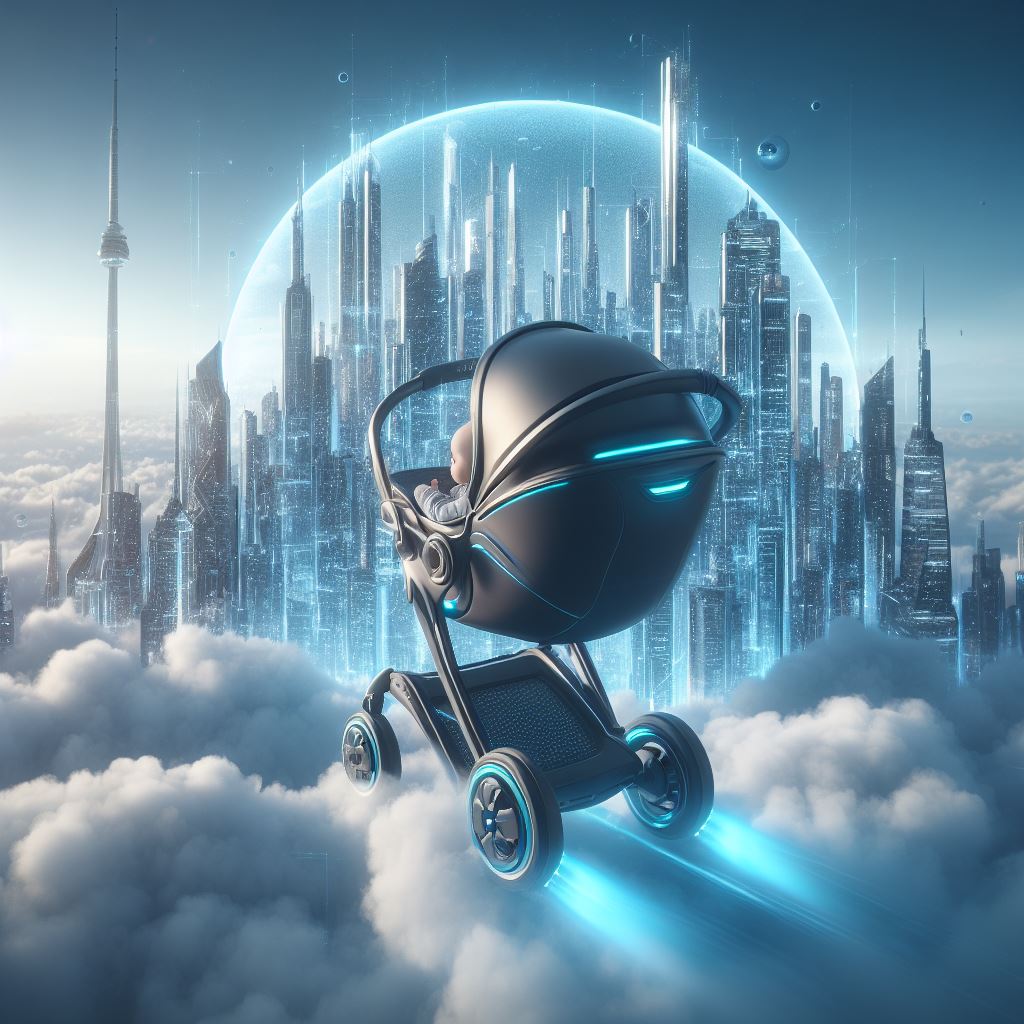
While we’re here, enjoy these images of early electric cars, milk trucks, and… baby carriages?

Shock of the old: the amazing, infuriating history of the electric car – in pictures

Believe it or not, battery-powered vehicles have been around since Victorian times – everything from private automobiles to taxis, ambulances and tricycles. We’ve got the photos to prove it.

History is a fascinating place, full of lessons for the future. 

* * *

“a futuristic image of a baby in a flying stroller, with a cloud city in the background, photorealistic” (Bing Image Creator, Generated with AI)

Read Full Post »

Older Posts »