Feeds:
Posts
Comments

Posts Tagged ‘inspiration’

The 2026 MacArthur Fellows have been announced, and this year’s class is an interesting mix. From climate scientists to fiction writers, historians to chemists and more, the list provides a window into just some of the work being done by smart, enthusiastic, and creative people today.

These Fellows have found ways to capture some of the most important issues of our time, and it’s great to see such varied examples of constructive creativity, and to think of all the other people out there doing good work. Let’s hear it for flashes of genius!

* * *

Read Full Post »

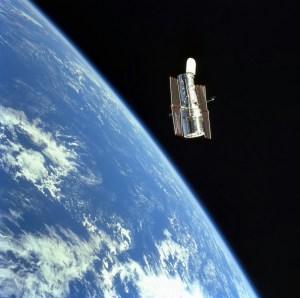
This month marked the Hubble telescope’s 200,000 orbit around Earth. That’s a lot of laps!

NASA marks Hubble’s 200,000th orbit around Earth with a stunning image

Hubble has been operating in space for more than 36 years and is still making discoveries. The space agency noted that the telescope has traveled over 5 billion miles around Earth during its lifetime and has made more than 1.7 million total observations. 

Click through to the article and the related NASA links to see an image of (checks notes) galaxy cluster MACS J0417, taken the day Hubble crossed that milestone. Here’s to science!

* * *

Read Full Post »

“Don’t ask what the world needs. Ask what makes you come alive, and go do it. Because what the world needs is people who have come alive.” — Howard Thurman

* * *

Read Full Post »

Happy Stanislav Petrov Day, everyone! Perhaps you, like me, could use a refresher? Not to worry, Sam Matey-Coste has us covered.

Happy Stanislav Petrov Day

Petrov was under direct orders to follow protocol and to immediately, without hesitation, report any Oko nuclear launch warning to Soviet high command. Who would then, presumably, launch a nuclear counterattack on the United States. This nuclear World War III would have devastated human civilization, perhaps irrevocably.

Stanislav Petrov disobeyed his orders.

It’s a good story, made even more important because it’s true. 

Petrov died in 2017. As one source said at the time, “He is survived by his two children, two grandchildren, and the entire human race.”

Let’s hear it for the humanity that still matters, even among the machines.

* * *

Read Full Post »

“Everything depends on the individual human being, regardless of how small a number of like-minded people there is, and everything depends on each person, through action and not mere words, creatively making the meaning of life a reality in his or her own being.” — Viktor Frankl

* * *

Read Full Post »

I’ve always been more of a word person than a math person, but I do enjoy experts who can translate their area of expertise into sharable concepts with roots in what matters for everyday life.

In this (fair warning, very substantive) video, one of the world’s best mathematicians shares some of the “extremely intuitive concepts” that underpin his forthcoming book on, what else? Math!

The world’s greatest mathematician explains 6 essential concepts of math – Big Think

If we didn’t have numbers, we would have to always speak poetically when trying to describe any situation, and it would always be a little bit imprecise, and the next person who’s communicating what you’re saying would get it slightly different. Numbers allow for precision. They are placeholders for concepts like quantity and size and magnitude, into very portable things that you can communicate to other people who may not have directly interacted with the objects you’re describing. And once you try to describe a very complicated scenario with many, many moving parts, you need numbers and everything else that’s born on top of that.

Do I like speaking poetically? I do, but a ten-page description of the state of the world is not terribly useful when it comes to calculating the price of gas.

* * *

Read Full Post »

Every single crewed mission to space — on one definitive map – Big Think

Future space cowboys and girls, stick this on your wall as you beat a path to the stars. This poster is a snapshot of humanity’s loftiest enterprise so far: making it off-planet. It maps Earth’s main spaceports, the landing sites on the Moon, the highest and farthest orbits traveled by us humans, and the spectacular array of suits and vehicles that got us there. 

This poster is a thing that the site sells, but I’m not promoting it as such and you don’t have to buy it to get a look. If you click through to the article above, you’ll see something that I found pretty dramatic: every crewed space mission fits in one little graphic.

There’s a lot going on in this one image, but compared to any other form of human transportation, it really brings home how different space is.

Imagine a visual history of all US train rides since the driving of the Golden Spike in 1869, for example. Or even yesterday. 

For me, that realization brings an extra bit of wonder to space flight.

* * *

Read Full Post »

For dinner-related reasons, Mr Man and I were recently discussing the humble fish finger. What were they like in childhood, which were the best now, and how does a “fish finger” get made, anyway? Imagine my surprise when I ran across this article on that exact topic. It’s interesting and full of supply-chain related surprises (that “30,000 mile” bit isn’t a typo!).

The 30,000-mile fish finger – by Ed Conway – Material World

This journey, a journey about which most people tucking into their fish fingers today are almost completely oblivious, tells you rather a lot about the way the modern world – what I like to call the Trade World – really works.

I find stories like this fascinating, and they’re also an interesting window into ideas for fictional worlds. If your fantasy kingdom has been around for a couple of centuries, it’s probably part of an international trading network. And that network would be rife with all kinds of history and conflict, complications and opportunities, legal and otherwise.

Just a thought!

* * *

Read Full Post »

“Inspiration usually comes during work, rather than before it.” — Madeleine L’Engle

* * *

Read Full Post »

This week marked the 60th anniversary of Star Trek (it was Tuesday, actually, but alas! I was distracted by the whole “return to work” thing). And the show almost didn’t make it at all.

How ‘Star Trek’ almost failed to launch

“The Cage” – a complicated story about alien mind-control – was an ambitious pilot. When Roddenberry presented it to NBC, the programming executives were blown away. But the sales and marketing department wasn’t convinced. Not enough action, they thought. It would be hard to promote. Pass.

“Star Trek,” it seemed, was dead.

Fortunately, there’s more to that story, and the show not only got off the ground but became the entertainment juggernaut it is today.

I wasn’t a Trek fan growing up, in large part, I think, because my parents had made the conscious decision not to have a television. Now that I’m all grown up and have a TV of my own, though, I appreciate the ideals and more behind the sometimes campy but always fun franchise. So inspiring, and not just for everyday fans. 

‘Star Trek’ and NASA have intertwined legacies – the show championed diversity and inspired generations of real space scientists

When it premiered in 1966, no one could have predicted that it would lead to more than a dozen spinoff shows, more than a dozen movies and one of the most enduring fandoms in popular culture.

“Star Trek” is also unusual for its close connections to NASA, both in its storylines and in the real world. Decades of “Star Trek” adventures have ignited a love of spaceflight across generations, inspiring many who now work as space professionals.

Let’s hear it for the real-world powers of fiction. And now, in life and the imagination, go boldly!

* * *

Read Full Post »
« Newer Posts - Older Posts »