Today might be crap. Wake to rain, the car won’t start and the kid’s hamster is under the weather too.
You’re out of coffee.
Steam builds and you dash headlong toward the Scylla of anger and the Charybdis of self-doubt. You seriously consider a cup of despair.
The boss asks you to step in last-minute for the most important meeting of the year or the kid’s hamster dies or it really is uphill both ways or (fill in the blank here) and you think, “I just… can’t.”
As I’ve mentioned, I sometimes see the world a little sideways. It helps me find the fun in functional and the butterfly in the weeds. It also means that some days, a perfectly normal breakfast can turn into something a little more elaborate.
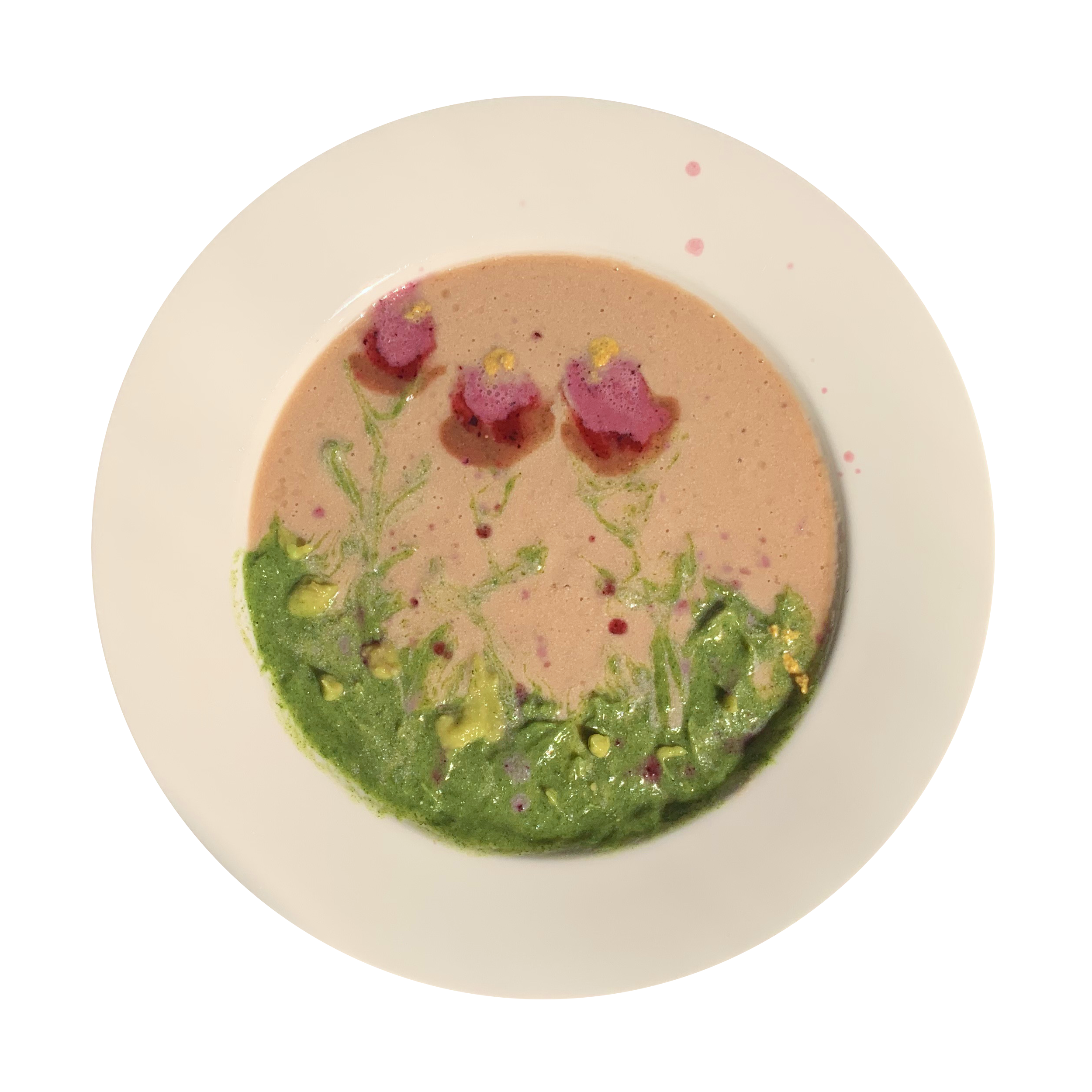
I mean, there I was this morning, producing multiple batches of colored liquid: bananas and tofu, spinach and avocado and green tea, blueberries and strawberries and cranberry juice, hemp seed and turmeric and more. It’s paint by any other name. And so, smoothie art.
* Editor’s Note: Welcome to Lunchtime Clickbait, where we test oddly specific headlines establishing implausibly sweeping claims for oddly specific life strategies.
* * *
Sure, it’s only been two days, but I can unequivocally say that smoked oysters have changed my life.
How do I know for sure that smoked oysters are the best thing since sliced bread? Well, three days ago I had ideas as usual, but little energy for action. Sure, I got my work done, but then, meh.
For the past two days we have had smoked oysters for dinner, and for the past two days I have had far more energy and verve than usual. I think the connection is obvious.
Yesterday? I did all of the things. Work, yes, but also house and writing and creative fun stuff. Also peaches.
Happily tucked away in the freezer, waiting to become sorbet.
Today I’ll do that and more, and I’m sure that it’s all because of the smoked oysters. What’s not to love?
Will smoked oysters work for you? Maybe, and unless you have a shellfish allergy, they can’t hurt.
* * *
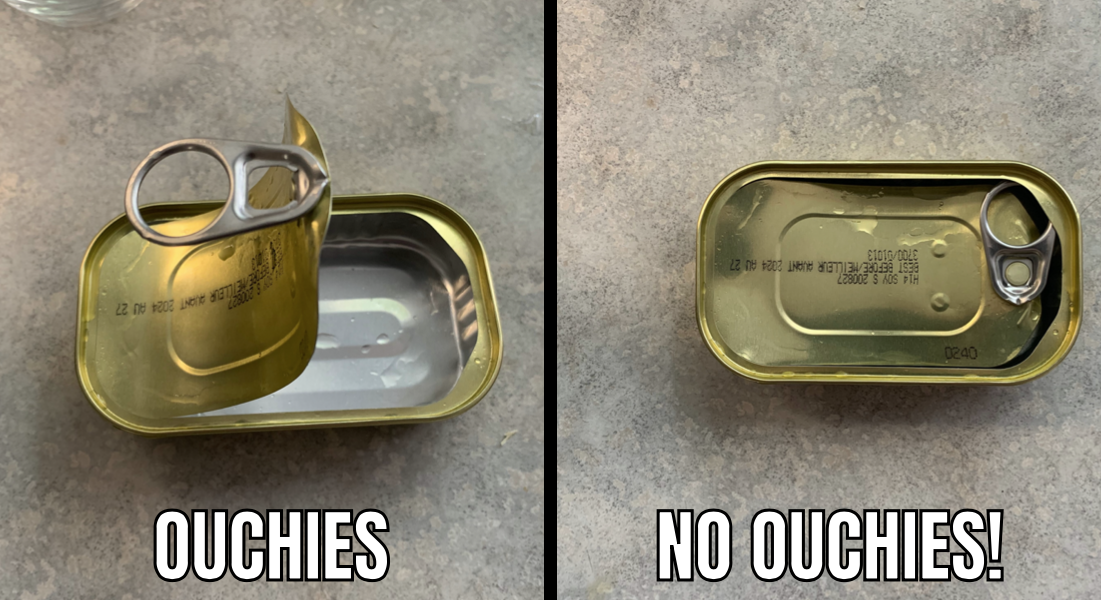
Now, do I wish they didn’t come in cans designed to slice my fingers when taking them to the recycling bin? I do, but I also have a solution.
I mean sure, you could still cut yourself if you tried hard enough. So maybe don’t?
And many of the readily available options are from halfway around the globe, but it would be great if increasing local popularity also encouraged more local production.
Still not convinced that smoked oysters are right for you? What else does a sweeping claim for dramatic outcomes based on one small lifestyle change need for maximum reputability?
A Top Ten List, of course!
* * *
Top Ten Reasons to Eat Smoked Oysters
10. They are great on salads, on pasta, in soups, on picnics, or straight from the can when you don’t have time for niceties like plates.
9. Canned, they are shelf stable to the Apocalypse and beyond.
8. Oysters purify water, are terrific for shoreline health, contribute to restorative aquaculture, and in a well-managed fishery are a great addition to a sustainable food system.
7. They remind me that the history of cities like New York is tied to the oyster.
6. Smoked oysters give an average day a bit of fancy dancy je ne sais quoi.
5. Oysters are rich in protein, good fats, iron, zinc, and copper. Eating them makes me feel practically electric!
4. Smoking takes away that weird sliminess of raw oysters that some people love but, well, I don’t. (Although maybe I haven’t tried enough of the good stuff, like those from High on the Hog‘s TheRealMotherShuckers.)
3. I still have warm fuzzy feelings from childhood, sitting in the living room recliner, reading, and eating after-school oyster stew.
2. Lord, I don’t know, isn’t this list done yet?
And finally, the number one reason to eat smoked oysters…
1. They are affordable, accessible, and Costco sells these babies in eight-can packs!
* * *
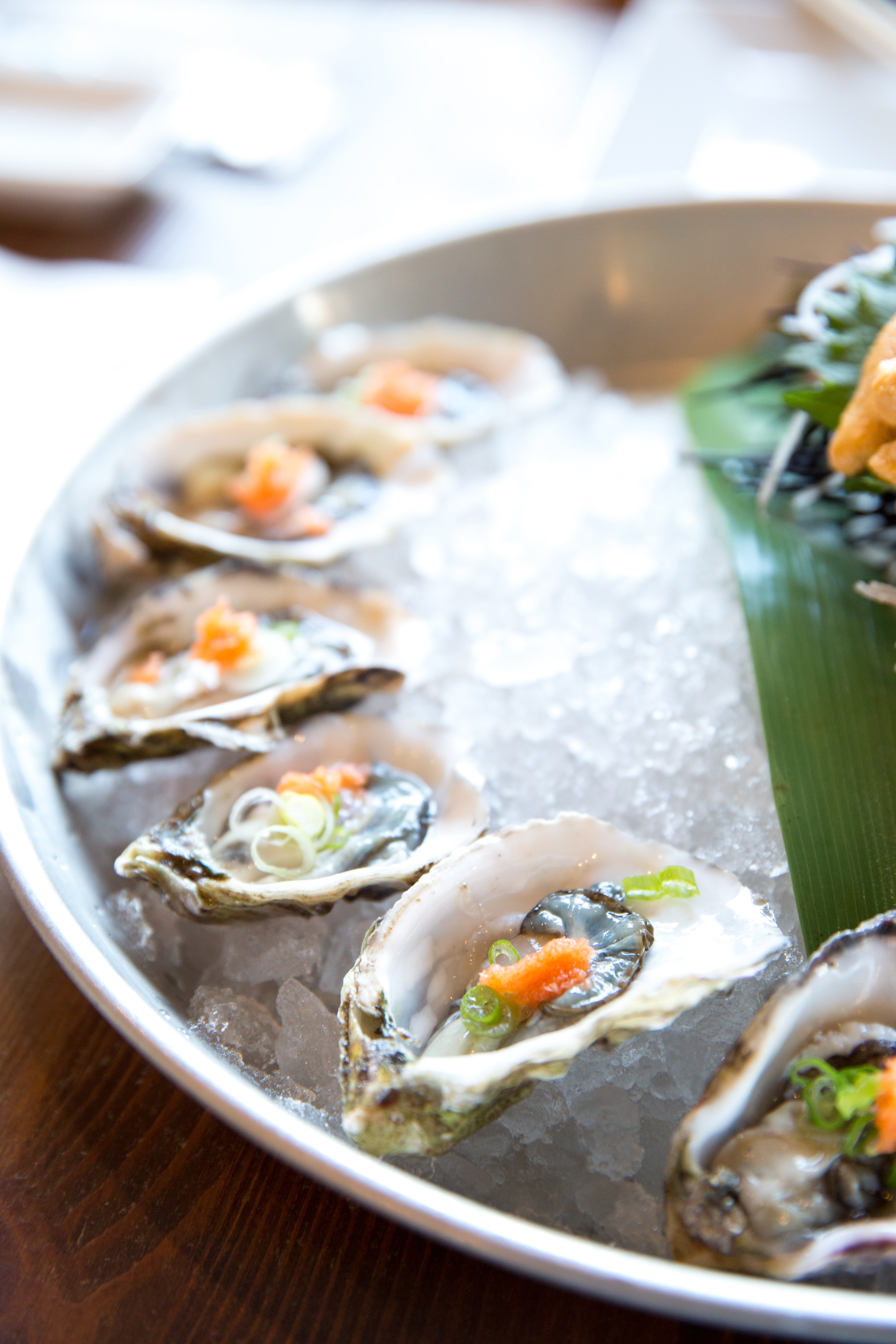
Yes, these oysters are the squishy kind, but the picture is pretty. Photo by Jason Leung on Unsplash
Reality? It’s Tuesday, the peaches are too soft for this, I think, and we’re already making scallion cakes tonight. Maybe next time.
Instead I’m going to try this Bittman sorbet recipe because it sounds delicious, but also because it means I can just slice everything up and freeze it until I’m good and ready.
Unless I come up with another idea between now and later. Like… grilled peaches with lime and maple syrup, peach pie, roasted peach halves with cinnamon crumble on top, stewed peaches with cinnamon, lemon and cardamom, peach salsa, savory peach-lime chutney, or…?
I’m feeling a lot better today, less exhausted ouchies and more “It’s cool, I’m good.” No naps today, no wishing I had a sling for my mostly incapacitated arm, just chilling and learning things.
Like using words to generate color palettes. Let’s see what we can do with that, shall we?
Using the Unsplash photo database, this site retrieves images related to your search term, combines them into a single image, then extracts a color palette. One nice thing is that you can deselect some of the component images, darken or brighten the palette, or zoom in to highlight just some of the colors in an image. I do find that the results tend to be a little muddy (“summer” is a lot duller grey and brown than I expected) but the tweaking helps.
* * *
Then what? I decided to learn how to color grade an image. Essentially, grading is a technique that lets you take the palette from one visual and apply it to another, often changing the tone and emotion of the image. A photo can go from warm summer afternoon to dark and stormy without a lot of fuss.
There are a lot of ways to do this but here’s a handy tutorial explaining the process in Affinity:
PhotoChrome has a link to download the composite image but it didn’t work for me. Instead, I used the “copy HEX” option for the color palette, then copied the darkest, lightest and middle colors into the Affinity photo Gradient Map / RGB Hex Sliders window.
What’s the color of cool? In my version of this exercise, this:
#4b5c74, #656778, #767482, #718694, #80949d
Here’s what that looks like when transferred onto an image.
The other day, a twenty-something told me I was cool. I don’t say this to brag (ok, maybe just a little), but because it surprised the heck out of me, and also gave me an extra shot of hope for the future.
Why?
Because this particular twenty-something doesn’t know much about me personally. And let’s face it, we’ve already established that I’m not that great.
* * *
What’s cool?
Well, I do have the US Army Survival Manual on my bookshelf, next to Tolkien and Bill Bryson, Ann Patchett, Dava Sobel, Jasper Fforde, Ilona Andrews, R2D2, a lucky cricket, and Edible & Medicinal Plants of Canada, but he doesn’t know that. Or that I can dye wool with the plants in my yard then design and knit it into a sweater, write science fiction and fantasy, have circumnavigated the globe, perfected chocolate cake and hybrid sourdough sandwich loaf recipes, turned my own wooden rolling pin, or any of the other things that you, dear readers, know about my sojourn on this planet.*
This particular person is a day-job colleague. What he knows about me is that I care about society, inequality, the environment and how we live in it. In short, he knows that I’m trying to make a positive difference.
That’s what he thinks is cool.
And that gives me just a little bit of extra hope for the future.
This is an entry from my book of beginnings. It’s fiction, but inspired by my grandmother (yes, the whippersnapper).
She was loving and kind and sweet. She also lived through an alcoholic father, abandonment, and the Great Depression, and was a lot tougher than she looked. She and my grandfather were enthusiastic travelers. The family story was that she kept a series of journals about their trips, starting with their honeymoon. In Cuba.
If I’d ever found those journals, it would not have surprised me if she was also a spy.
* * *
Cuba 1937
I was 24 when my grandmother died, the same age she’d been when she got married. My father called to give me the sad news. She’d been sick, but she lived a full life. She was the neighborhood bridge and poker champion in her neighborhood circle for most of the half-century she lived there and she led the women’s golf game every year. The next day I went to the house, to help my father sort through her things.
She was my favorite grandmother, and not just because she was a fantastic baker. My brother and I would sit at her kitchen table, eating pound cake and cookies while she told us stories. That’s what I liked best, the stories. She and Grandpa were travelers, starting when they got married and only stopping months before their deaths. That’s what they lived for, and listening to Grandma talk about souks, the Amazon rainforest, the glaciers of Alaska and the mountains of Italy, I thought I knew why.
“She left you something.”
My father had opened the door in a T-shirt, dressed for what was sure to be a messy task. Sorting through the remnants of eight decades would take us a while. I followed him into the kitchen and poured myself a cup of tea. I stood at the table waiting for the hot liquid to cool, and wondered what minor treasure I might receive.
“You’re lucky. The box they were in was sealed up nice and tight.”
The bundle was solid, and heavy. I set it on the table and unwrapped the musty fabric covering.
“I didn’t know anyone used oilcloth anymore.”
“These go back a long time.”
Inside the oilcloth envelope was a stack of books. They were different sizes and shapes, starting with a school notebook and progressing to leather-bound hardcovers. Each one had a short title written on the cover in my grandmother’s elegant script.
Looking over my shoulder, my father smiled.
“She knew how much you enjoyed her stories, so she wanted you to have her travel journals. This should be every trip she took over more than fifty years.”
Treasure indeed. Realizing that the most recent accounts were on top, I re-stacked the journals to uncover the oldest, her first trip. The black and white cardboard cover was grayed with age and blank except for her name. The pages were stiff, and for a moment I was afraid that the paper had completely fused together. A little work at the edges, though, and I was able to gently open it to the first page. Yellow with age, the corners cracked but the ink was still dark and bold.
She’d put the title inside, as if unwilling to announce it on the book’s cover.








You must be logged in to post a comment.