I believe in kindness. Also in mischief.
— Mary Oliver
* * *

Posted in Other, tagged #365Ways, #365Ways2025, fun, inspiration, Saturdays, Thoughts on August 9, 2025| Leave a Comment »
Posted in Science!, tagged #365Ways, #365Ways2025, astronomy, inspiration, JWST, NASA, science on August 8, 2025| Leave a Comment »
Sometimes a picture is worth much more than a thousand words:
Andromeda Galaxy Panorama Features Over 200 Million Stars
Stitching together more than 600 overlapping snapshots, the panorama serves as the largest photomosaic ever assembled from Hubble Space Telescope observations. Across its 2.5 billion pixels are a vast and vibrant assortment of 200 million stars, a mere fraction of Andromeda’s entire population. Taken in its entirety, the panorama is not only a technological or photographic achievement, it’s also a critical glimpse into the Andromeda galaxy itself.
And here’s the video version.
Andromeda revealed!
* * *
Posted in Other, tagged #365Ways, #365Ways2025, a bit of fun, creativity, fond memories, inspiration, Thoughts on August 5, 2025| 1 Comment »
Have a few minutes to let your inner child run free?
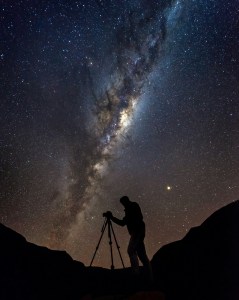
Perhaps you have fond memories of staring up at the sky during summer break, letting clouds drift across your subconscious until “Look! An elephant! An pterodactyl! Jabba the Hutt!”
If so, this site might be just the thing for you:
Cloud Drawing Gallery – Create & Share Cloud Art
* * *

Posted in Science!, tagged #365Ways, #365Ways2025, inspiration, ISS, NASA, science, space, technology, Thoughts, Writers on August 4, 2025| Leave a Comment »
I have a folder of interesting articles, quotes, and ideas. When the cicadas are buzzing and the temperature is too hot to think of anything particularly timely, I search that folder for stories that might interest you.
Today, this treasure trove of ideas wants you to know about a critical space station issue: water.
When you’re on a camping trip, you might have to pack your own food and maybe something to filter or treat water that you find. But imagine your campsite is in space, where there’s no water, and packing jugs of water would take up room when every inch of cargo space counts. That’s a key challenge engineers faced when designing the International Space Station.
Real life Dune! Ok, not really, but kind of! And this is exactly the sort of technology that can benefit the Earth-bound among us too.
* * *
Posted in Entertainment, Other, Science!, tagged #365Ways, #365Ways2025, cool facts, creativity, Indiana Jones, inspiration, NASA, Thoughts on August 2, 2025| Leave a Comment »
I enjoy the fact that there is always something new to learn. Some things are big, like the latest on asteroid deflection from NASA’s DART program, and some are small, like the fact that Dan Aykroyd had a cameo in Indiana Jones and the Temple of Doom. (Did you know that? I didn’t, until last night when I did a double take and said, “Wait, the guy with the mustache and the British accent. Was that Dan Aykroyd?” It was!)
Of global importance or not, these facts are all interesting reminders that there is always something new around the corner, if you keep looking.
And that, I think, is magic.
* * *

Posted in Other, Science!, tagged #365Ways, #365Ways2025, innovation, inspiration, science, science fiction, Thoughts on August 1, 2025| Leave a Comment »
Here’s a fun and productive use of the internet that answers a very important question: How close are we to living in the Star Trek universe?
Check it out and see!
This guide is intended to be a comprehensive look at the tech that Star Trek suggested to drive humanity forward ad astra per aspera. The emphasis is on innovations that don’t violate physics according to present consensus understanding. Go ahead and explore boldly… Just don’t waste too much time on idle speculation: there’s a whole lot to do if we’re going to get to Trek, and it’s going to take all of us.
* * *
Posted in Other, Writing, tagged #365Ways, #365Ways2025, books, higher education, inspiration, so many books so little time, syllabi, writing on July 31, 2025| Leave a Comment »
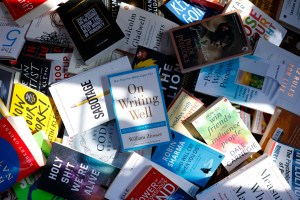
Ever wonder what kind of books get assigned in college courses? Wonder no more!
This plot shows the 1,138,841 most frequently assigned texts in the Open Syllabus corpus, a database of 7,292,573 college course syllabi.
The books are grouped by field and sized by the number of syllabi on which they are assigned. Click for details, browse from archaeology to information science to writing and more, and have fun.
You will have to do a lot of zooming, however. There are a lot of books in this graphic!
* * *
Posted in Other, Writing, tagged #365Ways, #365Ways2025, action, creativity, inspiration, procrastination, Thoughts, writing on July 17, 2025| Leave a Comment »
There is no perfect moment to begin.
— Seth Godin
* * *
Posted in Writing, tagged #365Ways, #365Ways2025, creativity, inspiration, quotes, Thoughts, Writers, writing on July 13, 2025| Leave a Comment »
“Dare to be strong and courageous. That is the road. Venture anything.”
— Sherwood Anderson
* * *
Posted in Other, tagged #365Ways, #365Ways2025, creativity, failure, inspiration, persistence, Thoughts on July 3, 2025| Leave a Comment »
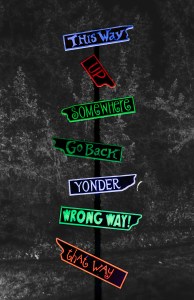
This world belongs to you. You are here to lead, to blossom out in the open, to show your heart to strangers, to fail and fail and fail again — with grace, with humor, with dignity, with joy.
— Heather Havrilesky
* * *



You must be logged in to post a comment.