Feeds:
Posts
Comments

Posts Tagged ‘literature’

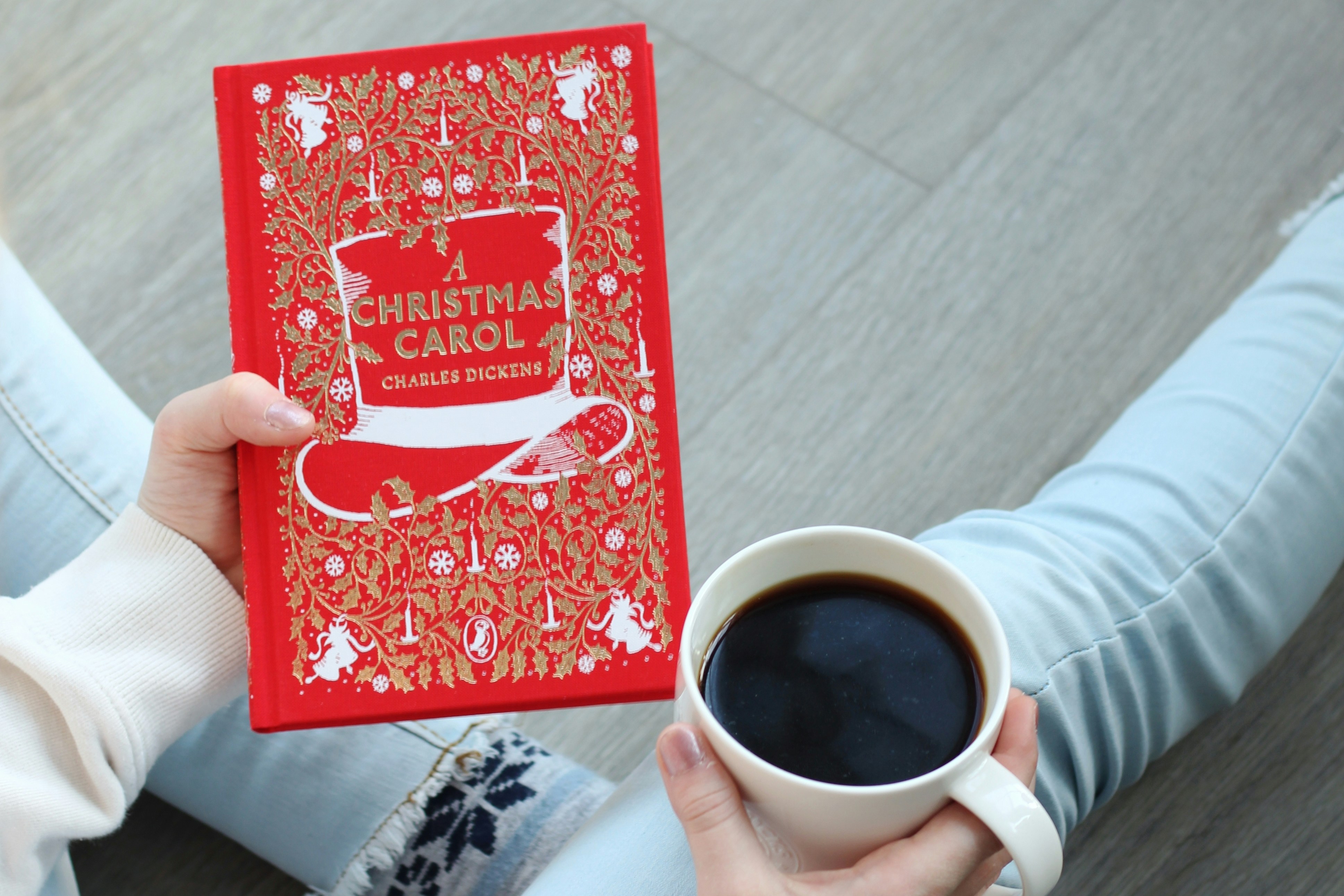
Merry Christmas! Today we have the final installments of Dickens’ A Christmas Carol.

A Christmas Carol (Dickens, 1843): Stave 4

THE LAST OF THE SPIRITS.

The Phantom slowly, gravely, silently, approached. When it came near him, Scrooge bent down upon his knee; for in the very air through which this Spirit moved it seemed to scatter gloom and mystery.

It was shrouded in a deep black garment, which concealed its head, its face, its form, and left nothing of it visible save one outstretched hand. But for this it would have been difficult to detach its figure from the night, and separate it from the darkness by which it was surrounded.

A Christmas Carol (Dickens, 1843): Stave 5

THE END OF IT.

Yes! and the bedpost was his own. The bed was his own, the room was his own. Best and happiest of all, the Time before him was his own, to make amends in!

“I will live in the Past, the Present, and the Future!” Scrooge repeated, as he scrambled out of bed. “The Spirits of all Three shall strive within me. Oh Jacob Marley! Heaven, and the Christmas Time be praised for this! I say it on my knees, old Jacob; on my knees!”

He was so fluttered and so glowing with his good intentions, that his broken voice would scarcely answer to his call. He had been sobbing violently in his conflict with the Spirit, and his face was wet with tears.

Read the last two installments of the story here and here, and thanks for sharing this Christmas classic with me.

May you keep Christmas well!

* * *

Photo by Elin Melaas on Unsplash

Read Full Post »

What comes after parts one and two of Dickens’ A Christmas Carol? Part three, of course!

A Christmas Carol (Dickens, 1843): Stave 3

THE SECOND OF THE THREE SPIRITS.

Awaking in the middle of a prodigiously tough snore, and sitting up in bed to get his thoughts together, Scrooge had no occasion to be told that the bell was again upon the stroke of One. He felt that he was restored to consciousness in the right nick of time, for the especial purpose of holding a conference with the second messenger despatched to him through Jacob Marley’s intervention. But finding that he turned uncomfortably cold when he began to wonder which of his curtains this new spectre would draw back, he put them every one aside with his own hands; and lying down again, established a sharp look-out all round the bed. For he wished to challenge the Spirit on the moment of its appearance, and did not wish to be taken by surprise and made nervous.

Gentlemen of the free-and-easy sort, who plume themselves on being acquainted with a move or two, and being usually equal to the time-of-day, express the wide range of their capacity for adventure by observing that they are good for anything from pitch-and-toss to manslaughter; between which opposite extremes, no doubt, there lies a tolerably wide and comprehensive range of subjects. Without venturing for Scrooge quite as hardily as this, I don’t mind calling on you to believe that he was ready for a good broad field of strange appearances, and that nothing between a baby and a rhinoceros would have astonished him very much.

Now, being prepared for almost anything, he was not by any means prepared for nothing; and, consequently, when the Bell struck One, and no shape appeared, he was taken with a violent fit of trembling. Five minutes, ten minutes, a quarter of an hour went by, yet nothing came. All this time, he lay upon his bed, the very core and centre of a blaze of ruddy light, which streamed upon it when the clock proclaimed the hour; and which being only light, was more alarming than a dozen ghosts, as he was powerless to make out what it meant, or would be at; and was sometimes apprehensive that he might be at that very moment an interesting case of spontaneous combustion, without having the consolation of knowing it. At last, however, he began to think—as you or I would have thought at first; for it is always the person not in the predicament who knows what ought to have been done in it, and would unquestionably have done it too—at last, I say, he began to think that the source and secret of this ghostly light might be in the adjoining room: from whence, on further tracing it, it seemed to shine. This idea taking full possession of his mind, he got up softly and shuffled in his slippers to the door.

The moment Scrooge’s hand was on the lock, a strange voice called him by his name, and bade him enter. He obeyed.

It was his own room. There was no doubt about

that. But it had undergone a surprising transformation. The walls and ceiling were so hung with living green, that it looked a perfect grove, from every part of which, bright gleaming berries glistened. The crisp leaves of holly, mistletoe, and ivy reflected back the light, as if so many little mirrors had been scattered there; and such a mighty blaze went roaring up the chimney, as that dull petrifaction of a hearth had never known in Scrooge’s time, or Marley’s, or for many and many a winter season gone. Heaped up upon the floor, to form a kind of throne, were turkeys, geese, game, poultry, brawn, great joints of meat, sucking-pigs, long wreaths of sausages, mince-pies, plum-puddings, barrels of oysters, red-hot chesnuts, cherry-cheeked apples, juicy oranges, luscious pears, immense twelfth-cakes, and seething bowls of punch, that made the chamber dim with their delicious steam. In easy state upon this couch, there sat a jolly Giant, glorious to see; who bore a glowing torch, in shape not unlike Plenty’s horn, and held it up, high up, to shed its light on Scrooge, as he came peeping round the door.

“Come in!” exclaimed the Ghost. “Come in! and know me better, man!”

Scrooge entered timidly, and hung his head before this Spirit. He was not the dogged Scrooge he had been; and though its eyes were clear and kind, he did not like to meet them.

“I am the Ghost of Christmas Present,” said the Spirit. “Look upon me!”

Scrooge reverently did so. It was clothed in one simple deep green robe, or mantle, bordered with white fur. This garment hung so loosely on the figure, that its capacious breast was bare, as if disdaining to be warded or concealed by any artifice. Its feet, observable beneath the ample folds of the garment, were also bare; and on its head it wore no other covering than a holly wreath set here and there with shining icicles. Its dark brown curls were long and free: free as its genial face, its sparkling eye, its open hand, its cheery voice, its unconstrained demeanour, and its joyful air. Girded round its middle was an antique scabbard; but no sword was in it, and the ancient sheath was eaten up with rust.

“You have never seen the like of me before!” exclaimed the Spirit.

Read the rest of part three here!

* * *

Photo by Hert Niks on Unsplash

Read Full Post »

I hope you enjoyed yesterday’s installment of Dickens’ A Christmas Carol. Now for part two!

A Christmas Carol (Dickens, 1843): Stave 2

THE FIRST OF THE THREE SPIRITS.

When Scrooge awoke, it was so dark, that looking out of bed, he could scarcely distinguish the transparent window from the opaque walls of his chamber. He was endeavouring to pierce the darkness with his ferret eyes, when the chimes of a neighbouring church struck the four quarters. So he listened for the hour.

To his great astonishment the heavy bell went on from six to seven, and from seven to eight, and regularly up to twelve; then stopped. Twelve! It was past two when he went to bed. The clock was wrong. An icicle must have got into the works. Twelve!

He touched the spring of his repeater, to correct this most preposterous clock. Its rapid little pulse beat twelve; and stopped.

“Why, it isn’t possible,” said Scrooge, “that I can have slept through a whole day and far into another night. It isn’t possible that anything has happened to the sun, and this is twelve at noon!”

The idea being an alarming one, he scrambled out of bed, and groped his way to the window. He was obliged to rub the frost off with the sleeve of his dressing-gown before he could see anything; and could see very little then. All he could make out was, that it was still very foggy and extremely cold, and that there was no noise of people running to and fro, and making a great stir, as there unquestionably would have been if night had beaten off bright day, and taken possession of the world. This was a great relief, because “three days after sight of this First of Exchange pay to Mr. Ebenezer Scrooge or his order,” and so forth, would have become a mere United States’ security if there were no days to count by.

Scrooge went to bed again, and thought, and thought, and thought it over and over and over, and could make nothing of it. The more he thought, the more perplexed he was; and the more he endeavoured not to think, the more he thought. Marley’s Ghost bothered him exceedingly. Every time he resolved within himself, after mature inquiry, that it was all a dream, his mind flew back again, like a strong spring released, to its first position, and presented the same problem to be worked all through, “Was it a dream or not?”

Read the rest of part two here!

* * *

Photo by Elliott B on Unsplash

Read Full Post »

I’ve mentioned before that I’ve missed some of the classics of Western literature, and also it’s almost Christmas (I know, right, it came up fast this year!). While the timing isn’t perfect, today seems like a good day to make a little progress on that front.

Specifically, this seems like a grand time to start Charles Dickens’ A Christmas Carol. Published in 1843, the story is famous for popularizing many of what we think of as Christmas traditions. The story was also released in installments, a format that appeals to me in general and also in particular, given the holiday-related furor that I expect from the next few days.

Cue part one!

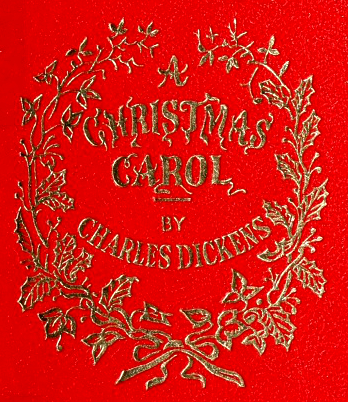
Wikipedia, by John Leech, Public Domain

PREFACE.

I have endeavoured in this Ghostly little book, to raise the Ghost of an Idea, which shall not put my readers out of humour with themselves, with each other, with the season, or with me. May it haunt their houses pleasantly, and no one wish to lay it.

Their faithful Friend and Servant,

C. D.

December, 1843.

A Christmas Carol (Dickens, 1843): Stave 1

Marley was dead: to begin with. There is no doubt whatever about that. The register of his burial was signed by the clergyman, the clerk, the undertaker, and the chief mourner. Scrooge signed it: and Scrooge’s name was good upon ‘Change, for anything he chose to put his hand to. Old Marley was as dead as a door-nail.

Mind! I don’t mean to say that I know, of my own knowledge, what there is particularly dead about a door-nail. I might have been inclined, myself, to regard a coffin-nail as the deadest piece of ironmongery in the trade. But the wisdom of our ancestors is in the simile; and my unhallowed hands shall not disturb it, or the Country’s done for. You will therefore permit me to repeat, emphatically, that Marley was as dead as a door-nail.

Scrooge knew he was dead? Of course he did. How could it be otherwise? Scrooge and he were partners for I don’t know how many years. Scrooge was his sole executor, his sole administrator, his sole assign, his sole residuary legatee, his sole friend, and sole mourner. And even Scrooge was not so dreadfully cut up by the sad event, but that he was an excellent man of business on the very day of the funeral, and solemnised it with an undoubted bargain.

The mention of Marley’s funeral brings me back to the point I started from. There is no doubt that Marley was dead. This must be distinctly understood, or nothing wonderful can come of the story I am going to relate. If we were not perfectly convinced that Hamlet’s Father died before the play began, there would be nothing more remarkable in his taking a stroll at night, in an easterly wind, upon his own ramparts, than there would be in any other middle-aged gentleman rashly turning out after dark in a breezy spot—say Saint Paul’s Churchyard for instance—literally to astonish his son’s weak mind.

Scrooge never painted out Old Marley’s name. There it stood, years afterwards, above the warehouse door: Scrooge and Marley. The firm was known as Scrooge and Marley. Sometimes people new to the business called Scrooge Scrooge, and sometimes Marley, but he answered to both names. It was all the same to him.

Oh! But he was a tight-fisted hand at the grindstone, Scrooge! a squeezing, wrenching, grasping, scraping, clutching, covetous old sinner! Hard and sharp as flint, from which no steel had ever struck out generous fire; secret, and self-contained, and solitary as an oyster. The cold within him froze his old features, nipped his pointed nose, shrivelled his cheek, stiffened his gait; made his eyes red, his thin lips blue; and spoke out shrewdly in his grating voice. A frosty rime was on his head, and on his eyebrows, and his wiry chin. He carried his own low temperature always about with him; he iced his office in the dog-days; and didn’t thaw it one degree at Christmas.

Read the rest here, and tune in tomorrow for the next installment!

* * *

Photo by Markus Spiske on Unsplash

Read Full Post »

I am still on a bit of a posting holiday, apparently. A lot is happening here at Chez J, but it’s all ruminative on the writing front, nothing to see here… yet. Before you head off to what I hope is a terrific summer day, though, have a slice of on-point social commentary from a master of speculative fiction, in conversation with DEATH (who, perhaps unsurprisingly, has a lot to say about this business of life).

[tl;dr: be excellent to each other, or what’s the point?]

“All right,” said Susan. “I’m not stupid. You’re saying humans need… fantasies to make life bearable.”

REALLY? AS IF IT WAS SOME KIND OF PINK PILL? NO. HUMANS NEED FANTASY TO BE HUMAN. TO BE THE PLACE WHERE THE FALLING ANGEL MEETS THE RISING APE.

“Tooth fairies? Hogfathers? Little—”

YES. AS PRACTICE. YOU HAVE TO START OUT LEARNING TO BELIEVE THE LITTLE LIES.

“So we can believe the big ones?”

YES. JUSTICE. MERCY. DUTY. THAT SORT OF THING.

“They’re not the same at all!”

YOU THINK SO? THEN TAKE THE UNIVERSE AND GRIND IT DOWN TO THE FINEST POWDER AND SIEVE IT THROUGH THE FINEST SIEVE AND THEN SHOW ME ONE ATOM OF JUSTICE, ONE MOLECULE OF MERCY. AND YET—Death waved a hand. AND YET YOU ACT AS IF THERE IS SOME IDEAL ORDER IN THE WORLD, AS IF THERE IS SOME…SOME RIGHTNESS IN THE UNIVERSE BY WHICH IT MAY BE JUDGED.

“Yes, but people have got to believe that, or what’s the point—”

MY POINT EXACTLY.”
― Terry Pratchett, Hogfather

Read Full Post »

The finalists for the 2017 Hugo Awards have been released! As I’ve mentioned before, if you’re interested in some of the best new science fiction today, or you’re looking to pad your reading list, the Hugo roster is a great place to start.

You can find some links to the nominated stories at Locus Online. For more on the list and the rule changes for this year’s award (including the new Best Series category), check out this column at Book Riot or this post on the WSFS updates. If you’re interested in voting for any of this fine fiction to win a Hugo, you’ll need an active membership to Worldcon 75.

Tor.com and Uncanny are killing it this year. The Locus list is light on short fiction links, so have a few (mostly free) links to the shorter works:

Best Novelette

Best Short Story

I do love a full To Read list. Enjoy!


Read Full Post »

Slate has invited ten writers to envision the possibilities of a Trump future. As Ben H. Winters, author and the editor of this series explains, “fiction has a special power to clarify, galvanize, prophesy, and warn.” Writers include Héctor Tobar, Ben H. Winters, Nisi Shawl, Saladin Ahmed, Lauren Beukes, Jeff VanderMeer, Kashana Cauley, J. Robert Lennon, Edan Lepucki, and Elizabeth Bear.
Because as the motto says, it’s best to be prepared.

Read Full Post »

Tor.com has put together a selection of its short fiction from 2016. If you’re interested in an e-book of same (rather than reading the material online) it’s available free for the next few days.

We are very excited to offer a free download of the 2016 edition of Some of the Best from Tor.com, an anthology of 25 of our favorite short stories and novelettes from the last year. Readers worldwide can download the ebook for free by signing up for the Tor.com Publishing newsletter from midnight EST on January 10th until 11:59 P.M. EST on January 17th.

Free fiction. Mmm, tasty.

Read Full Post »

The finalists for the 2016 Hugo Awards have been announced! If you’re interested in the best new science fiction today, or just looking to pad your reading list, the Hugo roster is a great place to start.

Check out the complete list at MidAmeriCon II (this year’s Worldcon host). For more on the award and this year’s slate, John Scalzi has a new piece up at the LA Times:

The Hugo finalists: John Scalzi on why the sad puppies can’t take credit for Neil Gaiman’s success*

I’ve read all but one of the candidates for Best Novel, but only two of those for Best Novella and a handful of the remaining works (I’ve seen all but one of the films, though, so quick and digestible, movies!).

If you’re interested in voting for any of this fine fiction to win a Hugo, you’ll need an active membership to Worldcon. (If you aren’t planning to attend the conference, the most accessible way to do this is with a $50 Supporting membership, which comes with many of the nominated works in the Hugo Voter Packet.)

Links to the (mostly not free) nominated stories are available via Locus Online or in Google’s handy summary search sidebar, along with past winners. I’ll add one more link to the free short story nominee at Nature:

Asymmetrical Warfare” by S. R. Algernon (Nature, Mar 2015)

Time to get reading:)

——

* Yes, the whole “puppies” kerfuffle remains ongoing, but looks to be less of an issue for this year’s Hugo nominees and going forward. Thankfully!

Read Full Post »

Today’s free fiction is a Best of 2015 collection from Tor.com. Available in PDF, EPUB & MOBI formats, the book download requires free login. Note that these and all other Tor.com stories are available free online but it’s great to get a prepackaged anthology as a jumping off point.

Some of the Best from Tor.com 2015

The stories were acquired by editors Ellen Datlow, Claire Eddy, Carl Engle-Laird, Liz Gorinsky, David G. Hartwell, Patrick Nielsen Hayden, Beth Meacham, Marco Palmieri, and Ann VanderMeer.

Enjoy!

Read Full Post »

Older Posts »