Feeds:
Posts
Comments

Posts Tagged ‘NASA’

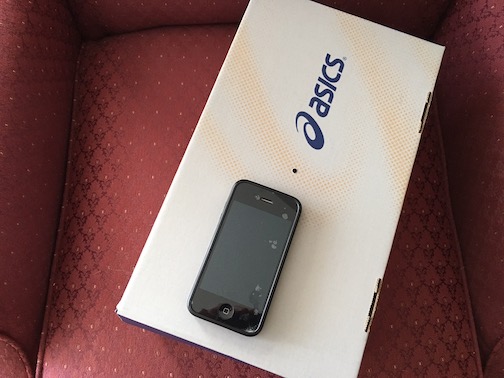
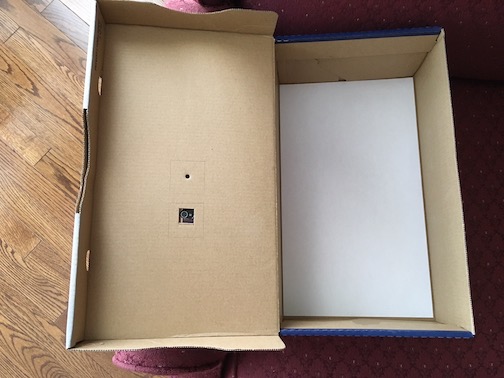
A friend with a shared love for Harry Potter sent me a link the other day. Some creative and determined person decided to make a Weasley clock.*
The magical ‘Harry Potter’ location clock exists in DIY form

For those who may have missed this detail from the HP book and/or movie, the Weasley clock is a magical JK Rowling invention that tracks each Weasley family member’s location and displays it on an antique clock face.

Rowling thought it up, and a Muggle made it real. How cool is that?

So with thanks to my friend, today’s installment of #ThingsILike is the real-world power of fiction.

*

“If you just focus on what you know, you’re blinding yourself to new opportunities.”
— Tyler Jacks, MIT

There are a lot of discussions of this topic out there, both contemporary and historical, but it’s a point I like to touch on periodically. A writer imagines a thing and someone else finds a way to make it real.

That’s magic right there.

This applies to specific items like the clock but also to everything from emotional states to broader goals. Want to generate ideas, stir up communal interest, and apply creativity to complex problems like living in space long-term? Tap the power of fiction:
The White House Wants To Use Science Fiction To Settle The Solar System

How to get into space? Excite the minds of young (and not so young) people with stirring tales of adventures in space. This applies to stories from Asimov, Clarke and other Golden Age of Science Fiction authors, but also to more recent blockbusters like Andy Weir’s The Martian.

The latter was particularly good at building future versions of current technologies, and NASA was happy to help Weir build his fictional (for now) world from the Popular Science article on the support NASA gave Ridley Scott as he turned the book into a blockbuster movie:

If you want to understand why it is that NASA loves The Martian and is so gung ho for this movie, you have to realize that this movie more or less presents exactly their future vision, minus all the drama.

*

I’ve cited this quote before but it’s so fitting I’ll use it again:

If you want to build a ship, don’t drum up people to collect wood and don’t assign them tasks and work, but rather teach them to long for the endless immensity of the sea.

— Antoine de Saint-Exupéry

That’s the power of fiction.

———

* There may be other such clocks out there (in fact, I hope there are) but this is the version that caught my attention. Feel free to build more!

Read Full Post »

David Bowie 1947–2016

Bowie was a great artist and an inspiration to so many, including those of us in the science and science fiction communities. A lot will be written about him in the next while so I’ll just leave you with one small sign of his influence, on and off the planet.

Read Full Post »

I finally got to see The Martian this past weekend, and if you’ve been following the reviews at all my reaction will come as no surprise: it was great. What’s that, you’ve been busy/off the grid/media fasting? Here’s a trailer.

I read Andy Weir’s book last year so the specifics weren’t a surprise, but in this case knowing the story did nothing to detract from the experience. The execution, whether in terms of writing, acting, directing, or visuals, was a delight. The movie compressed the story in exactly the right ways, maintaining dynamism and tension in what could have been a dull one-man alone setting.

Also, no stupid characters were required to move the plot. Yay! You may not agree with every decision, but at no point did the script make some hapless individual look down at a big red button under glass and say, “Gosh, I know they told me not to touch anything but I wonder what this does,” literally or otherwise. Also times two, smart, strong characters, women included. How refreshing is that?


A lot has been written about the movie, and about Weir’s journey from self-published indie author to Hollywood hit, and it’s both interesting and well-deserved (see here and here and here and here, for examples).

As an entertainment consumer both versions scored high for me. As a writer, I was impressed by Weir’s concrete attention to detail, his willingness to dig himself into seemingly impossible holes, and his facility at getting out of them in realistic ways. Drew Goddard did an excellent job translating the book into a screenplay (I’d expect nothing less from this Buffy/Angel/Alias+ alum) for Ridley Scott.

I came out of the theatre kicking myself for not studying more math in school. Astronauts are awesome, and while most of us will never make that exalted level, there’s nothing to say we can’t try. (Ok, fine, my eyesight is bad and I’m going to go out on a limb here and assume that astronauts need to be able to do more than 10 pushups, but you get my point.)

Helping kids (and everyone else) see that science is about exploration, discovery, innovation, capability and (in this case) freaking outer space?

That’s exactly the kind of story I can get behind. Recommended.

Read Full Post »

If we do find aliens someday, I hope they are carbon-based and heck, while I’m wishing, mammals. Why? Because I want to try their food.

On some days I think that food is as close to a universal language as we’ve got. This is hardly an original thought, but the millions of cookbooks and posts and discussions on food and its importance only serve to make my point.
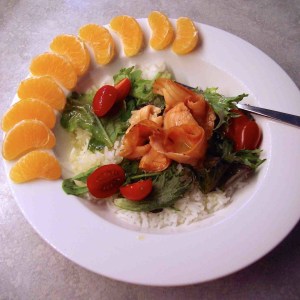
dinner

Food is good stuff. It supports us, sure, but it also helps define us as individuals and as social animals. What did you have for lunch today? How did you get your ingredients? How did you cook it? Did you share it?

Many folks’ introduction to other cultures happens over a meal. I grew up in a small town that was relatively isolated in terms of culture. Meat by the loin, heaping helpings of potatoes, sweet corn, one overcooked and somewhat suspect green at the edge of the plate. That sort of thing. I still have a soft spot in my tastebuds for pork and sauerkraut, but by and large the food was straightforward, hardly adventurous.

My parents took care of that.

Facing down a future with nothing more radical than chicken and waffles (yes, my poutine-loving Canadian friends, it’s a thing and you’d adore it:), the parental units got their hands on books like The New York Times Large Type Cookbook and Mrs. Chiang’s Szechwan Cookbook (both of which I still have on my shelf) and went to work. My palate and my social perspective are better for it.

An article on NPR talks about a group of Hungarian foodies fighting anti-immigrant prejudice with dinner. What a brilliant idea. Eritrean sourdough pancake bread, Somali fried bananas, or Afghan pie with fresh Syrian cream cheese? Sign me up, and while I’m there introduce me to the people too.

Think about your day, and the role food played in it. Did you go out to the barn to harvest eggs? Or did you open the refrigerator? What would breakfast look like (yours or mine) if the international shipping industry shut down?*
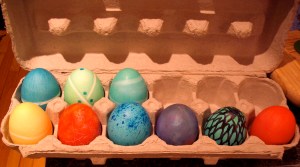
IMGP3041

Food is a big deal, and sharing it is sharing part of who you are. It’s why we invite people over for dinner instead of going out, It’s why Italy, of all places, has made significant progress in gluten-free food awareness as a way to make sure that gluten intolerance doesn’t get in the way of social communion.

Honestly, I’ve always felt that one major flaw in much speculative fiction revolves around food. Let’s see, fantasy = stew plus berries and mead, science fiction = rations that sound a lot like the worst protein bar you’ve every had or meals in a pill.** That’s not entirely fair but it’s not all that far off, either. It’s also not, from my food-oriented point of view, all that realistic.*** Sure, humans can put up with a lot when we must. Conflict, migration, that first year away from home, all times of upheaval, culinary and otherwise. But people still remember their traditions.

What we really want is that moment when life returns to normal, and among other things “normal” means real food. Whether your definition of “real” means Thanksgiving dinner or a Ramadan feast or congee, we use food as a touchstone. Lose that, and we lose an important piece of ourselves. (That doesn’t mean we can’t change, as my childhood diet attests, but it’s not like I’m eating hydrolyzed protein three meals a day either. Things got better. And hey, I feel the urge to add yet another footnote!****)

I’ve always been a bit shy but I learned early that one surefire way to start a conversation is to ask someone what they eat.

So if aliens arrive and invite us to the table, I’ll bring a fork.

* Note to everyone suffering from imagined caffeine withdrawal right now: yaupon is a caffeine-containing tea plant native to the United States. Because aliens, zombies, or no, mornings need a boost, amiright?

** For future reference, fellow SF Canada writer Krista D. Ball has a highly detailed and useful book on realism in fantasy food (just how long does it take to make stew and how in blazes do I carry leftovers?): What Kings Ate and Wizards Drank.

*** For a fascinating look at the intersection of food and space exploration, check out NASA’s Food for Spaceflight or read the section on food (titled “Discomfort Food, When Veterinarians Make Dinner, and Other Tales of Woe from Aerospace Test Kitchens”) in Mary Roach’s excellent Packing for Mars.

**** A good example of this is our family’s holiday smorgasbord: a few years ago we made the shift from Grandma Johnson’s handwritten recipes (so homey!) for dishes like Swedish meatballs and limpa and roast pork to the spectacular versions of same in Marcus Samuelsson’s Aquavit. Yes, an Ethiopian-born immigrant throws down on traditional Swedish food and wins big. See what I mean? The food still says home, only better:)

Read Full Post »

I don’t know about you but certain events pull me out of myself, away from the everyday minutia that anchor most of us to our little corners of the planet and remind me that we’re really just tiny dots on a spinning lump circling an isolated (if lively) corner of the Milky Way.

Eclipses are like that for me.

And lo, a total lunar eclipse is happening on Sunday night. Also, supermoon! That’s right, it won’t be just any eclipse, but one in which the moon’s orbit brings it about as close to the Earth as it comes, around 220,000 miles at perigee (rather than its more typical distance of 240,000 miles). And as this article in Slate describes it:

During this total lunar eclipse, the moon will appear about 14 percent larger and 30 percent brighter than Earthlings are used to seeing it… The last supermoon eclipse was in 1982, and it won’t happen again until 2033.

So, fellow Earthlings, get thee outside around 10:47pm EST Sunday evening and enjoy the dramatic sight of a harvest supermoon tinged red with Earth-shadow. Or, you know, watch it live-streamed on the Slooh Community Observatory network or see NASA TV’s coverage of the event from 8:00pm on. Your choice, just don’t forget the popcorn:)

Read Full Post »

Oh, I love this*: the folks at the most excellent Science News have assembled a scrapbook of sorts for the Curiosity rover. It tracks the rover’s path from August 2012 to the present, and includes a date/sol-based timeline, rover tweets, photos, maps and commentary. Fun and educational. And fun!

* Partly for the same reason we love R2D2, no doubt; Curiosity is both awesome and adorable. Also, adventures in space!

Read Full Post »

Considering a weekend getaway? Check out travel posters for these new destinations, courtesy of NASA’s Jet Propulsion Laboratory and the Kepler Space Telescope.

NASA made travel posters for real exoplanets, and they’re superb
keplertravel

I love the WPA-style presentation and terrific design sense. Want high-resolution versions to call your own? Check out the linked images in the engadget article or go to the NASA PlanetQuest Exoplanet Travel Series and click away.

Kepler-16b, here I come! (Now, where did I put my spacesuit?)

… the ways by which men arrive at knowledge of the celestial things are hardly less wonderful than the nature of these things themselves.

— Johannes Kepler


Read Full Post »

Erik Wernquist’s lovely short film “Wanderers” is making the rounds online, and deservedly so. The piece uses dramatic visualizations of our solar system and is narrated with audio excerpts from Carl Sagan’s book Pale Blue Dot. If you have four minutes and a yen for optimistic futurism, let this film help you imagine humanity’s future on the open road, “out there.” And it’s always good to hear Carl Sagan.

Read Full Post »

To The People of Earth,
You’re welcome.
Happy Halloween!
Love,
The Sun
halloween_sun_2014_2k

Jack-o-lantern Sun. Credit: NASA/SDO

Read Full Post »

via Slate.com:
Using Science Fiction to Create a Better Tomorrow: A Future Tense Event Recap

Oh, this looks fun. A recent event hosted by Slate’s Future Tense and Issues in Science and Technology in D.C. focused on ways that imagination in general, and science fiction in particular, can help inspire a better future. Sure, dystopias are all the rage and who doesn’t love a good apocalypse, but people have always enjoyed teasing themselves with frightening things. The key word is “teasing”… that doesn’t mean we actually want to live there.

(Srsly, do you really want a horde of raving zombies standing between you and your pumpkin spice latte every morning? Neither do I. I want to live in a future where disease is manageable, hunger is obsolete, and creativity and innovation rule the day in the best ways. I also want a flying car. Because where are all the flying cars?!)

Check out the October 2nd event, complete with video of speakers like Neal Stephenson, Ted Chiang, Elizabeth Bear, representatives from NASA, DARPA, SyFy and many others, here: Can We Imagine Our Way to a Better Future?

From the tales we tell about robots and drones, to the narratives on the cutting edge of neuroscience, to society’s view of its most intractable problems, we need to begin telling a new set of stories about ourselves and the future.

Related links:
— Neal Stephenson’s article at the World Policy Institute, on the importance of renewing our society’s ability to “get big things done”: Innovation Starvation.
— The anthology Hieroglyph: Stories and Visions for a Better Future.
— For more links to short stories (including pieces from Hieroglyph) and related discussions on this topic, see the final section of the Slate article.

Read Full Post »

« Newer Posts - Older Posts »