Feeds:
Posts
Comments

Posts Tagged ‘problem solving’

I like the data-driven articles from The Pudding, which include fun topics, great graphics and easy-to-digest research.

And hey, here’s one by Alvin Chang about science fiction!

Who killed the world?

I analyzed the top 200 sci-fi films and tv shows every decade from the 1950s to present day. What I found was that sci-fi narratives from yesteryear were quite different from today’s stories….

Sci-fi is an amazing genre.

It helps us explore our feelings about the unknown, the future, and the possible. It lets us imagine “what if” scenarios, and then build out rich worlds that our minds can occupy. It depicts dystopias we should fend off and utopias we should seek – and it teases us with the scintillating possibility that humans may actually be able to build the world we want.

But over the last few generations, it’s been harder for us to imagine this better world – and our sci-fi reflects that.

And while that may be so, sci-fi is also a critical part of highlighting society’s important problems. That’s the first step to finding a fix.

* * *

Read Full Post »

Last year Mr Man and I drove north from Los Angeles. Our goal was San Francisco and points in between, but before we could get there we had to escape LA. Our hotel room faced south and had a view of the pool and a sliver of Hollywood Boulevard, but nothing that resembled nature. We plotted a course out of the city that took us north through the canyons and picked up a rental car. 

Heading into the hills, we drove through a landscape that, while studded with the bright flowers of a superbloom, revealed a checkerboard of green growth and canyons sliced into smaller and smaller segments. Hollywood, Beverly Hills, the 101 and the 405 frame the natural world in a rigid network of pavement.

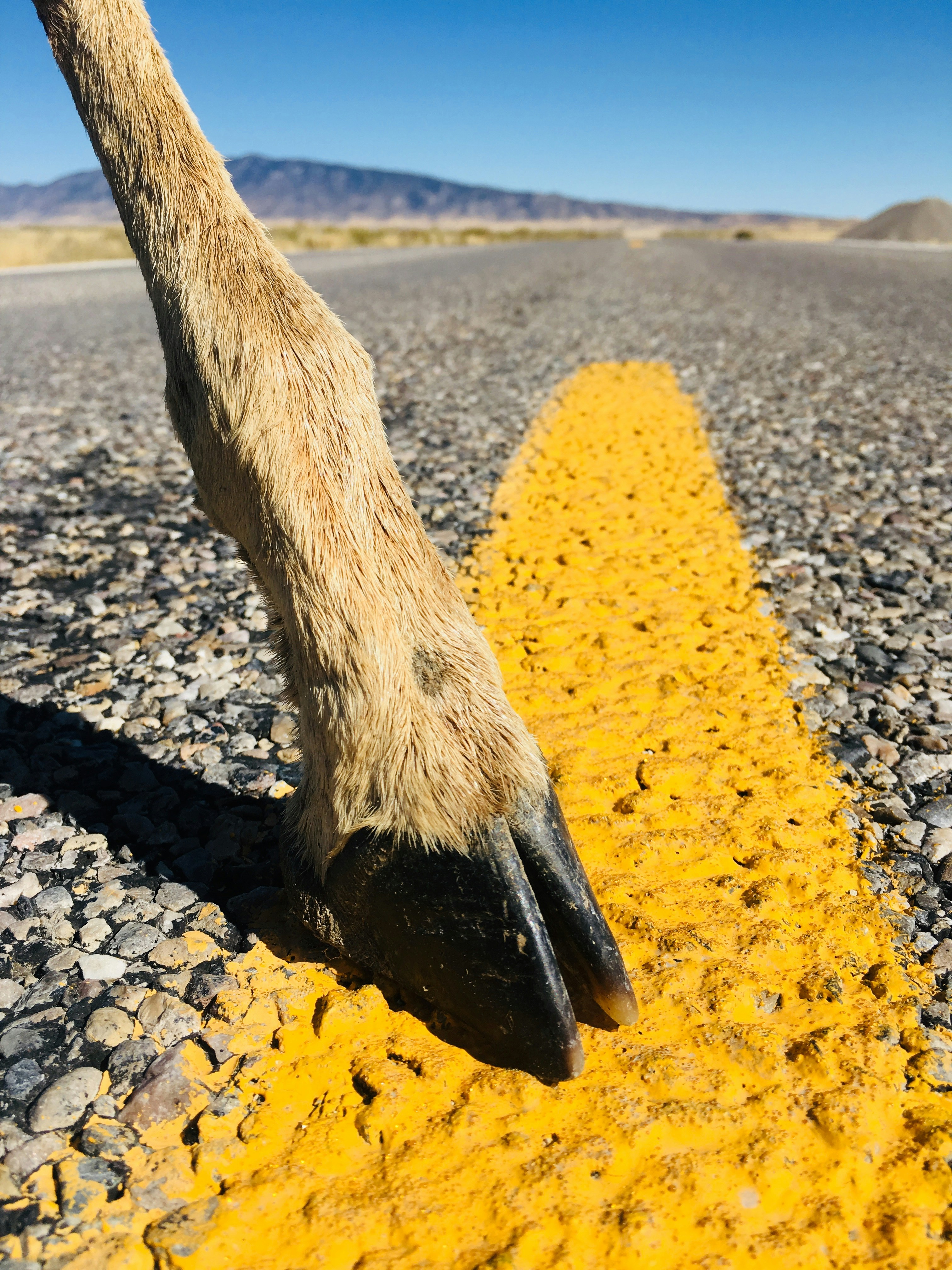
How, I wondered, do animals without wings survive here? The answer is with difficulty.

There is, however, some good news on that front!

World’s largest wildlife bridge will help animals cross California highway – The Washington Post

The 10-lane freeway that slices through this part of Southern California is one of the busiest in the country, ushering more than 300,000 cars across the greater Los Angeles area every day.

For drivers, it’s a nightmare: This stretch of Highway 101 is known as the “highway from hell,” the infamous host of the nation’s worst commutes.

But if the 101 is bothersome for bipeds, it is downright disastrous for the wildlife that also calls the region home. The 101 cuts like a chain saw through a vibrant natural ecosystem of coastal sage scrub and oak trees interspersed with suburban neighborhoods, disrupting the movement of animals and threatening their survival.

Now a massive infrastructure project is underway to suture together the vast tracts of fragmented wildlife habitat that have been separated by the highway for decades. Construction on a key phase of the Wallis Annenberg Wildlife Crossing — a $100 million structure funded by a mix of public and private money — began last month and is expected to open in early 2026.

One thing the article doesn’t get into is the fact that wildlife crossings, while not cheap to build, actually save money and lives. 

Earth Day Success Story: Wildlife Crossings Keep Animals and People Safe – Newsweek

“They are a cost-effective way of addressing the problem from the human side,” she said, pointing out the human toll from collision deaths, injuries and damage to vehicles. “We’ve got structures in the western states where they pay for themselves in less than five years.”

Like, A Lot of money, and A Lot of lives, both animal and human. It’s also not just a problem in highly urbanized landscapes like LA.

Animal crossings over and under highways can save big dollars — not just lives — says new study

WSDOT published a report of its own earlier this year on the benefits of wildlife crossings for road safety. Aside from matters of life and death, WSDOT estimated the average vehicle-deer collision resulted in economic costs of $9,175. Hitting an elk ballooned the average cost per collision to $24,242 and a moose even more, $42,652 per collision.

The good news is that California isn’t the only one getting in on this party. They’re actually a little late to the game. Canada pioneered wildlife overpasses two decades ago, and the idea has spread around the world.

The story of Canada’s pioneering adventures in overpasses for non-humans: As Banff’s famed wildlife overpasses turn 20, the world looks to Canada for conservation inspiration.

Fancy study with many long paragraphs and detailed mitigation case studies but here’s the really interesting bit: It can actually cost less to build a crossing than to do nothing. As an example, it’s estimated that the annual cost of animal collisions at $232 million (in 2021 dollars, which is like a million bajillion now).

And finally, here’s a page with a handy chart summarizing the average “Direct monetary costs of ungulate-vehicle collisions” (as a Pennsylvanian/Canadian I know such collisions are a big deal, but it’s even more dramatic to see the difference between the cost of hitting a deer ($6,617 and a moose $30,760 (in 2007 dollars, no less)!)

In conclusion, I love the idea of animal crossings for a number of reasons. Not only does it save animals and ecosystems while costing less in the long term, it also safeguards people. I love solutions that are smart, sensible, and just make sense.

Win win!

* * *

Photo by Tor Stryger on Unsplash

Read Full Post »

Most mornings I stop by the MIT homepage to see what new projects are in the works. Today I was particularly struck by the sense that these folks are freaking rockstars. 

Designing a flexible graphene supercapacitor for solar energy storage?

Rockstars.

Researching cell-based treatment for Type 1 diabetes?

Rockstar.

Advising the White House on space policy?

Rockstar.

Reducing concrete emissions, making affordable air quality sensors, supporting collaborative action, and addressing disparities in health care?

Rockstars all.

As someone who imagines the future, I love to see it being built. 

And it’s not just MIT, of course. The world is full of creative innovators at all levels, from cutting-edge research to finding solutions to everyday issues. Scientists or not, that’s kind of humanity’s thing.

Take a moment to remember a time when you identified a problem and worked to fix it. Have you ever soaped a sticky drawer, had a stoplight installed at a dangerous intersection, added pollinator-friendly plants to your garden, or tackled any of the many (many) problems we face every day?

Then you’re a rockstar too.

* * *

Photo by Aditya Chinchure on Unsplash

Read Full Post »

There is one part of my day job that is repetitive and annoying. It’s the kind of task that would be much easier if automated, and for a while now every time I have had to do this thing I think, “There has to be a better way.” 

Well, this week I found it.

It was a small thing, fixed with a hacky bit of code (my speciality), but figuring it out feels pretty great. Now every time I do the thing that used to annoy me so much, I instead feel a minor but deep-seated sense of satisfaction.

Perhaps you know the feeling? Something was broken and now it is fixed. 

When I’m up against a problem like this I always think that there has to be a better way. While I’m not always right I like that approach much better than rolling over and giving up.

So whatever it is you’re working on, keep pushing. If there’s a way to make it better, eventually you’ll find it.

* * *

Photo by Alex Lam on Unsplash

Read Full Post »

What can science fiction do for you? Help you think. Here’s an interview on Marketplace, better known for its discussions with economists, professors and policy wonks, with writer Neal Stephenson.

How sci-fi can make us smart – Marketplace

We’ll talk with Stephenson about how he thinks about big, complex issues like climate change and what this genre can teach us about the future and solving problems in the real world.

* * *

Photo by Daniel K Cheung on Unsplash

Read Full Post »

So long as you go about it ethically, I don’t see any shame in shortcuts. On a general note, most of what has given us as a species an edge could reasonably be categorized as such. And personally, I am particularly in favor of techniques, tools and strategies that help me fill in gaps of time or talent.

I’ve mentioned drawing, and how I can’t. Oh sure, I used to be able to draw an almost perfect circle freehand and once drew the world’s most beautiful eye while I was supposed to be studying verb conjugations in high school French class, but that’s about the extent of my talents in that department.

That doesn’t stop me from wanting to do more. If only my fellow monkeys had developed some tools that could help me make up for such deficiencies!

Cue computer drawing programs, yes, but then what? There’s still the difference between what I see in my mind and what comes out on the page or screen.

I came across this tool the other day: the Da Vinci Sketch Addon for Photoshop. 

* * *

Ooh, I said to the cat (who paid as much attention as usual, which is to say none), that is exactly the sort of art I like, part beauty, part craft, part epistolary exploration. Too bad I had to move away from Photoshop. Now what?

First, despair! Cue gnashing of teeth and rending of garments (just kidding, that’s wasteful and I really hate to shop).

Then it was time to get to work.

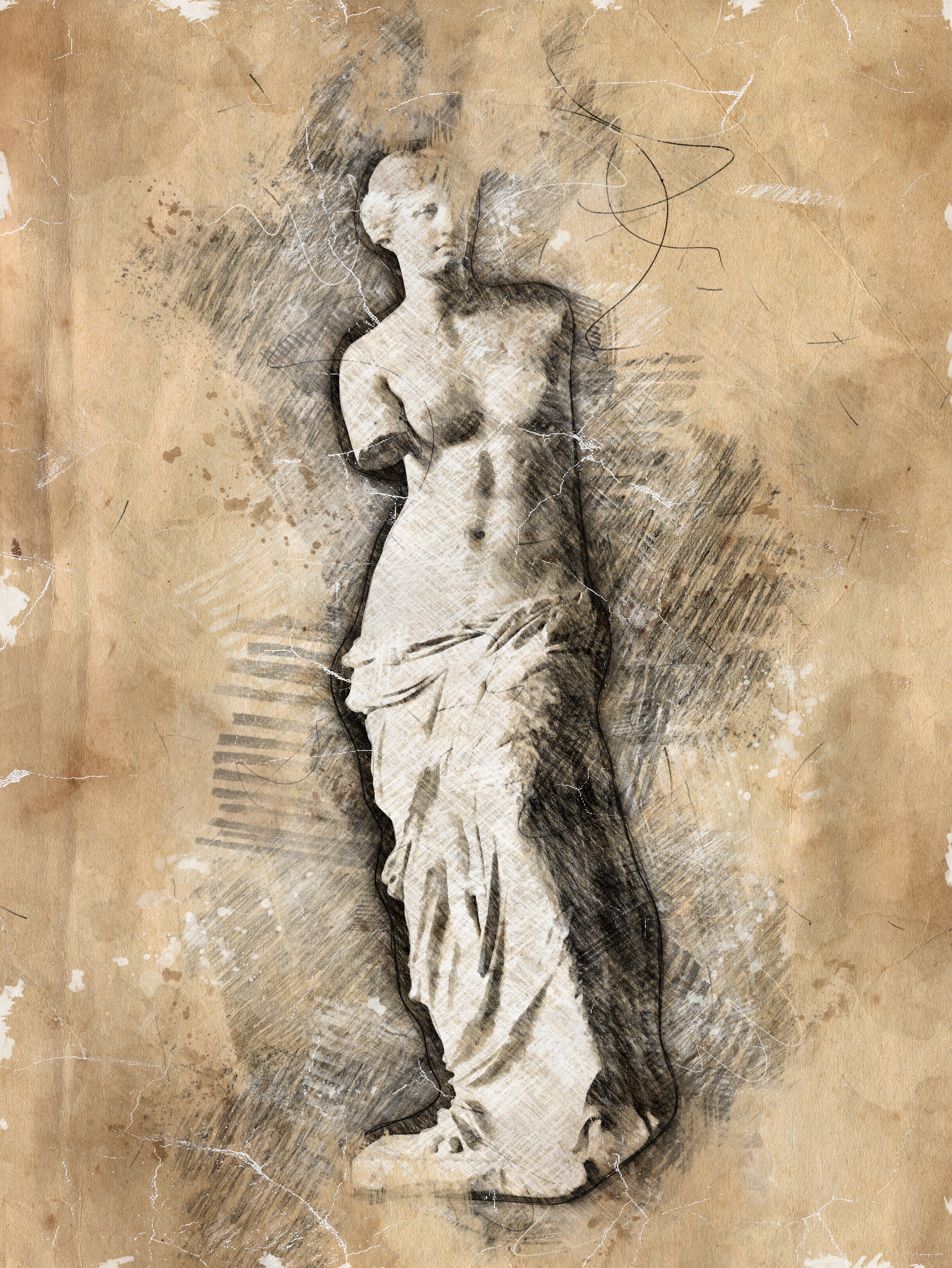
I decided to see if I could replicate some version of this technique in Affinity Photo. After forum diving, video watching, and a visit to The notebooks of Leonardo da Vinci, I produced this:

The Venus de Milo by Alexandros of Antioch, sculpted c. 150BC. Original photo by tabitha turner on Unsplash, text and doodles by Leonardo da Vinci. I don’t read Italian, much less Renaissance mirror writing, but I would love it if this was Leo’s to do or shopping list. “Note: buy looser robes with draping like this, because I like a healthy breeze around my private parts.”

* * *

Not bad, aside from the fact that it took forever and could use some real hatching and more dramatic outlines and the shading crashed the program about a dozen times. Still, it was progress I felt ok about.

Working through that puzzle also gave me time to think, and in that time I realized a couple of important things:

  • my computer is not the only computer in this house, and while the desktop upstairs has had the tech equivalent of a stroke and can’t be trusted with anything not backed up, I did manage to rebuild it into a functional system and it is now running a deprecated OS,
  • six bucks is not a lot of money, and
  • don’t I still have the disks for CS5, which includes Photoshop, kicking around somewhere?

True, true, and yes, yes I do.

Cue exciting graphic adventures!

* * *

I may have also sprung for a couple more tools from the same developer. Still affordable, and still worth it. This is what the Da Vinci Photoshop action produced, plus several other versions:

Da Vinci action
vintage sketch action
architecture sketch action

* * *

Have I been having fun? Yes, and here’s my absolute favorite so far:

When Leo met 3PO. Original Image by Gerhard Janson from Pixabay 

Shortcuts can be terrific so long as they don’t impede learning. In this case, I got the mental workout of deconstructing and rebuilding an effect, plus the practicality of pre-built actions.

Also C-3PO:)

Read Full Post »

I’m banging my head against a data problem so I’ll have to set aside the in-depth and incisive essay on the mating habits of Salarian scientists I had planned (so sad, but maybe next week;).

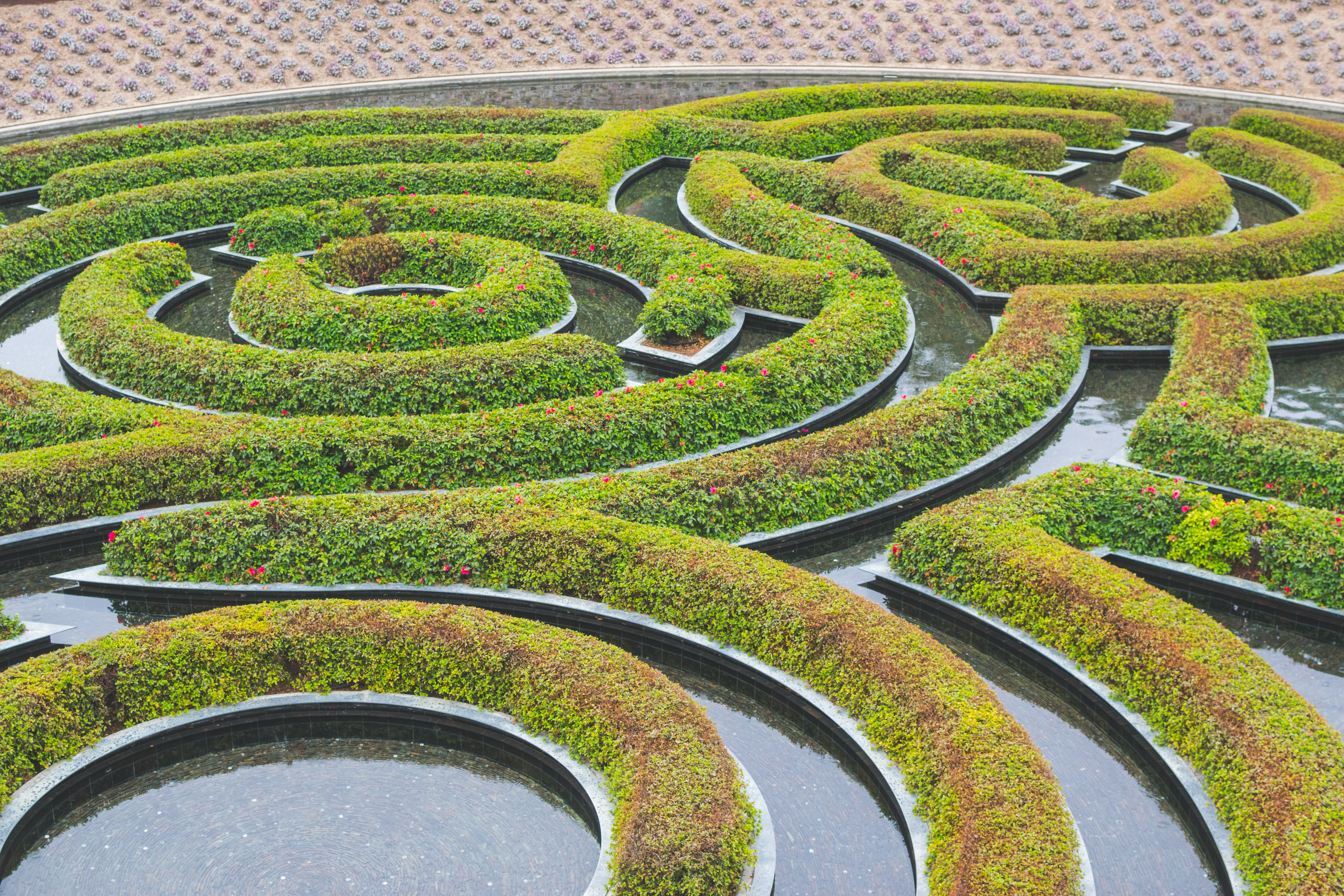
Instead, today’s thing I like is this image and the sheer effort the landscape represents. It’s also a shout-out to my Irish relatives (currently recovering from St. Patrick’s Day) and to the fact that people have been solving problems for millennia. Look at those walls, that can’t have been easy:)

The best way out is always through.
― Robert Frost

So, persistence for the win. With that in mind, back to work!


Read Full Post »

This is the coolest thing: a designer decided to tackle fifty problems in fifty days. I think it’s terrific when creative people find ways to use their talents to fix problems, particularly when they focus on challenges most of us have been living with for years. It’s easy to get used to doing things one way even when that way is not optimal, and once acclimated it can be hard to even see the issue, much less fix it.

http://50problems50days.com

This is what happens when creative people look at the world with fresh eyes, and decide that they can, and should, do something to make it better. Constructive creativity for the win.

What “fifty problems” would you choose?

Read Full Post »