A critical writing question addressed by the good people over at xckd (home of “serious answers to absurd questions”):
Can you power your computer by typing?
I mean, the answer’s pretty obvious, but the details are interesting!
* * *

Posted in Science!, tagged #365Ways, #365Ways2026, entertaining absurdities, science, Writers on March 6, 2026| 1 Comment »
A critical writing question addressed by the good people over at xckd (home of “serious answers to absurd questions”):
Can you power your computer by typing?
I mean, the answer’s pretty obvious, but the details are interesting!
* * *
Posted in Science!, tagged #365Ways, #365Ways2026, astronomy, NASA, science, space on February 26, 2026| Leave a Comment »
Sadly, the Artemis II moon mission has been pushed back again, and the new launch window now won’t happen until April at the earliest. Pesky helium flow issues!
Happily, this week we can entertain ourselves with a planetary conjunction!
APOD: 2026 February 24 – Planet Parade over Sydney Opera House
Look up this week and see a whole bunch of planets. Just after sunset, looking west (mostly), planets Mercury, Venus, Saturn, and Jupiter will all be visible to the unaided eye simultaneously.
Mercury Completes the Planetary Parade at Dusk
Seeing all the naked eye planets at once is set to become a rarity in coming years.
Here’s hoping the skies are clear where you are!
* * *

Posted in Entertainment, Science!, tagged #365Ways, #365Ways2026, Artemis, full-moon, inspiration, movies, NASA, science on February 4, 2026| Leave a Comment »
Sadly, NASA’s Artemis mission launch has run into some issues (hydrogen leaks bad!) and will be delayed until at least March.
NASA Conducts Artemis II Fuel Test, Eyes March for Launch Opportunity
That said, safer is better, so you do what you need to do, NASA. (Maybe rehiring some of the folks who were let go last year might help? Just saying.)
What do we hope to see when the mission does launch? This site has a nice explainer.
The flight path of Artemis 2, step by step
And for more on the long-term goals, see this in-depth article: How Artemis will land humans on the Moon.
As we wait to hear more from the launchpad, here’s something fun I ran across the other day that may help keep you entertained:
We asked former astronauts about their favorite space movies, and this is what they said
I mean, I’m more The Martian and Galaxy Quest than 2001, but that’s me. So many good movies!
* * *
Posted in Other, Science!, tagged #365Ways, #365Ways2026, full-moon, NASA, science, space, Thoughts, unexpected joys on February 1, 2026| 8 Comments »
We’ve lived in this house for years but this morning I discovered something new. Some confluence of sun angle, time of day and positioning meant that the lampshade in the kitchen reflected a rainbow-colored series of textured light onto the ceiling. It was both joyful and unexpected, reminding me that there is beauty everywhere.
If I look.
Speaking of reflected light, there’s a full moon tonight.
Tonight’s moon is known by many names, including the Wolf Moon, Cold Moon, and Snow Moon. We may finally have clear skies tonight, too, and I’m looking forward to looking up.
Snow Moon: Full Moon in February 2026
February’s Full Snow Moon reaches peak illumination at 5:09 P.M. EST on Sunday, February 1. Step outside after dusk to see the Full Moon in all of its glory!
Since we’re here, I’ll share a link that led to a flurry of conversation in my family.
1969 Apollo 11 First steps on the Moon (16mm footage)
On July 20, 1969, the Apollo 11 Lunar Module with Neil Armstrong and Buzz Aldrin aboard touched down on the surface of the Moon 4 days, 6 hours, and 45 minutes after having launched from Cape Canaveral. At 02:56:15 GMT, Neil Armstrong became the first human to set foot on another celestial body.
My parents were remembering where they were when it happened (at the next-door neighbor’s in Michigan, because they didn’t have a television), and what it felt like to watch the landing. Uplifting.
And looking ahead, NASA’s first crewed mission around the moon in over half a century will be happening soon.
Something to look forward to!
* * *

Posted in Science!, tagged #365Ways, #365Ways2026, science, space, winter on January 24, 2026| Leave a Comment »
Like many of you, we caught some of the winter weather that’s making such a splash this weekend. I feel for those who are digging out from the snow and sleet and ice many got, but for us it was a little snow and a lot of cold.
We hit -34C last night, which is (checks notes) really really cold! Which made today the perfect day to post this quick @ScienceandtheCity video on how space would feel, temperature wise.
Would space feel cold without a suit?
Yes. The answer is yes.
* * *

Posted in Other, Science!, tagged #365Ways, #365Ways2025, astronomy, science, solstice, Thoughts on December 21, 2025| Leave a Comment »
It’s that time again!
Yes, the darkest day of the year is here, but that means brighter days are ahead.
Sunday is the shortest day of the year north of the equator, where the solstice marks the start of astronomical winter.
That’s right, if you’re in the Northern Hemisphere, today is the shortest day of the year. (And if you’d like a quick reminder of the astronomy of it all, this one’s helpful: December Solstice 2025.)
So light a candle (physical or metaphorical, your choice!), and look ahead to a brighter future.
* * *
Posted in Science!, tagged #365Ways, #365Ways2025, inspiration, music, nature, science on October 15, 2025| Leave a Comment »
Ok, this is amazing.
And if you wired other nearby plants and trees, would they all play in synchrony?
* * *

Posted in Science!, tagged #365Ways, #365Ways2025, MarsCuriosity, NASA, science, space, Thoughts on September 18, 2025| Leave a Comment »
Some days the day job is a little hectic, and what I’d really like is a moment to get away from it all, you know?
Curiosity knows. The intrepid rover has been on Mars since 2012 and is still very much out of the office.
In fact, let’s check in. Where is that little bundle of human ingenuity is now?
Curiosity Rover Location Map – NASA Science
And what has it seen? So much!
Being away from the rest of us doesn’t mean Curiosity isn’t getting the best dirt. In fact, its latest discovery has the potential to stir up what we know about life on Mars!
Here’s Neil deGrasse Tyson to break it down for us:
As Neil asks, “Could we have Martian neighbors?” If yes, would they fancy a mid-afternoon coffee break?
I know I could use one.
* * *

Posted in Science!, tagged #365Ways, #365Ways2025, astronomy, lunar eclipse, planetary stuff, science on September 7, 2025| Leave a Comment »
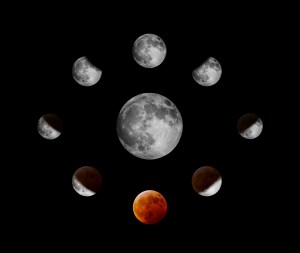
Tonight there will be a total lunar eclipse visible for most of humanity (just not for we Western Hemispherians; here’s a map of viewing locations). The moon has been very bright the past few days, and tonight it will be full. As the Earth’s shadow blocks the sun, the moon will turn red.
What to expect during the ‘blood moon’ total lunar eclipse on Sept. 7-8 | Space
The Sept. 7-8 total lunar eclipse will be visible to over 7 billion people in Asia, Australia, Africa and eastern Europe.
Not in a region that will see the full eclipse? Enjoy the power of modern technology and livestream it:
LIVE: Total Lunar Eclipse (Blood Moon) – September 7–8, 2025
Looking forward to it!
* * *
Posted in Science!, Writing, tagged #365Ways, #365Ways2025, science, sorry!, Thoughts, writing on August 31, 2025| Leave a Comment »
/with apologies to the Lepidoptera experts among us…
Ok, so here’s the thing:
— I like moths and butterflies but there’s a lot about the evolution of the family Lepidoptera that I don’t know;
— the idea that moths evolved from butterflies is, as far as I can tell, bunk;
— also, moths come out during the day, too;
— but sometimes a thought / idea / feeling flutters my way and sticks around long enough to inspire, even when I regretfully inform said idea that it is probably flying in the face of science.
And so, that’s how this most certainly unscientific poem about moths dreaming about sunshine came to be.
Some days you just go with it.
Do moths love the moon
because they remember
being butterflies?
* * *




You must be logged in to post a comment.