Feeds:
Posts
Comments

Posts Tagged ‘science fiction’

It’s Monday and my day job brain is a little tired. So why not take a little time to stretch my mind in other ways, like listening to a couple of cool dudes chat about a nice light topic… like controversies in quantum mechanics;)

Neil deGrasse Tyson and Sean Carroll Discuss Controversies in Quantum Mechanics

(We’re also watching 3 Body Problem, the series based on Liu Cixin’s award-winning novel, so it’s maybe kind of like semi-related big brain study material?)

Yeah, I don’t understand most of this at a deep level but I really like that there are other humans on this planet who do.

* * *

Speaking of science, this is also an excellent opportunity to celebrate a new blog by scientist, award-winning author and friend Arthur H. Manners. He is currently working on The Sci-Fi Writer’s Guide to Reality, a series with the goal of helping SF writers understand the fundamentals of science.

I love this idea so much. One great session at last year’s Writers of the Future workshop was given by Dr. Beatrice Kondo. It was Day 6 of a long week. Many of us were half asleep, until the good doctor started talking in a serious, straightforward way about what it would take to make some of the crazy stuff in our heads work in real life. Really terrific stuff.

Writers & Illustrators of the Future Workshop Week 2023 – Day 6

Kondo talked the writers through the science of several common writing scenarios. Why can a submarine only travel at certain speeds underwater? What would happen to someone’s body if they tried to lift a car? How do exoskeletons work?

Then she touched on tissue engineering, stem cells, 3D bio-printing, breathing underwater, genetic engineering, and whether human wings or human photosynthesis would actually work.

Chatting after the session, a lot of the writers expressed a desire for a collection of introductory information on various scientific topics. Not a thick textbook for students of the field, but the sort of material one might need to both ground a story and to better imagine the possibilities of those topics.

I am so happy to see that Arthur has taken up this challenge. 

New Release: Writing About Remote Sensing in Sci-Fi – Arthur H. Manners

I’ve just finished the first 6-part primer in my new blog called the Sci-fi Writer’s Guide to Reality. The blog aims to help science fiction writers with the fundamentals of science. The first primer focuses on remote sensing (the act of trying to determine what’s going on over there, i.e., at a distance, through means other than physical contact). This topic is rich and essential to many aspects of science fiction, from spaceship sensors to astronomical observations.

Yes, please!

Here’s the first installment of his six-part primer on remote sensing: 

Sci-fi Primers- Remote Sensing – Part 1

Ensign: “Captain, the long-range scanners indicate that the aliens’ blood-type is O-negative.”

Captain: “My God… Universal donors. What else is on the scanners?”

Ensign: “That the aliens think Star Wars Episodes Seven through Nine were the best.”

Captain: “Monsters! Arm the photon torpedoes!”

So if you’re wondering how remote sensing works, what is handwavium (official writer terminology alert!), and what crosses the boundaries between science and magic, check out this guide: 

Sci-fi Primers- Remote Sensing – Part 1

Sci-fi Primers- Remote Sensing – Part 2

Sci-fi Primers- Remote Sensing – Part 3

Sci-fi Primers- Remote Sensing – Part 4

Sci-fi Primers- Remote Sensing – Part 5

Sci-fi Primers- Remote Sensing – Part 6

Go, science!

* * *

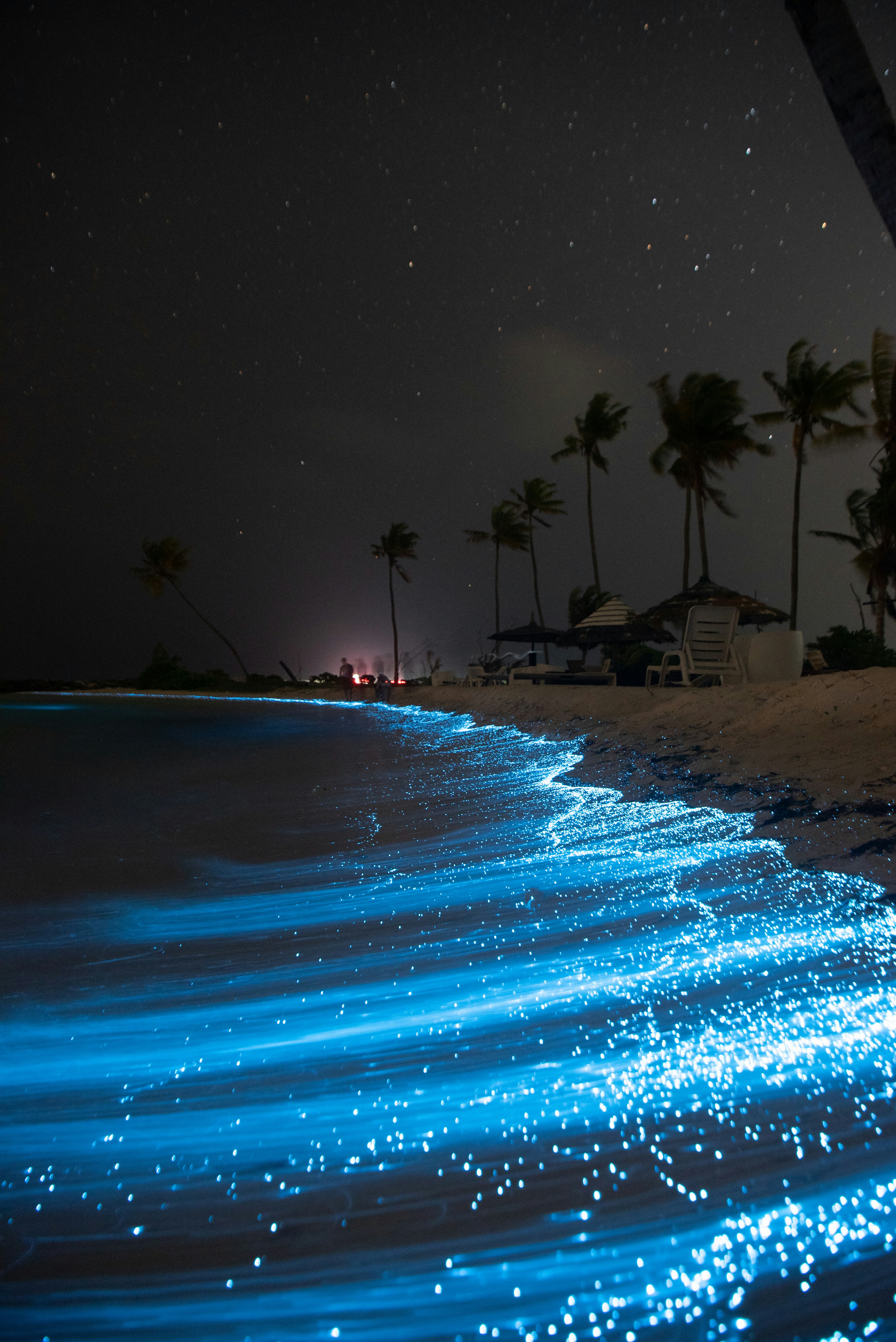
Real magic. Photo by Ahmed Nishaath on Unsplash

Read Full Post »

Today only (well, yesterday and today, for any time travelers out there)!

Free free free book giveaway from a wide array of science fiction authors. I heard about it through Krista D. Ball, another SFCanada member who is part of the event. 

Here’s the main link: Sci-fi Book Blast March 15 – 16, 2024

Books available in the following categories: Adventure, Alien Invasion, Colonization, Crime & Mystery, Cyberpunk, Dystopian, First Contact, Galactic Empire, Humor, Military, Post-Apocalyptic, Short Story Anthologies, Space Opera, Time Travel

Note: it does say to be sure to check that the link is free because database updates don’t always work like they should, and I did run across a few that were either not free or not available. That said, there are over a hundred books in the list so lots to choose from.

I ended last night in a bit of a funk because I 1) finished my book, and 2) the ending was disappointing as hell. Was it supposed to be a dramatic climax and just fizzled, or was the author so committed to his (also annoying) cliffhanger that he decided to just bypass the climax altogether? Ugh.

Either way, I am very much in the market for a new book and new authors, so this giveaway is excellent timing. Hope you find something you like!

* * *

Read Full Post »

For me, the end of a year is a great time to think about the future. 

What did one of science fiction’s most acclaimed writers think about the future back in 1980, what’s changed, and which of his predictions have already come to pass?

* * *

Photo by Ali Pazani on Unsplash

Read Full Post »

It’s last call for StoryBundle’s To the Stars Adventure SciFi bundle, featuring Writers of the Future v.39 and so much more!

This new StoryBundle will take your autumn, and your e-reader, to the far edges of the universe. Curated by bestselling author Kevin J. Anderson, this cosmic batch of eighteen books showcases the range of epic science fiction, from galactic empires to time-travel adventures to alien invasions. These books are from classic award-winning science fiction authors and hot new indie authors. 

Only a few hours left to grab this Great Deal on Sci-Fi. Enjoy!

Am I biased? Sure, I happen to think our collection is great. But the bundle is curated by Kevin J. Anderson and also includes books by other names sci-fi/fantasy fans may have heard of, like Todd McCaffrey and Nancy Kress, as well as others I look forward to discovering.

Enjoy!

* * *

Photo by Massimiliano Morosinotto on Unsplash

Read Full Post »

Ever wonder where your favorite books, shows and movies take place in space? This person has you covered. Stellar!

* * *

Photo by Greg Rakozy on Unsplash

Read Full Post »

Today, an award-winning piece from friend and fellow Writers of the Future winner Elaine Midcoh. “Man on the Moon” won the 2022 Jim Baen Memorial Short Story Award, and was also showcased at Escape Pod.

I really enjoyed this story and look forward to more from this world. Read or listen below!


Escape Pod 895: Man on the Moon

Sasha’s eyebrows shot up. Her driver made the final turn back to the resort dome. Within minutes they would enter the airlock and then she would – what? “I’m not a criminal defense lawyer. I haven’t read a criminal case since law school. What am I supposed to do?”

Zander grimaced. “Whatever you can. The next transport to the moon is in ten days. It’s booked up, but we’re trying to clear a seat for a top defense lawyer. Until then, you’re on your own.”

* * *

Photo by History in HD on Unsplash

Read Full Post »

Short on time but still want to explore the wonders of the universe? Check out Dust, an outlet for short sci-fi videos:

The YouTube Channel Sci-Fi Fans Need To Watch – CNET

…Dust’s absolutely balling YouTube channel, which functions as a receptacle for hundreds upon hundreds of sci-fi shorts with surprisingly high production values. If you’re a fan of sci-fi and you have around 15 minutes to kill, I 100% recommend hopping onto Dust and hitting play on pretty much anything. … As a spot for aspiring filmmakers to show off their talents, Dust’s videos mostly feature high-concept sci-fi – sort of like a post-modern Twilight Zone for zoomers. Almost all have surprisingly good special effects, decent acting performances and – above all – come bursting with grand ideas.

Have fun out there!

* * *

Photo by Alex Shuper on Unsplash

Read Full Post »

I started multiple posts today (mackerel? Winnie the Pooh? cracking CIA kiddie codes?) but none seemed quite right. I think I’ll go shovel some snow and see if that gets my mind going.

In the meantime, here’s a piece about the usefulness of science fiction in the nonfictional world.

Connecting Science Fiction to Science Policy by Avital Percher

Science fiction can help the science policy community envision both where we end up as well as how we get there. As our social-technological problems grow ever more complex, we need a range of stories that spans the human experience and even beyond. How will we leverage new tools to improve equity and democracy in society? Science fiction can help us imagine future possibilities, opening not just our minds but our hearts as well.

* * *

Photo by Dylan Shaw on Unsplash

Read Full Post »

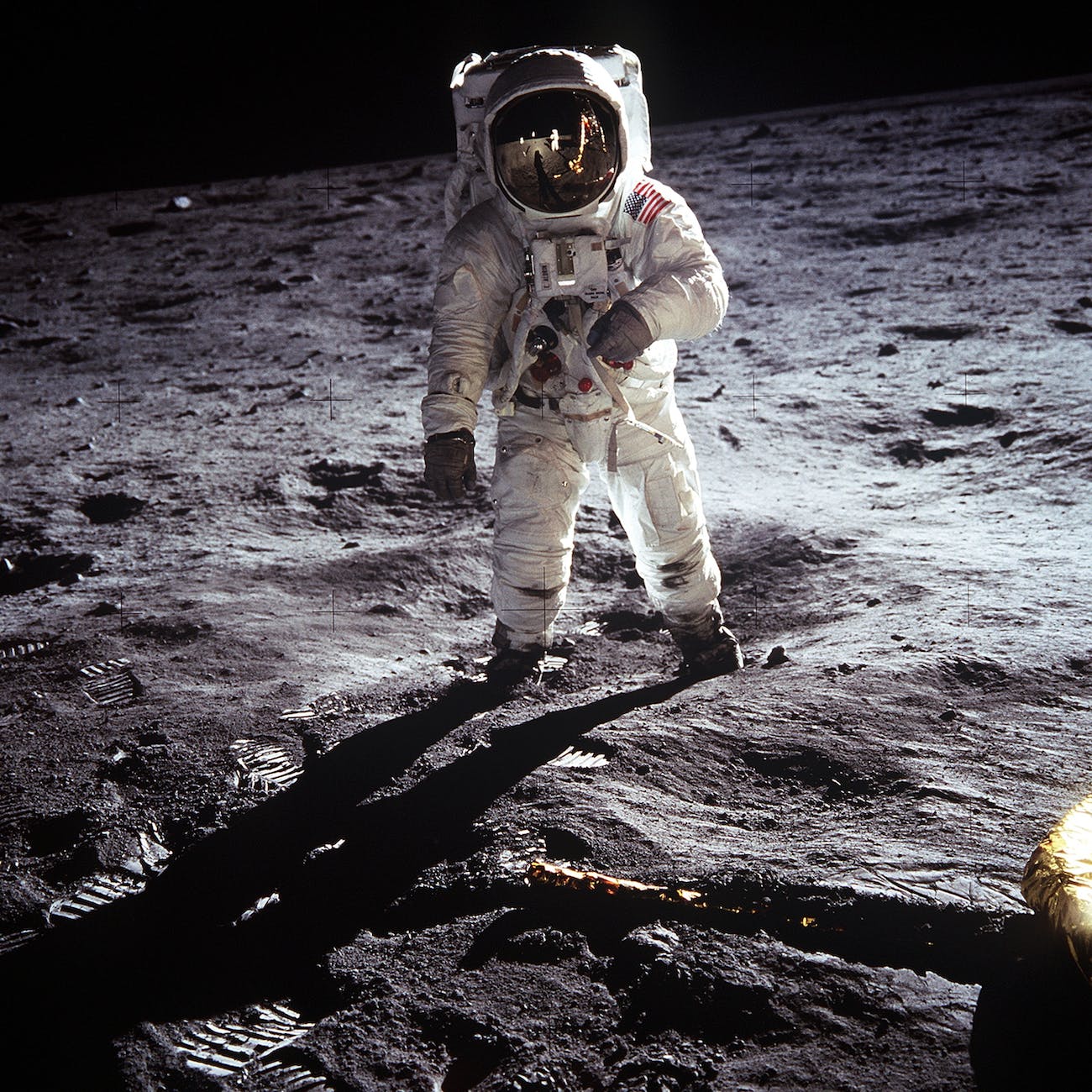
I am working on story edits today and found myself needing to look up a lunar technicality. Next thing I know, I was reading a detailed account of the first lunar spacewalk at Tranquillity Base. I thought you might enjoy it too.

Wide Awake on the Sea of Tranquillity | NASA

July 20, 1969: The day began on the farside of the Moon. Armstrong, Aldrin and crewmate Mike Collins flew their spaceship 60 miles above the cratered wasteland. No one on Earth can see the Moon’s farside. Even today it remains a land of considerable mystery, but the astronauts had no time for sight-seeing. Collins pressed a button, activating a set of springs, and the spaceship split in two. The half named Columbia, with Collins on board, would remain in orbit. The other half, the Eagle, spiraled over the horizon toward the Sea of Tranquillity.

“You are Go for powered descent,” Houston radioed…

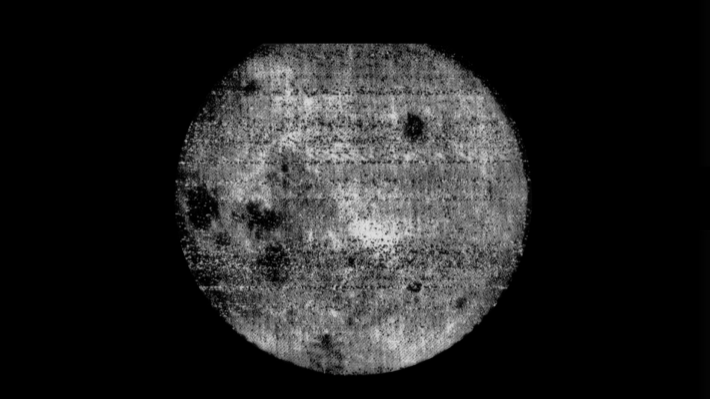
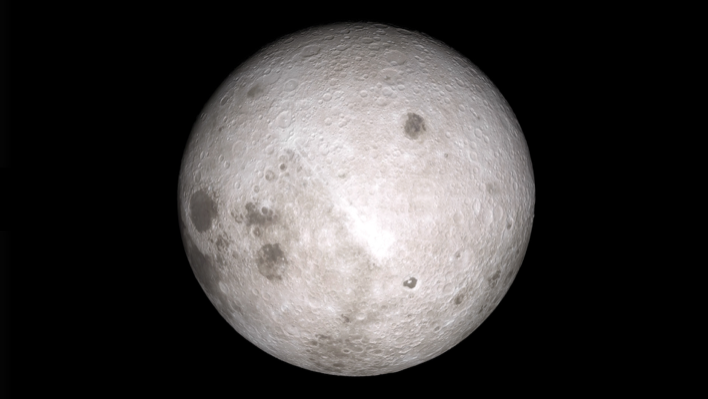
This also got me thinking about the farside of the moon. We’ve learned a lot about it since these images in 1959:

First Photo of the Lunar Farside – Moon: NASA Science 

Check out the image comparison a few paragraphs in. Or heck, here’s my version:

Image credit: NASA

And since we’re talking about the moon, let’s wrap with an update from Artemis:

NASA to Share Artemis I Update with Orion at Farthest Point from Earth | NASA

Orion entered a distant lunar orbit on at 4:52 p.m. EST Friday, Nov. 25, where the spacecraft will remain for about a week to test systems in a deep space environment about 40,000 miles above the lunar surface before beginning the journey back to Earth. 

* * *

Photo by Pixabay on Pexels.com

Read Full Post »

‘Tis I.

How many writing samples does one need to build an AI of a person? And could it take meetings?

Asking for a friend.

* * *

Frazzled robot.
Photo by Rock’n Roll Monkey on Unsplash

Read Full Post »

« Newer Posts - Older Posts »