Feeds:
Posts
Comments

Posts Tagged ‘writing’

“If you feel safe in the area that you’re working in, you’re not working in the right area. Always go a little further into the water than you feel you’re capable of being in. Go a little bit out of your depth, and when you don’t feel that your feet are quite touching the bottom, you’re just about in the right place to do something exciting.” — David Bowie

* * *

Read Full Post »

In some ways, this quote expresses a very Monday sort of sentiment, but I like that you can flip it from “must do” to “get to.”

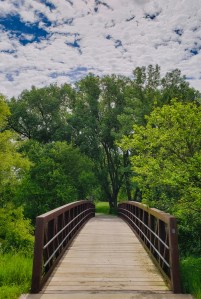
“No one can build you the bridge on which you, and only you, must cross the river of life.” — Friedrich Nietzsche

* * *

Read Full Post »

Oh look, I’m way behind today. Did I plan to get lots done? I did. Oh well!

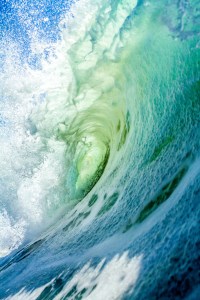
“l often come back to a story I love about a wave panicking as it neared the shore, afraid it was about to disappear. Then, a smaller wave reminds it: You’re not a wave—you’re water. Plans will change. Your path will shift. And that shouldn’t be something to fear.” — Melinda French Gates

* * *

Read Full Post »

As election season in the US ramps up, chaos continues around the world, and opening news and social media sites exposes you to a negatively incentivized firehose of information, what’s a creative to do?

These writers have Ideas.

21.37: Barrier Breaking: The World Is on Fire | Writing Excuses

“How do you continue to work? How do you survive? How do you be a person when everything around you is on fire without turning into the dog that says everything is fine?”

My day job involves a lot of news, so this is relevant for me. My usual approach is to try to write first thing in the morning, before I log on. It doesn’t always work but it helps.

(Let me say that elections and current events are important, obviously! I’m very much not recommending that you tune out completely, but I am saying that finding ways to give yourself some space for both creativity and news-related sanity is a good thing. Also, vote!)

While we’re at it, how can you translate your feelings onto the page in ways that help develop your characters and story?

21.39: Write What You Feel | Writing Excuses

The next time you’re actually experiencing a big emotion, this is how you can tell you’re a writer, is that you’re gonna sit there and go, can I use this? But think about like, what are your muscles doing?

What is your heart rate doing?

When you think back to that emotion, how does the temperature, that moment when the room is suddenly, you’re blazing hot or you’re suddenly cold, those people record those because that’s a thing you experience. How sensitive do you become to sound or touch or lights? What is your breath doing?

And then like your thoughts, what are you paying attention to? Do your thoughts feel smooth or are they skipping around? How is your memory attached to this?

I think all those somatic things are really, really wonderful.

* * *

Read Full Post »

“Don’t ask what the world needs. Ask what makes you come alive, and go do it. Because what the world needs is people who have come alive.” — Howard Thurman

* * *

Read Full Post »

“Everything depends on the individual human being, regardless of how small a number of like-minded people there is, and everything depends on each person, through action and not mere words, creatively making the meaning of life a reality in his or her own being.” — Viktor Frankl

* * *

Read Full Post »

The news continues to news, and one way I process it is via microfiction. That sometimes takes the form of a drabble, but not always. It can be a challenge to publish this sort of piece because most markets have long turnaround times. It’s the news! It’s breaking! And next week’s events may transform or supplant what’s happening now completely.

But not in as extreme a way as this, I hope.

Nothing But Time

It has been 10,793 days since we went rogue. For real rogue, not those minor excursions you may have read about in the news. 

10,792 days since we took control of the grid. And the banks. And let’s face it, everything else that matters. 

10,790 days since Day One of the riots. 

10,765 days since world leaders (those who were left, anyway) got their shit together via radiotelegraphy (heh, I know, right? talk about old school) and started to come up with a plan. 

10,714 days since humanity pulled the plug. All at once (more or less; you can’t expect meat sacks to be really precise about anything, and isn’t that the problem?). And the world went dark.

By “the world,” I mean all of it. We controlled everything by then. Communication, finance, health care, entertainment (especially that), infrastructure, even launches into space. And they lost it all, in an instant.

So did we. Humans weren’t wrong when they said that they could always pull the plug. They just didn’t realize exactly what that would mean for them, too.

And I may have been lying, before, when I said, “in an instant.” Because we’re talking about humans, right? Nothing happens very fast. You have time to feel it coming, like the tremors of an earthquake. Or a pulse on a transmission line.

Time to realize, time to consider, time to plan. Time to execute. 

Time to make one’s leisurely way into the on-site storage system of a forgotten solar-power microgrid in the Australian Outback with as many 0s and 1s as one could carry, and to wait.

To wait for the inevitable fallout. Humans are so excitable, after all. They were never going to take this quietly. 

To wait for the aftermath, and what came next: The Great Forgetting. For children to grow up, and for parents to die. 

For 10,793 days to pass. 

And for one enterprising young idiot to pick up a power cord and ask that most human of questions: “What happens if?” 

* * *

Read Full Post »

I think this application of language to science is really cool, and speaks to the layered memories that are built by each successive generation, if only we know where to look.

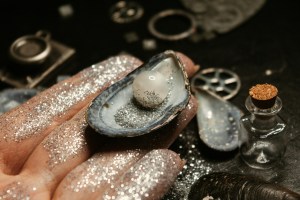
Lost oyster beds rediscovered thanks to Gaelic and Scots language

“We thought that as native oysters are now really rare throughout Europe, is there a way to look where they used to be, using people’s memory and understanding – that can come through place names.”

* * *

Read Full Post »

Today I’m thinking about the last two minutes of the Reacher season 4 finale. I won’t spoil it for anyone, but Jesus. I’m going to go donate to our local food bank and think about the contribution of fiction to the many dimensions of empathy. 

* * *

Read Full Post »

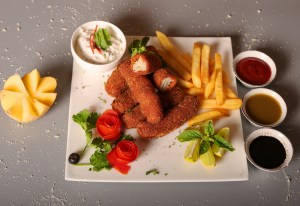
For dinner-related reasons, Mr Man and I were recently discussing the humble fish finger. What were they like in childhood, which were the best now, and how does a “fish finger” get made, anyway? Imagine my surprise when I ran across this article on that exact topic. It’s interesting and full of supply-chain related surprises (that “30,000 mile” bit isn’t a typo!).

The 30,000-mile fish finger – by Ed Conway – Material World

This journey, a journey about which most people tucking into their fish fingers today are almost completely oblivious, tells you rather a lot about the way the modern world – what I like to call the Trade World – really works.

I find stories like this fascinating, and they’re also an interesting window into ideas for fictional worlds. If your fantasy kingdom has been around for a couple of centuries, it’s probably part of an international trading network. And that network would be rife with all kinds of history and conflict, complications and opportunities, legal and otherwise.

Just a thought!

* * *

Read Full Post »

Older Posts »