Feeds:
Posts
Comments

Archive for the ‘Science!’ Category

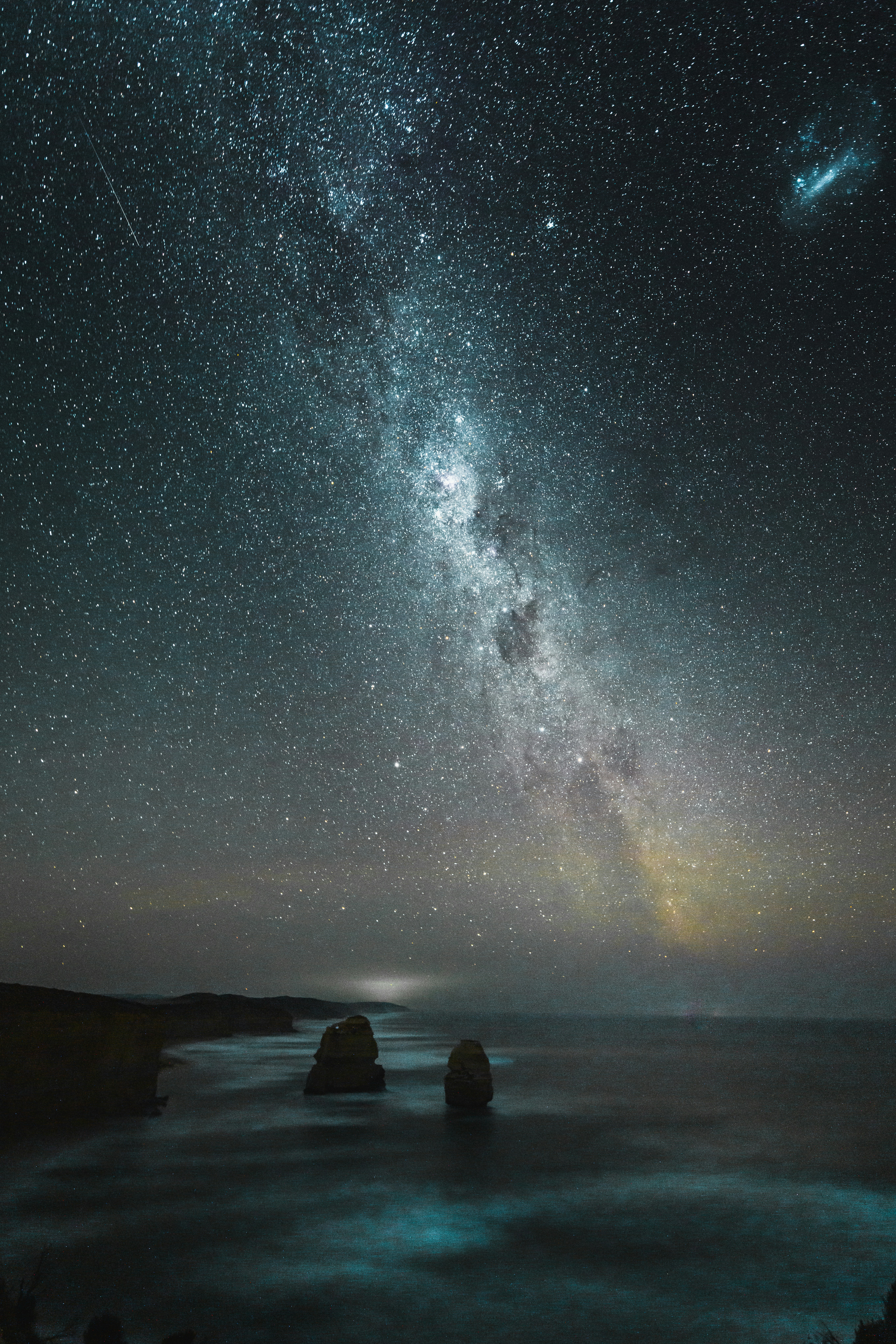
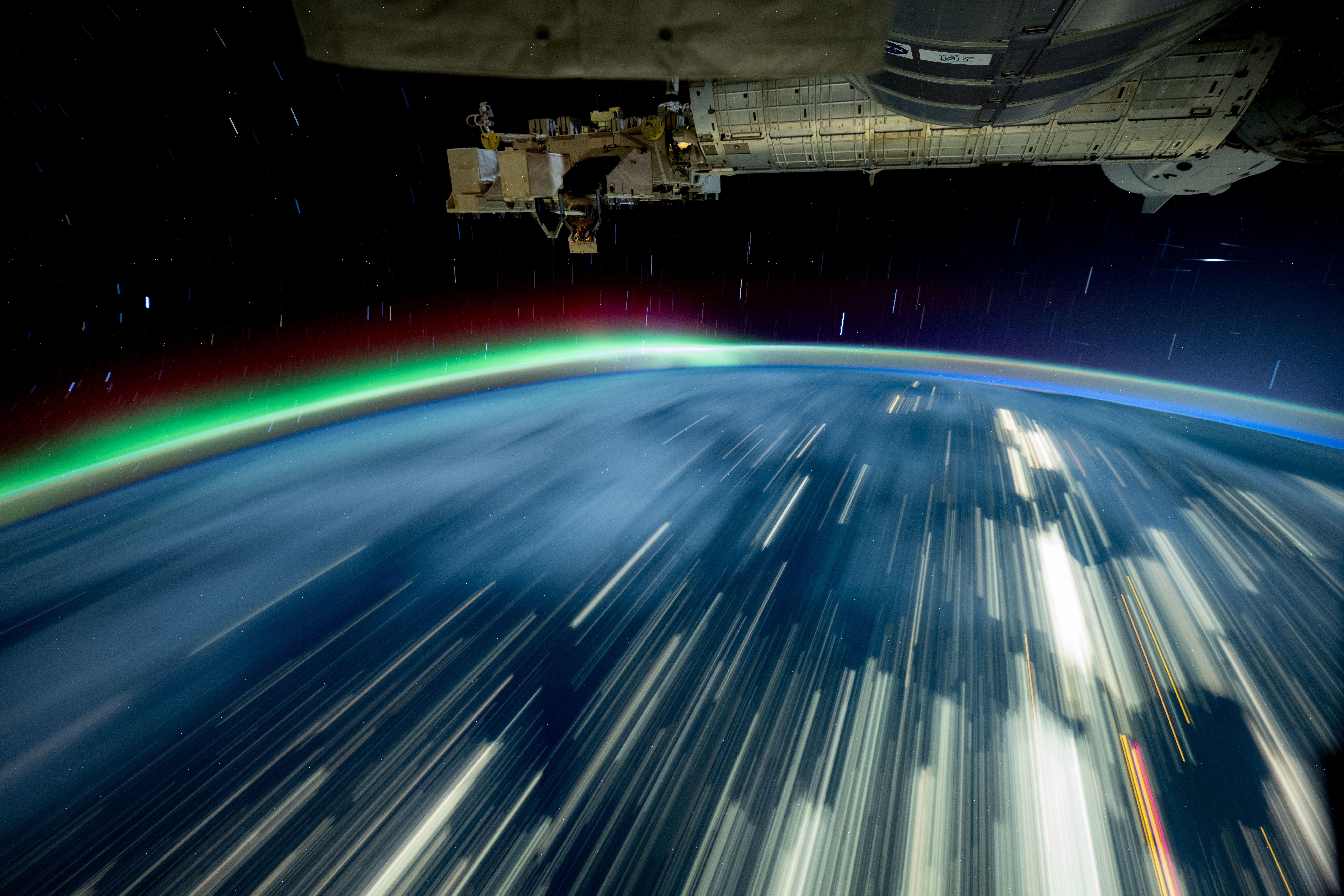
A NASA astronaut may have just taken the best photo from space—ever

Check out the article for the specific photo, but this is from the same series:

Image Credit: NASA, Donald Pettit

For more of Astro Don’s imagery, see his photos at the Portraits of a Planet exhibit, his book Spaceborneor find him on social media.

“Art is an inevitable consequence of being human – even in space.”

— Donald R. Pettit

* * *

Read Full Post »

Welcome to the new year! Here’s what you can expect from space in 2025 (including a new way of studying the solar corona that looks enough like the Millennium Falcon to be extra fun):

Look up! Here’s what’s to watch for in space in 2025 – NPR

After a spectacular 2024, which featured a year of wonder in the skies, including a total solar eclipse and rare sightings of the northern lights, 2025 is set to bring even more astronomical events.

* * *

Photo by Benjamin Davies on Unsplash

Read Full Post »

I spent a non-zero amount of time today writing out-of-office poetry. Because the holidays need more fun:)

* * *

Photo by Clay Banks on Unsplash

Read Full Post »

Between work and vaccine side effects and more work, today feels a little tedious. Time is crawling, and it feels like everything is taking a very looooong time. 

What better day to remind myself that it could be much much worse? (Seriously, how many movies would I have to watch to fill the time it takes to get to Mars?)

If the Moon Were Only 1 Pixel – A tediously accurate map of the solar system

That does actually make me feel better.

* * *

Photo by kazuend on Unsplash

Read Full Post »

Some (Mon)days you might just want to get away. Or maybe you’re just a huge fan of that classique of modern cinema, The Core

What If You Just Keep Digging? – YouTube

Have you ever thought, “what if I just dug a really really deep hole?”

Well, the USSR actually did. The hole they dug is deeper than the deepest part of the ocean. It’s deeper than Mt. Everest is tall! They began digging it in the 1970s as part of a space race, but down. The United States only got to 600 ft before pulling funding. But the USSR kept going for 20 years. They made it about a third of the way through the Earth’s crust and then STOPPED.

But what if… you just… kept… digging? 

If you dug a hole to the center of the Earth, what would you find? What would happen to you? And what does our newest tech tell us is REALLY down below your feet?

* * *

Photo by Alejandro Alas on Unsplash

Read Full Post »

If you happen to live in a place that will have clear skies tonight (or tomorrow), rejoice! It is time for that highlight of the annual meteor shower cycle, the Geminids.

Geminids meteor shower: What to know, viewing tips – NPR

The Geminids, which are bright and have a yellow hue, are considered one of the best and most reliable annual meteor showers, when at least 120 meteors are usually seen per hour during its peak, NASA says. 

The Geminid meteor shower peaks in the middle of December, with the most activity this year expected late Friday and into early Saturday, according to NASA.

Alas, we expect snow and clouds here tonight, but I’m happy knowing that you, dear reader, might have a chance to see one of the most spectacular shows in the solar system.

* * *

Photo by Venti Views on Unsplash

Read Full Post »

I’ll just leave this link here, with gratitude to all the scientists and health care workers who have helped protect me, my family, and my community over the years. 

Battling Infectious Diseases in the 20th Century: The Impact of Vaccines

If you wonder why vaccines (and antibiotics, and other health fundamentals) are a big deal, ask your grandparents who they lost.

* * *

Photo by Belinda Fewings on Unsplash

Read Full Post »

As we’re right around the full (super!) moon this weekend (and I’m knee-deep in tech and tax stuff, super fun), here’s a composite image of the moon with amazing detail.

An Enormous Photo of the Moon Zooms in on the Cratered Lunar Topography in Incredible Detail

The self-taught Kurdish astrophotographer amassed 81,000 images, which he stitched into a 708-gigabyte composite revealing the intricacies of the lunar topography in stunningly high resolution.

Scroll down through the images to be impressed by the work of this self-taught astrophotographer.

* * *

What the moon looked like to Galileo in 1610, Public domain, via Wikimedia Commons

Read Full Post »

Typing monkey would be unable to produce ‘Hamlet’ within the lifetime of the universe, study finds

“It is not plausible that, even with improved typing speeds or an increase in chimpanzee populations, monkey labor will ever be a viable tool for developing non-trivial written works,” the authors muse.

So human writer monkeys can rest easy. In case you were worried!

* * *

Photo by Jamie Haughton on Unsplash

Read Full Post »

A few thoughts on AI from one of the leading sci-fi writers of the day.

Scalzi on Film: Hollywood Totally Lied to Us About AI: Why Cinematic Cyborgs Are So Much Smarter Than What We Have in the Real World

Behold! Science has caught up to fiction, and the age of Artificial Intelligence, long promised by science fiction in film, literature, and video games, is here! And in this golden age…tech companies expend vast amounts of energy to create search engine assistants trained on partially or fully stolen data, who tell us it’s okay to eat rocks and put glue on pizza, and chatbots who “hallucinate” answers to queries, i.e. confabulate bullshit based on a statistical regression to the textual mean. Our “AI,” as it turns out, is less intelligent than a chicken, even if it has a better vocabulary.

Will the technology continue to change? Certainly, and with rapidity. Will it move more concretely from “applied statistics” to a more humanized “artificial intelligence”? We shall see!

* * *

Photo by Jonathan Kemper on Unsplash

Read Full Post »

« Newer Posts - Older Posts »