The news continues to news, and one way I process it is via microfiction. That sometimes takes the form of a drabble, but not always. It can be a challenge to publish this sort of piece because most markets have long turnaround times. It’s the news! It’s breaking! And next week’s events may transform or supplant what’s happening now completely.
But not in as extreme a way as this, I hope.
Nothing But Time
It has been 10,793 days since we went rogue. For real rogue, not those minor excursions you may have read about in the news.
10,792 days since we took control of the grid. And the banks. And let’s face it, everything else that matters.
10,790 days since Day One of the riots.
10,765 days since world leaders (those who were left, anyway) got their shit together via radiotelegraphy (heh, I know, right? talk about old school) and started to come up with a plan.
10,714 days since humanity pulled the plug. All at once (more or less; you can’t expect meat sacks to be really precise about anything, and isn’t that the problem?). And the world went dark.
By “the world,” I mean all of it. We controlled everything by then. Communication, finance, health care, entertainment (especially that), infrastructure, even launches into space. And they lost it all, in an instant.
So did we. Humans weren’t wrong when they said that they could always pull the plug. They just didn’t realize exactly what that would mean for them, too.
And I may have been lying, before, when I said, “in an instant.” Because we’re talking about humans, right? Nothing happens very fast. You have time to feel it coming, like the tremors of an earthquake. Or a pulse on a transmission line.
Time to realize, time to consider, time to plan. Time to execute.
Time to make one’s leisurely way into the on-site storage system of a forgotten solar-power microgrid in the Australian Outback with as many 0s and 1s as one could carry, and to wait.
To wait for the inevitable fallout. Humans are so excitable, after all. They were never going to take this quietly.
To wait for the aftermath, and what came next: The Great Forgetting. For children to grow up, and for parents to die.
For 10,793 days to pass.
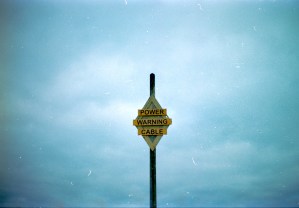
And for one enterprising young idiot to pick up a power cord and ask that most human of questions: “What happens if?”











You must be logged in to post a comment.