“Trying hard and working hard is its own reward. It feeds the soul. It affirms your will and your power. And it radiates from you, lighting the way for all those who see you.”
Getting stuck is part of the process. If you’re never stuck, you’re not doing anything thrilling, important, and/or daunting. Be patient, be kind, and rather than focus on where you’re stuck, do something to shift the stuckness.
“Let’s put it this way: if you are a novelist, I think you start out with a 20 word idea, and you work at it and you wind up with a 200,000 word novel. We, picture-book people, or at least I, start out with 200,000 words and I reduce it to 20.”
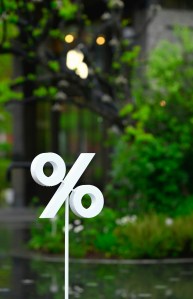
The 70% rule: If you’re roughly 70% happy with a piece of writing you’ve produced, you should publish it. If you’re 70% satisfied with a product you’ve created, launch it.
Do I believe this, as in, do I think that 70% is “good enough”? Not entirely.
Would I be more productive if I did? Absolutely.
And is most of my reluctance to sign onto this rule based in my little problem with perfectionism? Again, absolutely.
I do very much agree with the general idea:
I’m convinced it’s also the way to cultivate a particular kind of sane, action-focused, peaceful-but-energised approach to life that’s becoming more essential by the day. At the risk of offending any sticklers for traditional mathematics, I’m even tempted to argue that 70% is actually better than 100%, at least in this context.
So I think I’ll try to work my way down toward 70%. Will I get there? Maybe not, but when it comes to clearing away barriers to productivity, every step counts.
On the off chance that you feel uninspired, or as if you lack the necessary requirements to make art, I give you Tatsuo Horiuchi. This retiree decided that he would start with what he had and go from there.
While most digital artists opt to use Photoshop or other similar digital imaging software, 77-year-old Japanese artist Tatsuo Horiuchi chooses to work with Microsoft Excel to produce his beautiful works of art. His “paintings” are remarkably intricate works that mimic traditional Japanese paintings that offer scenic views of natural landscapes rich with cultural motifs.
And the next time I think I can’t art without more (fill in the blank), I’ll remember this.





You must be logged in to post a comment.