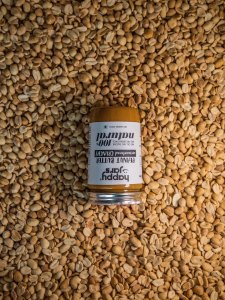
I’m rushing through lunch with a quick PB&J. We use natural peanut butter that has an annoying tendency to separate and require a sloppy stirring session before said butter can be spread.
Or at least, that’s how my PB life used to be.
I ran across a comment the other day that recommended storing the peanut butter jar upside down. The author suggested it would change my sandwich life.
After the autumnal equinox, days become shorter than nights as the Sun continues to rise later and nightfall arrives earlier. This ends with the winter solstice, after which days start to grow longer once again.
The word “equinox” comes from Latin aequus, meaning “equal,” and nox, ”night.” On the equinox, day and night are roughly equal in length.
Let me preface this musing with the statement that I know very little about art, art history, Rembrandt, Dutch social history of the 17th century, or most related issues.
I do, however, know that dead chickens and fashion don’t usually mix.
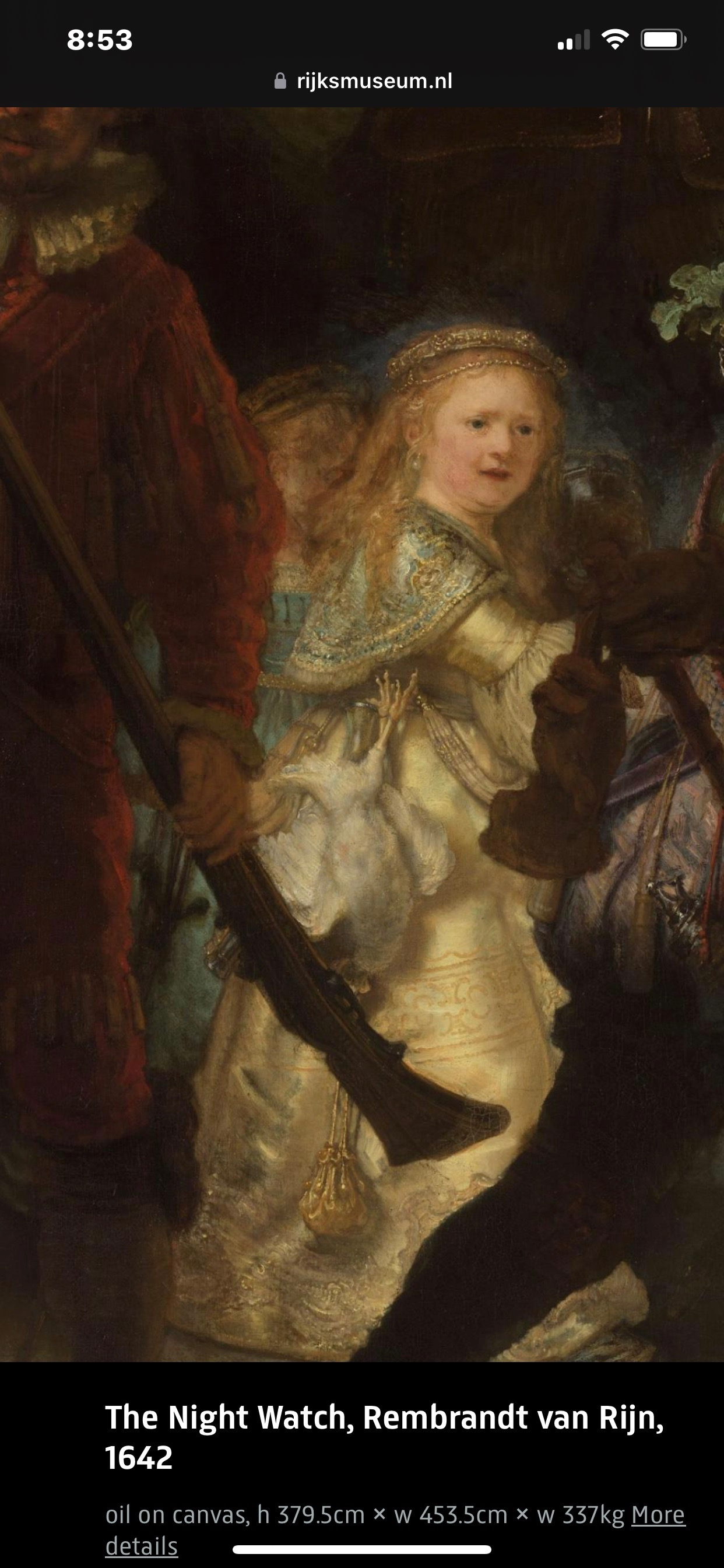
Two of my parental units visited the Rijksmuseum this summer and saw The Night Watch, which inspired a recent discussion about the painting’s history, size and purpose. I pulled up the digital version on the museum’s website so that we could examine the details. The page was still up on my phone when I opened my browser today, and I decided to zoom in on the strangest element in the picture: a well-dressed woman in the midst of a group of heavily armed and armored men, her figure, clothing and purse, all glowing as if under a spotlight.
I take that back. She wasn’t the strangest thing about this picture. The strangest thing was that the aforementioned well-dressed woman was wearing… a chicken?
One thing I love about the move to digitize many museum holdings is that you can see details not usually visible, unless you are viewing the art in person. Using the Rijksmuseum’s Rijksstudio, I was able to zoom in on the subject in question and inspect her unusual accessory. Here it is:
Detail from The Night Watch, Rembrandt van Rijn, 1642, via the Rijksmuseum’s Rijksstudio
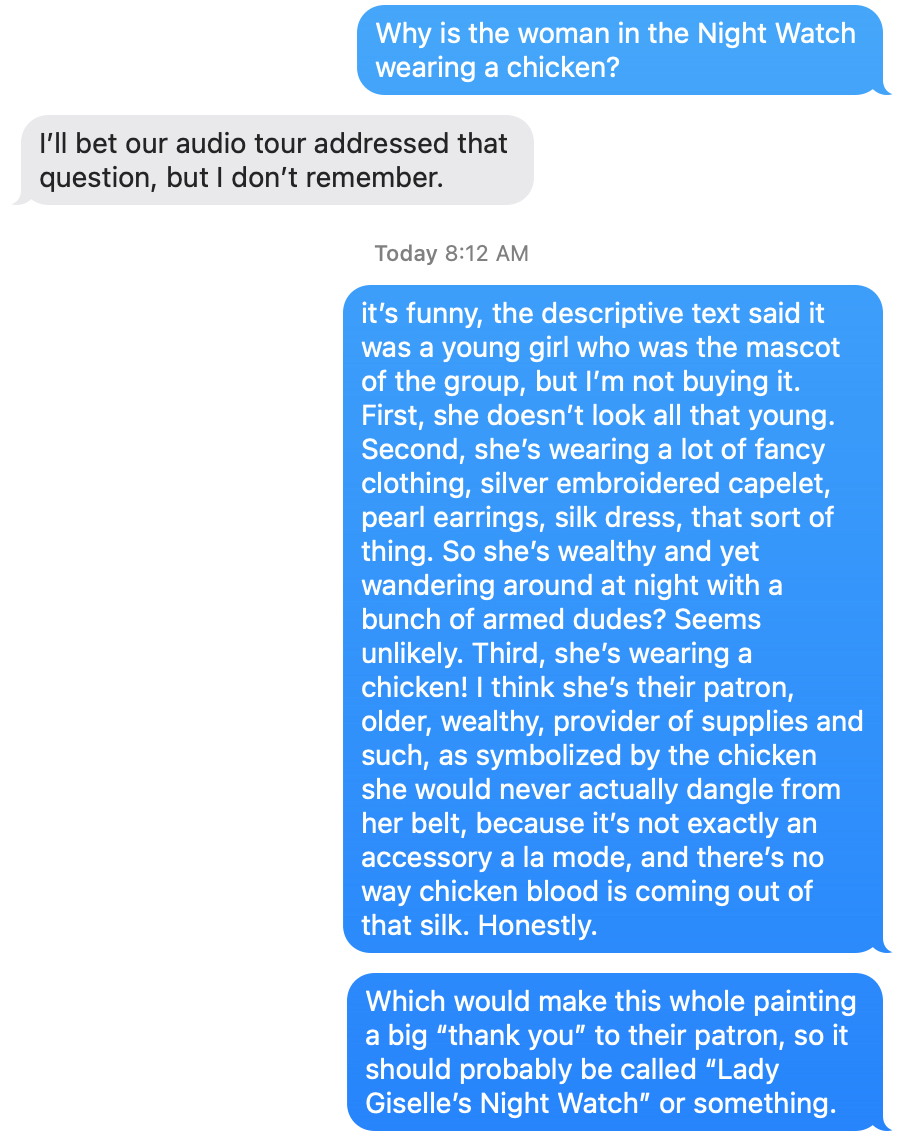
That inspired this exchange with my father:
Again, I know very little about art history and am probably wrong about every single bit of this. I am having fun speculating on the importance of that well-dressed woman, her prominently featured silk purse, and of course, her chicken.
Other people are some of the best, most interesting sources for story ideas, if you can find your way behind their facades.
Most of us would prefer to avoid awkward conversations with strangers, however.
PostSecret is one way to get a glimpse of the former without the latter.
You are invited to anonymously contribute a secret to a group art project. Your secret can be a regret, fear, betrayal, desire, confession or childhood humiliation. Reveal anything – as long as it is true and you have never shared it with anyone before.
Some secrets are funny, some poignant, and all are reminders that every person you meet is a complex, ever-changing world of their own.
According to Ray Bradbury (who ought to know), this is the secret to creativity:
As soon as things get difficult, I walk away. That’s the great secret of creativity. You treat ideas like cats: you make them follow you. If you try to approach a cat and pick it up, hell, it won’t let you do it. You’ve got to say, “Well, to hell with you.” And the cat says, “Wait a minute. He’s not behaving the way most humans do.” Then the cat follows you out of curiosity: “Well, what’s wrong with you that you don’t love me?” Well, that’s what an idea is. See? You just say, “Well, hell, I don’t need depression. I don’t need worry. I don’t need to push.” The ideas will follow me. When they’re off-guard, and ready to be born, I’ll turn around and grab them.
It seems as though every step I take I trip over yet another project to do. I have made it to the end of my workday having done many, many things, but not the items that were actually on my list.
So congratulations, all those who like quotes and pretty pictures, today is (onceagain) your day!
“Don’t worry about looking cool. Do you because you are awesome.”
We read fantasy to find the colors again, I think. To taste strong spices and hear the songs the sirens sang. There is something old and true in fantasy that speaks to something deep within us, to the child who dreamt that one day he would hunt the forests of the night, and feast beneath the hollow hills, and find a love to last forever somewhere south of Oz and north of Shangri-La.
“There’s a point, around the age of twenty, when you have to choose whether to be like everybody else the rest of your life, or to make a virtue of your peculiarities.”
On this day in 2001 I was home in Pennsylvania, getting ready to fly back to Boston. At least that was the plan, until I got a call telling me that all flights had been grounded.
For more on what was behind the cancellation of my flight, and all the others, check out this article from Now I Know:
In all, Ben Sliney’s initiative makes for an incredible story. When Universal Pictures decided to turn the heroism of the passengers of United Flight 93 into a movie, they did not overlook Ben Sliney’s role — they even asked him to play himself in the movie…
Here’s to all the heroes from that day, and after.








You must be logged in to post a comment.