Feeds:
Posts
Comments

Posts Tagged ‘writing’

I have a minor confession: I have never read Charles Dickens. I may have started A Tale of Two Cities but I don’t think I finished it. Scratch that, I know I didn’t finish it.

Many of Dickens’ major novels were written for publishers who paid by the word. The man wasn’t stupid. He wrote A Lot of words. He also wrote across class boundaries, giving readers a window into the lives of those they might not otherwise encounter.

We live in a world shaped by his works and ideas. Movies, characters, what makes up some of the foundations of modern Christmas, a lot of that has to do with Dickens’ works. 

But I haven’t read the original source material.

* * *

If someone wanted to remedy a hole like this in their literary education, where to start?

One nice thing about the classics, they are everywhere.

* * *

Photo by Hert Niks on Unsplash

Read Full Post »

tl;dr scroll for climate fiction contest info

You may have noticed that we are in the midst of a climate shift that is affecting all facets of life. What comes next, and how do we fix it?

Science is great for understanding what will change but to better understand the squishier bits like how it will impact our lives and societies? That is where fiction excels.

I’ve mentioned climate fiction before but if you’re interested in what’s out there, here are a few examples:

* * *

Want to try at hand at writing us all into an optimistic future? Good news, Fix is back with another short story contest titled Imagine 2200: Climate Fiction for Future Ancestors.

We’re looking for stories of 3,000 to 5,000 words that envision the next 180 years of climate progress — roughly seven generations. The winning writer will be awarded $3,000, with the second- and third-place winners receiving $2,000 and $1,000, respectively. An additional nine finalists will each receive $300. Winners and finalists will be published in Fall 2022 in an immersive collection on Fix’s website and celebrated during a virtual event.

  • Entry is free!
  • Submissions close May 5, 2022, 11:59 p.m. U.S. Pacific Standard Time.
  • The contest is open to writers anywhere in the world.
  • Authors must be 18 years or older at the time of submission.
  • Submissions must be fictional stories between 3,000 and 5,000 words.
  • We do not accept previously published or simultaneous submissions (stories can only be submitted to this contest and not to others, until we have informed you of the result).
  • Only one submission will be accepted per entrant.

There is no cost to enter and story copyright and ownership remains with the author. More details here.

Let’s write ourselves a better future!

* * *

Photo by LOGAN WEAVER on Unsplash

Read Full Post »

Today’s debate: Do I push ahead on the story idea upon which I am currently stumped, update the family cookbook, or head to the workshop for the first time in ages?

The good news is that no matter what I decide, I’m likely to make progress on at least some of these fronts (or on something else entirely, but whatever, progress is progress).

Productive procrastination for the win!

* * *

Photo by Mario Dobelmann on Unsplash

Read Full Post »

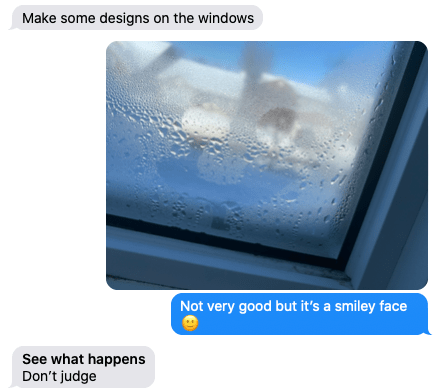
It’s cold here today and I mentioned to my mother that we had condensation on the windows.

Now, you should know that my mother is very artistic and has an arts and languages background. She’s been to the creativity wars, you know?

Here’s what she said:

Great advice, right? And while I didn’t have enough condensation to draw anything real (and oh right, I can’t draw anyway, see above lopsided grimace for proof), the important thing is that I didn’t stop there. 

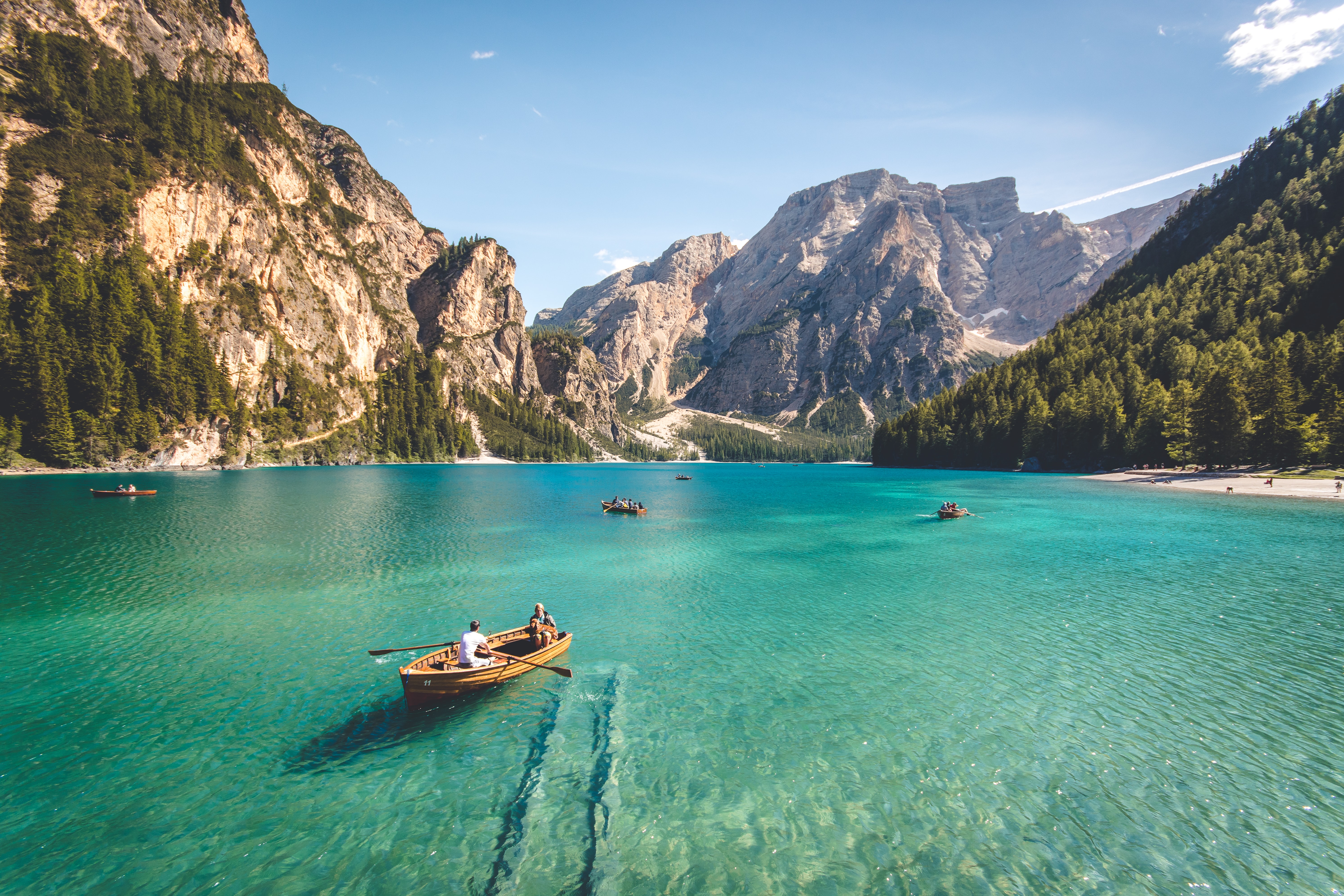
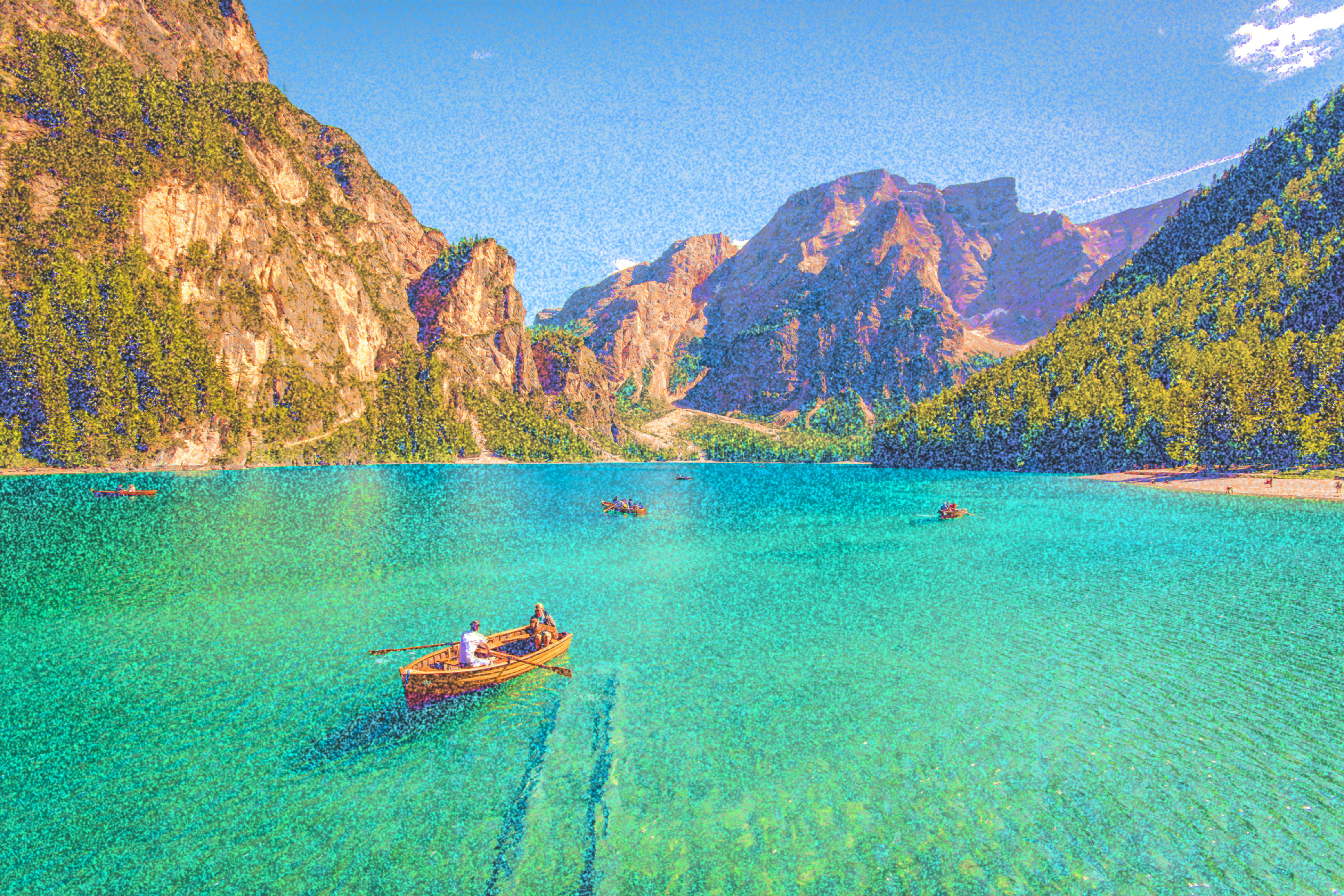
I woke up thinking about Impressionist art (as one does) so I decided to try my hand at computer aided pointillism using this tutorial.* Here’s the result.

Original photo by Pietro De Grandi on Unsplash

Thanks, Mom!

* * *

* I also learned that Mary Cassatt, one of the “three great ladies” of Impressionism and an artist who focused much of her work on the social and domestic lives of women (subjects often ignored by male artists), was from Pennsylvania.

Read Full Post »

“Never be afraid to sit awhile and think.”

― Lorraine Hansberry

* * *

Photo by billow926 on Unsplash

Read Full Post »

“What are you going to do? Everything, is my guess. It will be a little messy, but embrace the mess. It will be complicated, but rejoice in the complications.”

― Nora Ephron

* * *

Photo by Hasan Almasi on Unsplash

Read Full Post »

Today, some useful writing advice from award-winning writer Nalo Hopkinson.

The point of fiction is to cast a spell, a momentary illusion that you are living in the world of the story. Fiction engages the senses, helps us create vivid mental simulacra of the experiences the characters are having.

* * *

* * *

Photo by Sean Pierce on Unsplash

Read Full Post »

“If you don’t have time to read, you don’t have the time (or the tools) to write. Simple as that.”

― Stephen King

That’s my excuse and I’m sticking to it!

* * *

Photo by Clay Banks on Unsplash

Read Full Post »

“A book is made from a tree. It is an assemblage of flat, flexible parts (still called “leaves”) imprinted with dark pigmented squiggles. One glance at it and you hear the voice of another person, perhaps someone dead for thousands of years. Across the millennia, the author is speaking, clearly and silently, inside your head, directly to you. Writing is perhaps the greatest of human inventions, binding together people, citizens of distant epochs, who never knew one another. Books break the shackles of time ― proof that humans can work magic.” 

― Carl Sagan

* * *

Photo by JoelValve on Unsplash

Read Full Post »

I am a re-reader. Sometimes I pick up a book that I’ve already read in order to study some aspect of craft, like a fight scene or character introduction, but my primary motivation is usually entertainment.

I love knowing that the piece I’m reading has a great story, compelling characters, and a satisfying conclusion. Often, that last element is where things fall apart. Over the holidays three books in a row ended with a whimper, and left Reader Me at loose ends, feeling out of sorts and disappointed. Writer Me was not impressed.

Good openings pull readers deeper into the story. 

The first scene can be anything—a funny incident that introduces one of your protagonists, or perhaps an argument that leaves your reader shocked. Maybe you’ll write a scene that will leave your reader admiring your protagonist and cheering for her, or perhaps you’ll introduce your tale with a gruesome murder that will leave the reader horrified but burning with intrigue. Whatever you do in your opening, a great opening scene will almost always find some way to arouse a powerful emotional response in the reader—and the impact of that scene will convince the reader to delve further into the tale, hoping for more.

— David Farland’s Writing Tips – Be Excited

All excellent advice. But a good opening isn’t enough. It’s a promise. Endings should deliver on that original promise by giving the reader a satisfying emotional conclusion. If a story opens with a question the ending must close with the answer. Not any answer. Not a conclusion (dramatic or otherwise) that has no relationship to the questions posed at the outset. And not, for the love of all that’s holy, a cliffhanger.

This is why so many books fail, in my experience. Open with a lost dog, close with a found dog. Open with a murder mystery, close with the murderer being brought to justice. 

What if The Return of the King had ended as the One Ring went into the lava? That’s it, right? Game over, no reason to continue. Not quite, and the fact that the story didn’t stop there is one reason I went back to The Lord of the Rings every year for decades. Our emotions are tied to characters, and in this case to one group in particular. Start with hobbits all nice and cozy, end with slightly battered but stronger, more capable, still cozy hobbits tucked up nice and safe at home.

There’s also a reason I have several reliable series on call at all times. I don’t do well with literary disappointment. That’s also the reason I return to some shorts over and over again.

I’ve mentioned this story before and may well again. Do I like young adult stories? Frequently not.* Do I like horror or monsters? Not usually. But everything about this story works for me, and it’s about time to read it again:

Holly Black’s Ten Rules for Being an Intergalactic Smuggler (the Successful Kind) is everything I love about a story: it’s funny, poignant, trying and triumphant. And fun.

I hope you enjoy it. I know I will.

* * *

Photo by Gaman Alice on Unsplash

* * *

* There are exceptions. This story is one, and there are others like The Scholomance and Rory Thorne books.

Read Full Post »

« Newer Posts - Older Posts »